Mistake One: Automating a Workflow Nobody Has Mapped
Configuration begins before anyone has written down how specimens actually move. The documented process describes collection, transport, accessioning, and analysis; the real one includes a porter who batches tubes until his round is full and a technologist who telephones the ward when a request form is illegible. Automating the documented version hard-codes the gap and pushes informal workarounds further out of view.
Spend a week observing before configuring anything. Follow specimens from three sources — an outpatient collection room, a ward round, and the emergency department — and record every handoff, wait, and improvisation. The map that emerges usually contradicts the standard operating procedure in at least two places, and those two places are where a new system will fail on its first busy morning.

Mistake Two: Treating Sample Rejection as a Collector Problem
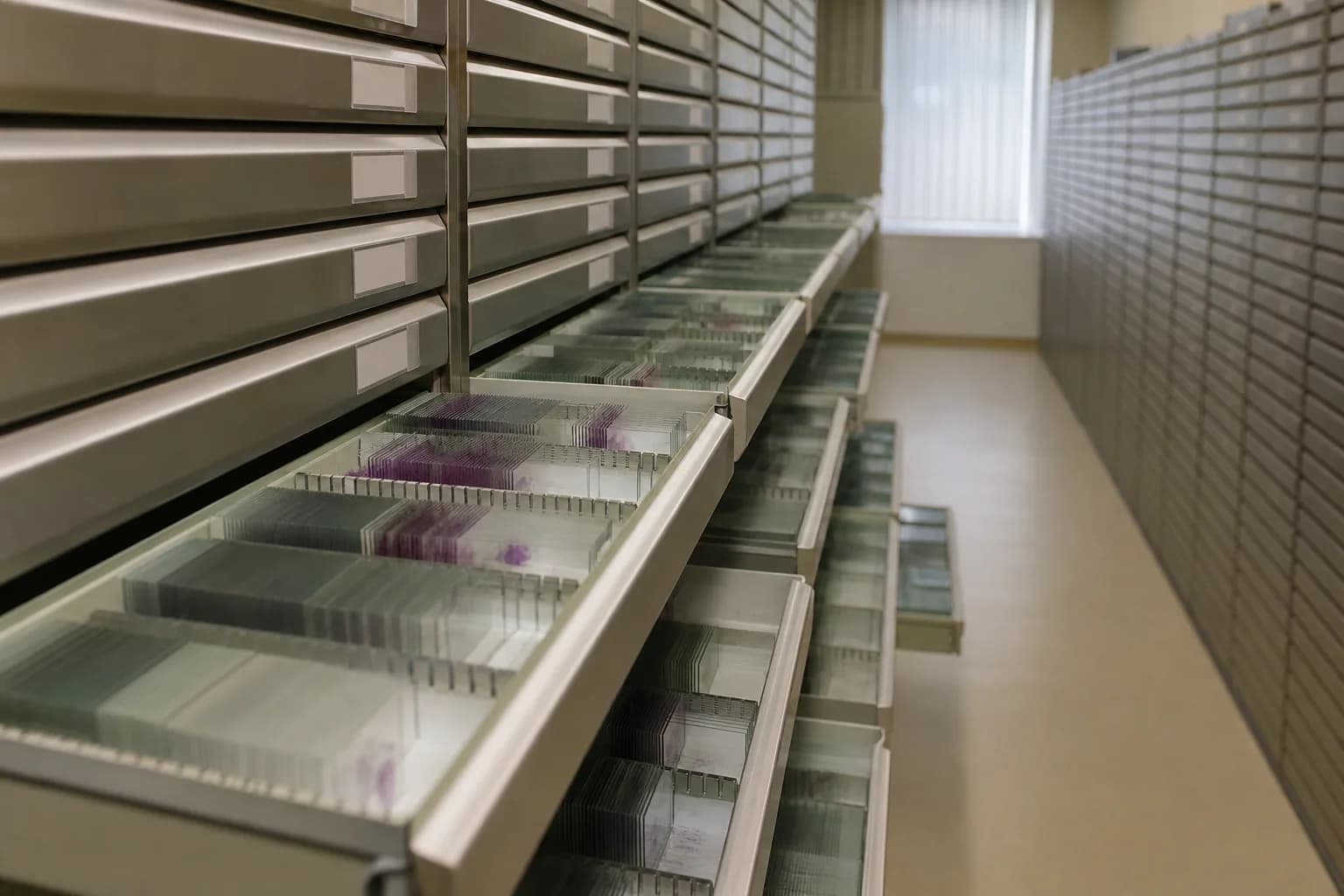
Rejection registers routinely record the reason and stop there. Hemolysis is logged, the collector is retrained, and the same rate returns the following month because the cause was a tourniquet held too long during a rushed morning list, or a transport route that leaves tubes in a warm corridor. A reason code without a location, shift, and route attached cannot support any corrective action.
Capture rejection at accessioning with enough context to trace it, and make the resulting pattern visible to the people who can change it. HealUDoc records the rejection reason, originating location, and collector against the specimen event, so a supervisor can see that most clotted samples arrive from one ward on night shift rather than treating the finding as an unfocused training need across the whole workforce.
Rejection data worth capturing
- Standardised reason code
- Originating ward or collection point
- Collector and shift
- Transport route and elapsed time
- Recollection outcome and delay
Mistake Three: Enabling Autoverification Too Early
Autoverification is often switched on during the first quiet week after go-live, because release queues look manageable and the rules seem obvious. Those rules have not yet been validated against the laboratory's own data, and delta checks tuned on a textbook example behave differently against a dialysis population or a paediatric cohort with different reference intervals. The first missed interference is usually found by a clinician, not the laboratory.
Run the rules in shadow mode first. Let them evaluate results and record what they would have released while a technologist verifies everything manually, then compare the two across normal, abnormal, and flagged samples for several weeks. Shadow comparisons are easier to defend when HealUDoc's verification queue retains both the rule outcome and the technologist's decision for side-by-side review. Narrow rules that release reliably beat broad rules nobody trusts.

Mistake Four: Letting the Test Catalogue Grow Unmanaged
Every new analyzer, branch, and clinician request adds entries, and within two years the catalogue holds three spellings of the same thyroid panel, two obsolete orderables nobody dares delete, and a profile that silently bills components separately. Ordering clinicians pick whichever name appears first in the search, so trend graphs fragment across duplicates and the data becomes untrustworthy exactly where it is used most.
Assign catalogue ownership to a named person in laboratory medicine, require an approval step for additions, and version every change so historical reports still render correctly. HealUDoc's governed test catalogue supports effective dates and mapping between local names and standard identifiers, which keeps a renamed analyte from breaking the longitudinal view clinicians rely on when monitoring therapy. Quarterly review should retire what nobody has ordered.
Catalogue controls to enforce
- Named clinical owner
- Approval before new orderables
- Effective dates on every change
- Mapping to standard identifiers
- Scheduled retirement review
Mistake Five: Assuming a Flag on Screen Is a Callback
A critical potassium turns red in the result view and the laboratory considers the obligation met. The ordering clinician has gone off shift, the covering registrar never opened the chart, and nothing in the record shows whether anyone accepted responsibility. The failure is rarely discovered at the time; it surfaces weeks later during an incident review, when reconstructing who knew what has become impossible.
Notification must record a recipient, a channel, an acknowledgement, and an escalation when acknowledgement does not arrive. HealUDoc tracks each attempt and escalates to an approved role after the configured interval, preserving the full sequence for later review. Read-back for telephoned results should be captured as text rather than a tick box, because the tick proves a call happened and the text proves the value was heard correctly.

Mistake Six: Going Live Without Rehearsing Downtime
Interfaces fail, analyzers drop connections, and networks in older buildings do not always survive a storm. Laboratories that have never rehearsed downtime revert to loose paper, lose collection timestamps, and spend the following two days reconciling handwritten worksheets against the system. The recovery is often more damaging than the outage, because results entered retrospectively carry no reliable timing and timed tests cannot be defended.
Rehearse the full cycle before go-live: pre-printed downtime request forms, a defined manual accessioning sequence, agreed criteria for which tests continue and which are deferred, and a back-entry procedure that preserves true collection times rather than the moment of typing. Then rehearse annually. HealUDoc's activity logs make back-entered results distinguishable from live ones, which matters when an auditor asks how a timestamp was established.
“Every serious problem we had after go-live was something we had chosen not to write down beforehand.”