Find the Constraint That Is Actually Binding
Growing laboratories reach for analyzers first, because capital equipment is the visible answer. The binding constraint in a district hospital is more often the two phlebotomists covering a morning outpatient peak, a single accessioning desk that batches arrivals, or one senior technologist who is the only person authorised to verify microbiology. Adding throughput behind a narrow front end simply relocates the queue.
Identify the constraint by watching where work waits rather than where staff look busy. Pending counts by stage, measured hourly across a normal week, show whether specimens accumulate before collection, before accessioning, at the bench, or in the verification queue. The answer frequently surprises people who have worked in the department for years, because the loudest stage is rarely the slowest one.
Standardise Before Adding Capacity
Scaling an inconsistent process multiplies the inconsistency. Before opening a second collection point or a night shift, fix the things that only work because experienced staff compensate: an unpruned test catalogue, undocumented rejection criteria, verification practice that differs by technologist, and collection procedures held in one supervisor's memory. Each is survivable in a single room and unmanageable across three sites.
Write down the standard operating procedures that already exist informally, then configure the system so the standard becomes the path of least resistance. HealUDoc's collection worklists carry tube requirements, volume, and special handling with the order, so a new collector at a new site follows the same sequence as the original team without depending on somebody nearby knowing the answer.

Standardise before you scale
- Single governed test catalogue
- Documented rejection criteria
- Consistent verification rules by test family
- Uniform label format and barcode symbology
- Defined escalation roster per site
Add Collection Points Without Adding Chaos
A new collection point is not simply a room with a chair. It needs its own barcode printer, a defined courier cutoff, stability-aware rules about which tests can be drawn there, and a named person accountable for rejection performance at that location. Sites opened without these arrangements generate specimens that arrive unlabelled, arrive late, or arrive after the analyte in question has degraded.
Track each site separately from the first day. HealUDoc records the originating location on the specimen event, so rejection rate, collection-to-receipt time, and volume by hour can be compared site by site rather than absorbed into a network total that conceals a struggling new opening. A site that looks fine inside the aggregate is often the reason the aggregate stopped improving.
Design the Hub-and-Spoke Before You Need It
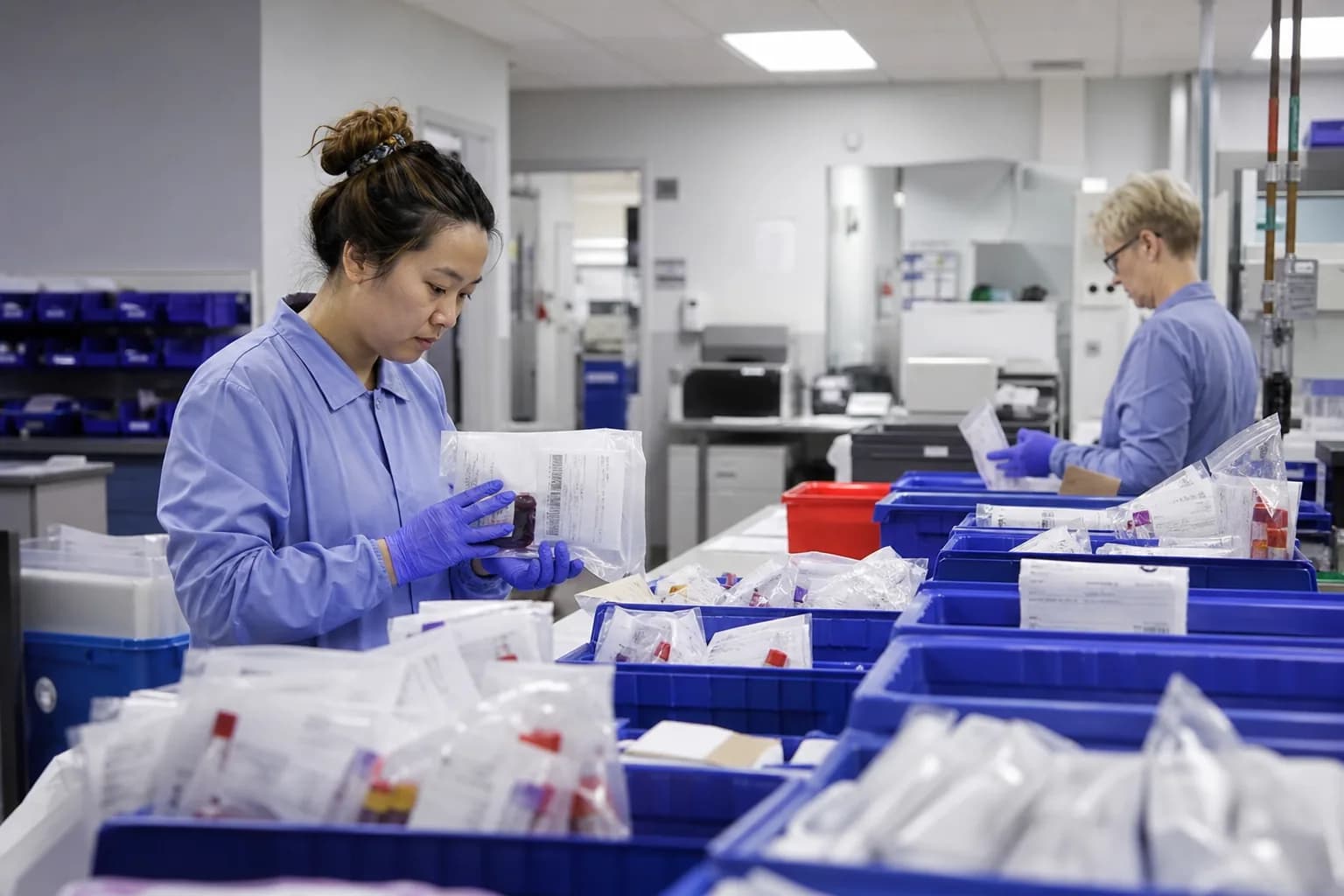
Mid-size networks eventually centralise specialised testing at one site while keeping urgent chemistry, haematology, and basic microbiology local. The design decision is which tests stay local, and it should follow clinical urgency and specimen stability rather than equipment convenience. An emergency department without local potassium and troponin is not viable regardless of how efficient the central laboratory becomes. Courier timetables decide most of the rest.
Courier schedules, chain-of-custody events, and expected arrival times belong in the queue rather than a separate spreadsheet. HealUDoc exposes the receiving branch, transport state, and expected arrival on the specimen, so a clinician chasing a send-out sees a meaningful status instead of an indefinite pending. Without that, centralisation improves unit cost while quietly damaging the clinical service; the saving is real, and so is the complaint.
Hub-and-spoke design decisions
- Tests that must remain on site
- Courier frequency and last-collection times
- Stability limits per specimen type
- Chain-of-custody events between branches
- Backup routing when a run is missed
Staffing and Competency at the Next Volume Tier
Volume growth changes the shape of the roster before it changes headcount. A laboratory adding evening outpatient clinics needs verification cover in the evening, not another daytime technologist, and the competency matrix has to show who is signed off for which bench at which hour. Rosters built around historical volume are the most common reason a well-equipped department still breaches urgent targets.
Cross-training is the cheapest capacity a small laboratory can buy, but it must be recorded rather than assumed. Maintain competency by test family with assessment dates, and configure verification rights to match, so nobody is technically able to release a result they are not trained to interpret. HealUDoc's role-based permissions make this enforceable, which matters most on the night shift when supervision is thinnest.
Recognise When to Stop Scaling the Same Way
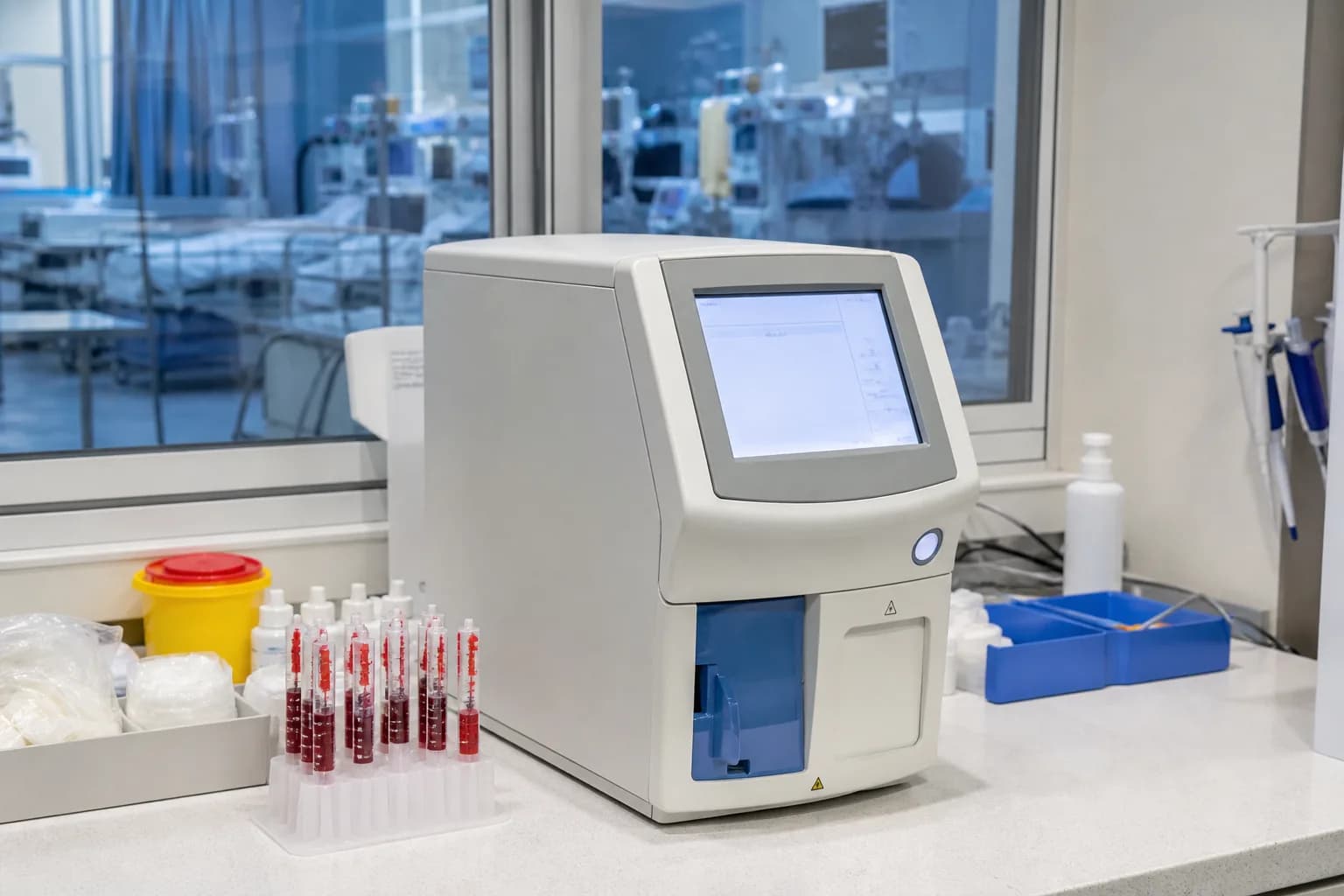
Incremental scaling works until it does not. The signals are consistent: overtime becomes structural rather than occasional, urgent breaches cluster at predictable hours, the same senior staff appear in every escalation path, and quality indicators drift while volume grows. At that point the answer is a different operating model — a second shift, a genuine hub, or outsourced specialised testing — not another analyzer.
Review the constraint annually using the same measurements applied at the start, because the binding constraint moves as the network changes. What limited the laboratory at one volume is rarely what limits it at four times that volume. Keeping the diagnosis current is worth more than any single expansion decision, and it is the discipline most often abandoned once growth begins to feel routine.
“We kept buying capacity for the bench when the queue was always at the front door. Measuring where specimens waited saved us an entire procurement cycle.”