Identity Is the Integration Problem
Every downstream link depends on two systems agreeing which patient this is. If scheduling can create a record from a name and a phone number while registration requires a national identifier, duplicates appear immediately and then follow the patient into the laboratory and the billing ledger. Decide before integration whether scheduling creates identities or only proposes matches to a review queue.
Define the matching rules explicitly, covering which identifiers are authoritative, what constitutes a probable match, and who adjudicates the uncertain ones. Route those cases to a named team rather than to whoever happens to be at the desk when the patient arrives. HealUDoc matches against controlled identifiers and holds ambiguous cases for review, which is far cheaper than merging records after results have been filed.

Identity decisions to settle first
- Authoritative patient identifier
- Whether booking may create a record
- Probable-match adjudication owner
- Merge and unmerge procedure
- Cross-branch identity scope
Map the Interfaces the Appointment Actually Touches
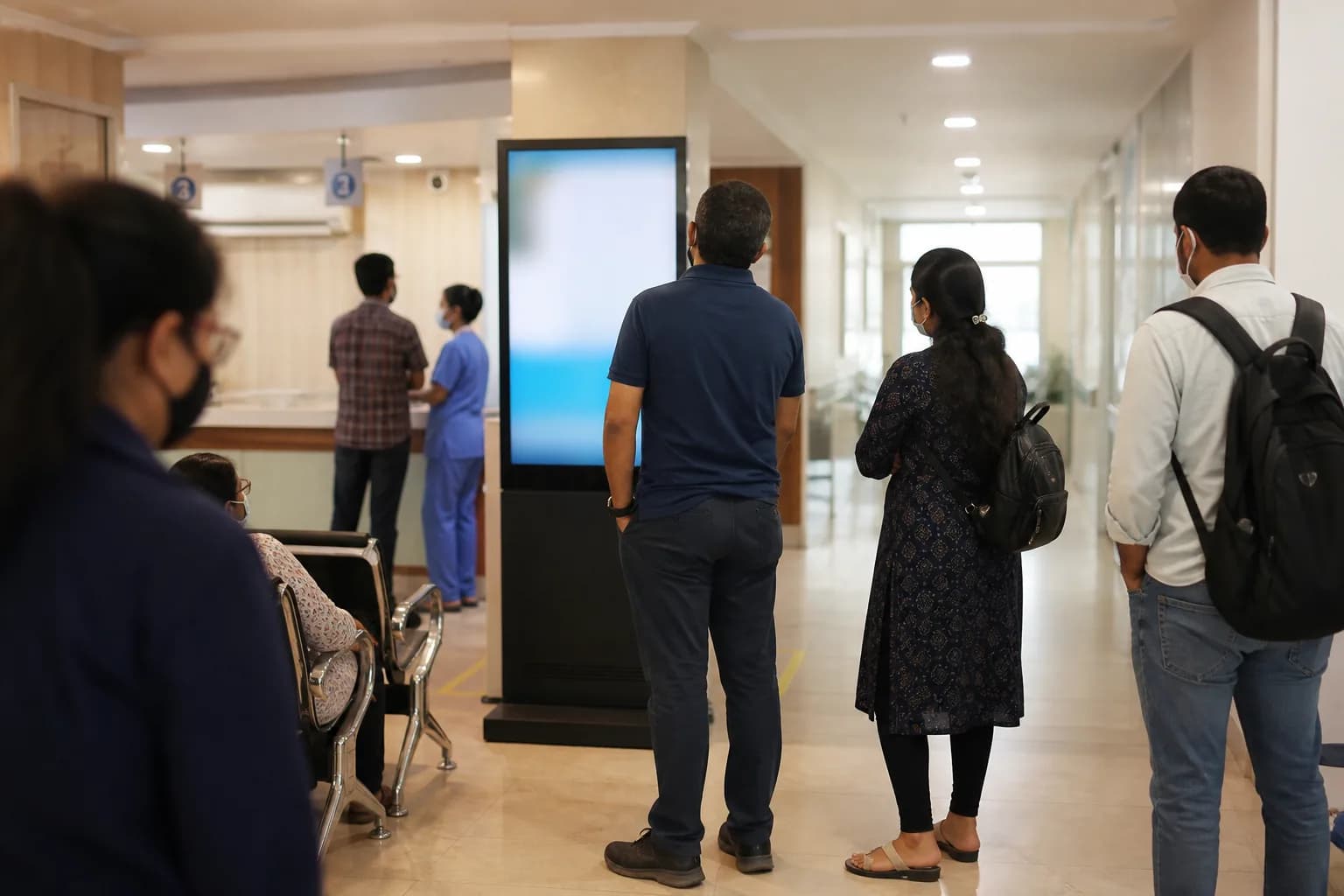
Draw the appointment's journey as interfaces rather than as departments. A confirmed booking should reach registration as a planned encounter, reach the clinical record so the consultation opens against the right context, reach billing with the service and price, reach the messaging gateway for confirmation and reminders, and reach the queue display without exposing clinical detail. Where those modules already sit inside HealUDoc, each link becomes a configuration question instead of an interface build.
For every remaining link, name the trigger event, the direction, the payload, the system of record, and what happens when the two sides disagree. That last question is the one most projects skip. If billing believes the visit is a follow-up while the schedule believes it is a new consultation, one must be authoritative and the reconciliation must surface to a human rather than resolve silently.

Choose the Right Exchange Pattern for Each Link
Not every link needs the same mechanism. Event-driven messaging suits booking, cancellation, and arrival because downstream systems must react promptly. A query API suits a display board or patient portal that needs current state on demand. Batch reconciliation suits the nightly comparison of appointment counts against encounters and invoices, which catches the slow drift that real-time messages never reveal.
Where standards apply, use them rather than inventing local formats. FHIR resources such as Appointment, Schedule, Slot, Encounter, and Patient cover most scheduling exchange, and HL7 v2 messaging remains widespread across existing hospital estates. HealUDoc exposes scheduling data in these standard shapes, so an external laboratory, insurer, or referral partner does not require a bespoke translation layer built and maintained for each one.

Per-interface specification items
- Trigger event and direction
- Payload and standard used
- System of record for each field
- Retry and duplicate-suppression rules
- Reconciliation method and frequency
Design for Failure, Not for the Happy Path
Interfaces fail in ways that look like clinical or administrative problems. A stalled message queue presents as a patient arriving with no registration record. A duplicated cancellation event presents as a slot that reopens twice and is then double-booked. The people who notice first are receptionists and nurses, not the integration team, so they need a reporting route that does not require diagnosing the cause.
Build idempotency into every consumer so a replayed message cannot create a second appointment or a second charge. Monitor queue depth, message age, and error rates with thresholds that alert before the clinic notices. HealUDoc records each appointment state transition with an audit trail, which makes lost or replayed events identifiable during reconciliation rather than after a patient complaint reaches the medical superintendent.

Reference Data Drift Breaks Integrations Quietly
Most integrations break long after go-live, and rarely because of code. A department adds a service, a branch renames a clinic, a billing code is retired, a new consultant is created in one system with a slightly different specialty label. Each change is locally reasonable, and each can silently misroute appointments, reject charges, or leave a visit type mapped to nothing at all.
Put service catalogues, visit types, location codes, clinician records, and billing codes under change control with a single owner per domain. Require that a new service is defined once and propagated rather than entered separately in each system. HealUDoc's shared configuration across appointments, OPD, and billing removes a large class of drift, but the governance question of who may add a service still belongs to the hospital.
Govern Interfaces as Living Clinical Infrastructure
Treat interfaces as clinical infrastructure with named owners, documented specifications, and a change process that includes testing in a non-production environment. Every upgrade to a connected system is an integration event: confirm which messages changed, run the reconciliation, and check the queue before the first clinic of the day rather than after the complaints start arriving at reception.
Keep a register of interfaces with their business purpose, owner, dependencies, and last verified date. When a link is decommissioned, remove it deliberately, because orphaned feeds writing into inactive systems are a persistent source of confusing data. The measure of good integration is not that data moves, but that a clinician opening a record sees one coherent story about what was booked, what happened, and what was charged.
“Our worst outages were never the systems going down. They were two systems staying up while quietly disagreeing about the same patient.”