What a workable appointment cancellation and refund policy contains
A workable appointment cancellation and refund policy answers five questions in plain language: how much notice a patient must give to cancel without cost, what happens to money already paid, how long a refund takes and by what route, which situations are exempt, and who may authorise an exception. If a policy cannot be summarised in five lines at the point of booking, it will not be understood, and a policy that is not understood cannot be enforced fairly.
The purpose is not to collect cancellation fees. It is to make cancellation early enough that the slot can be reused, which is the only outcome that actually benefits the hospital, the waiting list, and the patient who cannot get an appointment. A policy designed around revenue protection produces different rules from one designed around slot recovery, and the second is both easier to defend and more effective.
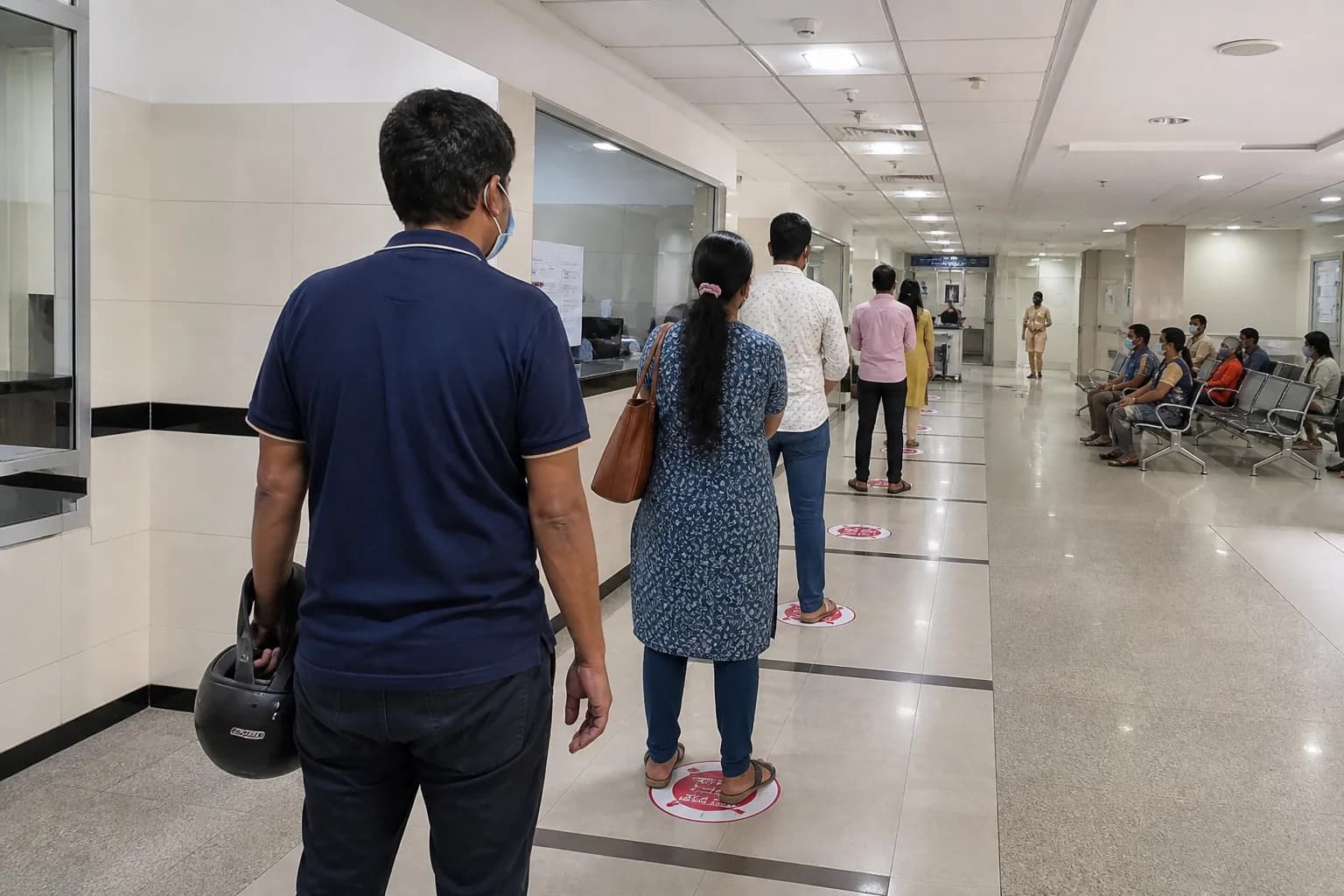
It also has to be enforceable in practice, not just in writing. A policy that requires a front-desk clerk to refuse a distressed patient's refund at a busy counter will not survive contact with reality; the rule will be waived case by case until it means nothing. Design the enforcement path along with the rule, and give staff a defined authority to grant exceptions so that waivers are recorded rather than improvised.
Notice windows people can actually meet
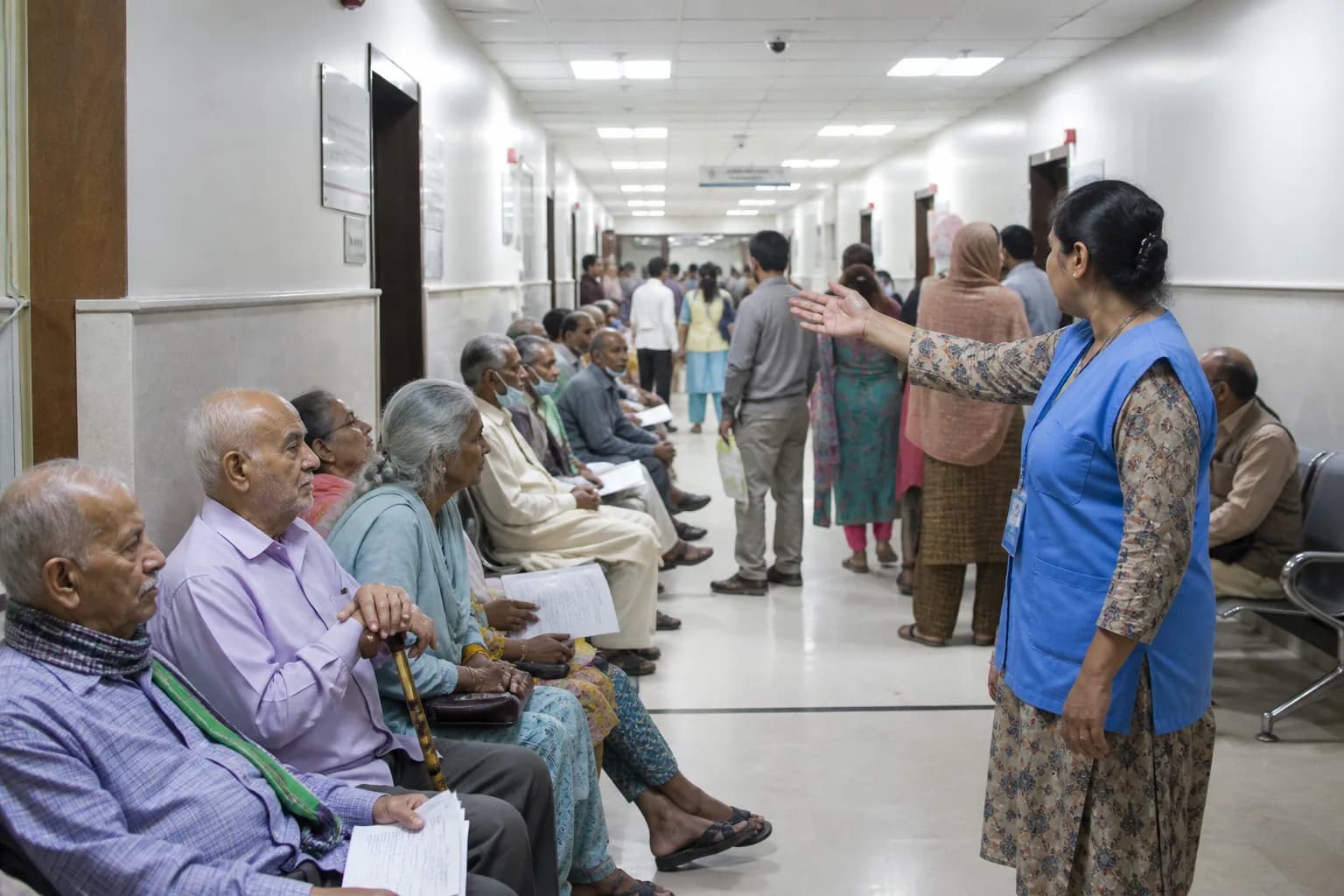
The notice window should be set by how long it takes to fill a released slot, not by convention. If your waiting list and short-notice contact process can fill a cancelled slot within twenty-four hours, then a twenty-four hour window is the right threshold, and demanding seventy-two hours penalises patients for time the hospital does not need. If a specialised session takes a week to refill, a longer window is justified and you should be able to explain why.
Different services warrant different windows, and that is fine as long as each is stated where the booking is made. A routine outpatient consultation, a procedure requiring theatre time and a nurse, and a home visit that commits a technician's route have genuinely different recovery costs. What causes disputes is not variation; it is variation the patient discovers only after cancelling.
Be careful about how the window is counted. Working hours versus calendar hours, whether a Sunday counts, and what time of day the clock starts are exactly the details that generate arguments at the counter. Express the deadline as a specific date and time on the booking confirmation — cancel before 5 pm on the 14th — rather than as a number of hours the patient has to compute.
Elements to state explicitly in the policy
- The exact cancellation deadline, shown as a date and time on the confirmation
- What is retained and what is refunded for a late cancellation
- What happens on a no-show, which is not the same as a late cancellation
- Refund route and expected timeline, in working days
- Named exemption categories and who approves them
- How to cancel, through at least two channels including a non-digital one
Advance payment versus deposit
These are different instruments and confusing them causes most of the trouble. An advance payment is the full consultation fee collected before the service; a deposit is a smaller amount held to secure the booking and adjusted against the final bill. A deposit is the gentler mechanism — it creates enough commitment to reduce casual no-shows without holding a large sum belonging to a patient who has received nothing yet.
For teleconsultation and online booking, advance payment is usually unavoidable because there is no alternative collection point. For in-person appointments, a deposit or even a zero-cost booking with a strong reminder and easy cancellation often performs comparably on no-shows and avoids the entire refund apparatus. Before introducing advance payment, it is worth asking whether the no-show problem is large enough to justify the refund workload it will create.
Whatever the instrument, its treatment on cancellation should be proportionate. Retaining a full consultation fee for a cancellation made a day late is difficult to justify and will be challenged; retaining a modest deposit is defensible. Proportionality is also what keeps the policy usable — a rule staff consider unfair is a rule staff will quietly not apply.

Refund SLAs and payment-gateway reality
The refund timeline you publish must be one the payment rails can actually deliver. A refund initiated to a card or a UPI handle passes through the gateway, the acquiring bank, and the issuing bank, and the visible credit to the patient depends on the slowest of those. Promising an immediate refund and delivering it in a week generates more complaints than promising a week and delivering in three days.
Publish two numbers rather than one: the time within which the hospital will initiate the refund, which you control, and the typical time for it to appear, which you do not. This distinction is both honest and operationally useful, because it lets your billing team demonstrate that their part was done and directs the remaining query to the right place. Give patients a reference for the refund transaction so the query is answerable.
The failure modes deserve planning. Refunds to a closed card, to a UPI handle that has changed, or against a payment made by a relative are all common and all end up at a counter. Define the fallback — typically an alternate route with identity verification and an approval — and set a target for resolving stuck refunds. A platform such as HealUDoc can hold the refund state against the appointment so an unresolved refund is visible as an open item rather than living in a payment gateway dashboard nobody checks.
Refund process controls worth having in place
- Separate published timelines for initiation and for credit appearing
- A refund reference issued to the patient at initiation
- An exception route for refunds that fail on the original instrument
- A daily worklist of refunds initiated but not confirmed
- Reconciliation between gateway settlements and the hospital ledger
Exceptions must be written down, not improvised
Every cancellation policy needs exemptions, because a hospital is not a hotel and the reasons patients cancel include the ones you would never charge for. A patient admitted as an emergency, a bereavement, a clinician-initiated cancellation, a technical failure on the hospital's side, and a genuine transport or weather disruption are all cases where the fee should not apply. Writing these down converts a discretionary act into a policy the front desk can apply consistently.
Hospital-initiated cancellation deserves particular attention because it is the case where hospitals most often apply an implicit double standard. If a session is cancelled because the consultant is unavailable, the patient's money should be refunded promptly and without a request, and the alternative appointment should be offered proactively. Applying a strict policy to patients while handling your own cancellations casually is the fastest way to lose the argument for the policy entirely.
Record the exception and the reason. Not to police it, but because a growing volume of exceptions in one category is telling you something — a specialty cancelling frequently, a booking flow that confuses people about the date, a scheme population for whom advance payment is a barrier. Exceptions granted without a coded reason are just leakage; exceptions with reasons are a diagnostic.
“The policy only started working once we published our own obligations alongside the patient's. It is very hard to charge someone for late notice when you cancelled their last two appointments at a day's notice.”
Communicating the policy at the moment of booking
A policy the patient sees for the first time when they try to cancel is not a policy, it is an ambush. The cancellation terms should be visible at the point of booking, in the same view as the payment, in short and specific language — not as a link to a terms page. Then they should be repeated on the confirmation message with the actual deadline computed for that appointment.
Language and literacy matter here as much as anywhere in the hospital. If the booking flow is available in a regional language, the cancellation terms must be too, and they should be written for someone reading them quickly on a phone. Legal completeness is worth less than being understood; the enforceable version can sit behind a link for the small number who want it.
The reminder is the last chance to convert a would-be no-show into a cancellation, so it should carry both the deadline and a one-tap cancel option. Making cancellation easy feels counterintuitive when you are trying to reduce non-attendance, but a cancelled slot is a recoverable slot and a no-show is not. The purpose of the whole policy is to move patients from the second category into the first.

Enforcement, waivers and the review loop
Decide before launch who may waive a charge and at what level, and make the waiver a recorded action rather than a decision not to charge. A clerk should have authority to waive small amounts within the published exemption categories; anything beyond that should route to a supervisor. Without a defined authority, the outcome depends on which staff member the patient meets, which is the least fair arrangement possible.
Review the policy on outcomes rather than on collections. The measures that matter are the proportion of cancellations arriving inside the notice window, the proportion of released slots successfully refilled, the no-show rate before and after, and the volume of disputes and waivers. If notice-window compliance is rising and no-shows are falling while fee collection stays negligible, the policy is working exactly as intended.
Expect to revise it. A first version will get the notice window wrong somewhere, will have missed an exemption category, and will contain at least one rule that turns out to be unenforceable at a busy counter. Set a review at six months, take the front desk's account of what actually happens seriously, and change the policy rather than continuing to apply one that staff have already stopped believing in.