The registration counter is usually the real bottleneck
Front desk registration workflow optimisation is the least glamorous scheduling work a hospital can do and frequently the most productive. The counter sits upstream of everything: a patient cannot be triaged, tokened, seen, billed, or investigated until registration completes. When it runs at ninety seconds a patient it is invisible; when it runs at four minutes, the entire morning shifts, doctors start late, and the delay is attributed to the clinic rather than to the desk that caused it.
The diagnostic question is simple: at your busiest hour, what is the queue length at registration and what is the service time per patient? Most hospitals have never measured the second number, and the estimates staff give are usually optimistic by a factor of two because they think of the straightforward cases. Sit behind the counter for an hour with a stopwatch and the picture becomes clear immediately.
The other thing that becomes clear is the shape of the variation. Registration time is bimodal — a returning patient with a card is fast, a new patient with an insurance scheme, no documents and a name spelled three ways is slow — and the slow cases block the fast ones in a single queue. Almost every improvement below is an attempt to separate those two populations.
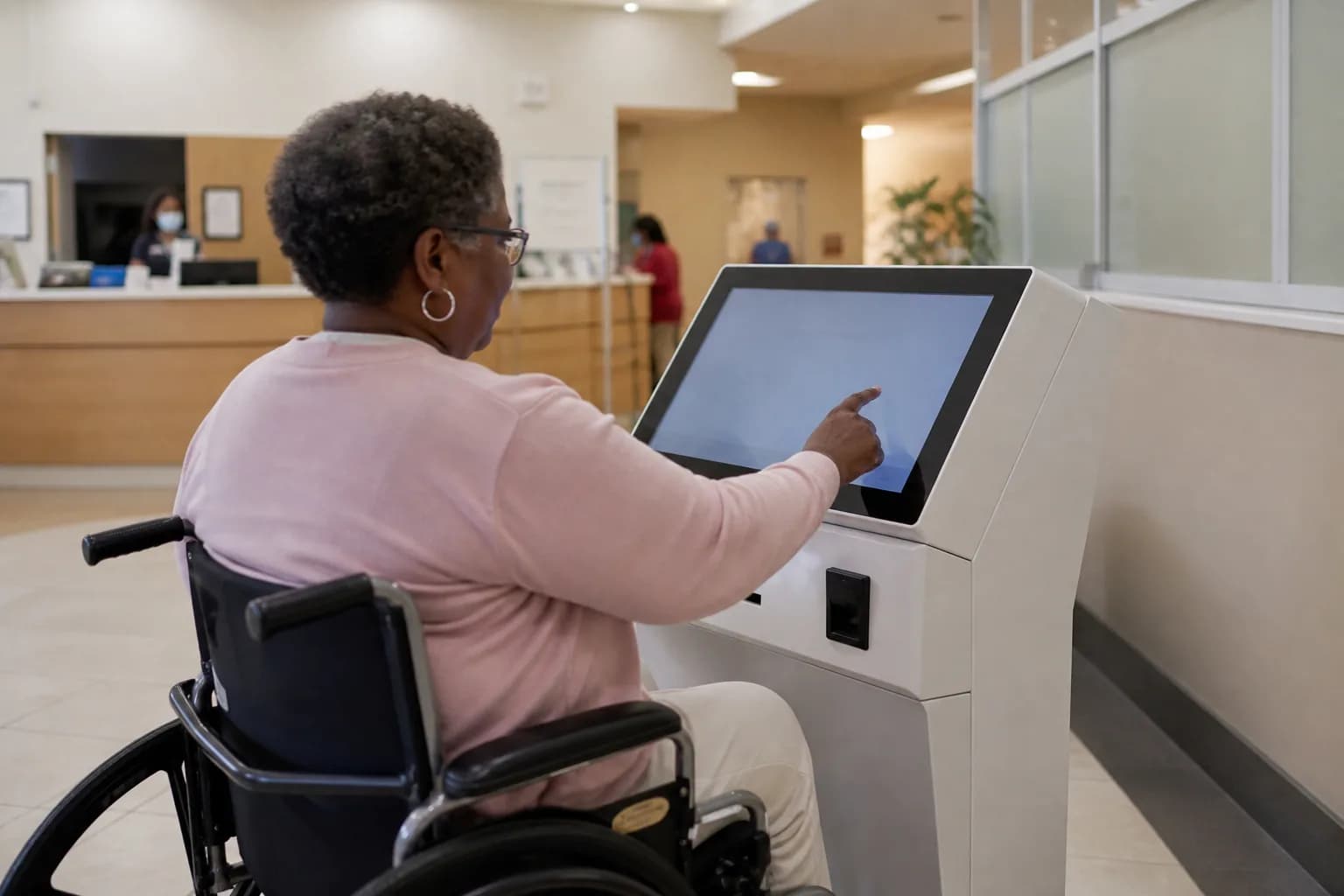
Duplicate MRN prevention starts at the search box
Duplicate medical record numbers are created at registration, and almost always because the search for an existing record failed rather than because the clerk chose to create a new one. In Indian hospitals the search is fighting transliteration variance, inconsistent surname usage, approximate dates of birth, and phone numbers that belong to a relative. A search that requires an exact name match will fail constantly, and every failure is a new MRN and a split clinical history.
The fixes are mostly in the search rather than in the policy. Phonetic and fuzzy name matching, search by phone number as a first-class option, search by ABHA number or government identifier, and a results list that shows enough detail — age, last visit, department — for a clerk to recognise the right person. A search that returns twenty rows with only names is unusable at a busy counter and will be abandoned.
Add a merge path and a duplicate-detection report, because prevention will never be perfect. A weekly report of probable duplicates — same phone, similar name, close date of birth — reviewed by health information management, keeps the problem bounded. Hospitals that never run this report typically discover the scale of it only during an ABDM linkage exercise or a migration, at which point it is a project rather than a routine.
Search capabilities that prevent duplicate registrations
- Phonetic and fuzzy matching for transliterated names
- Search by mobile number, ABHA number and government identifier
- Result rows showing age, last visit date and treating department
- A warning when a new registration closely matches an existing record
- A supervised merge workflow, with an audit trail of merged identifiers
- A periodic probable-duplicate report owned by health information management
Move work off the counter with pre-registration
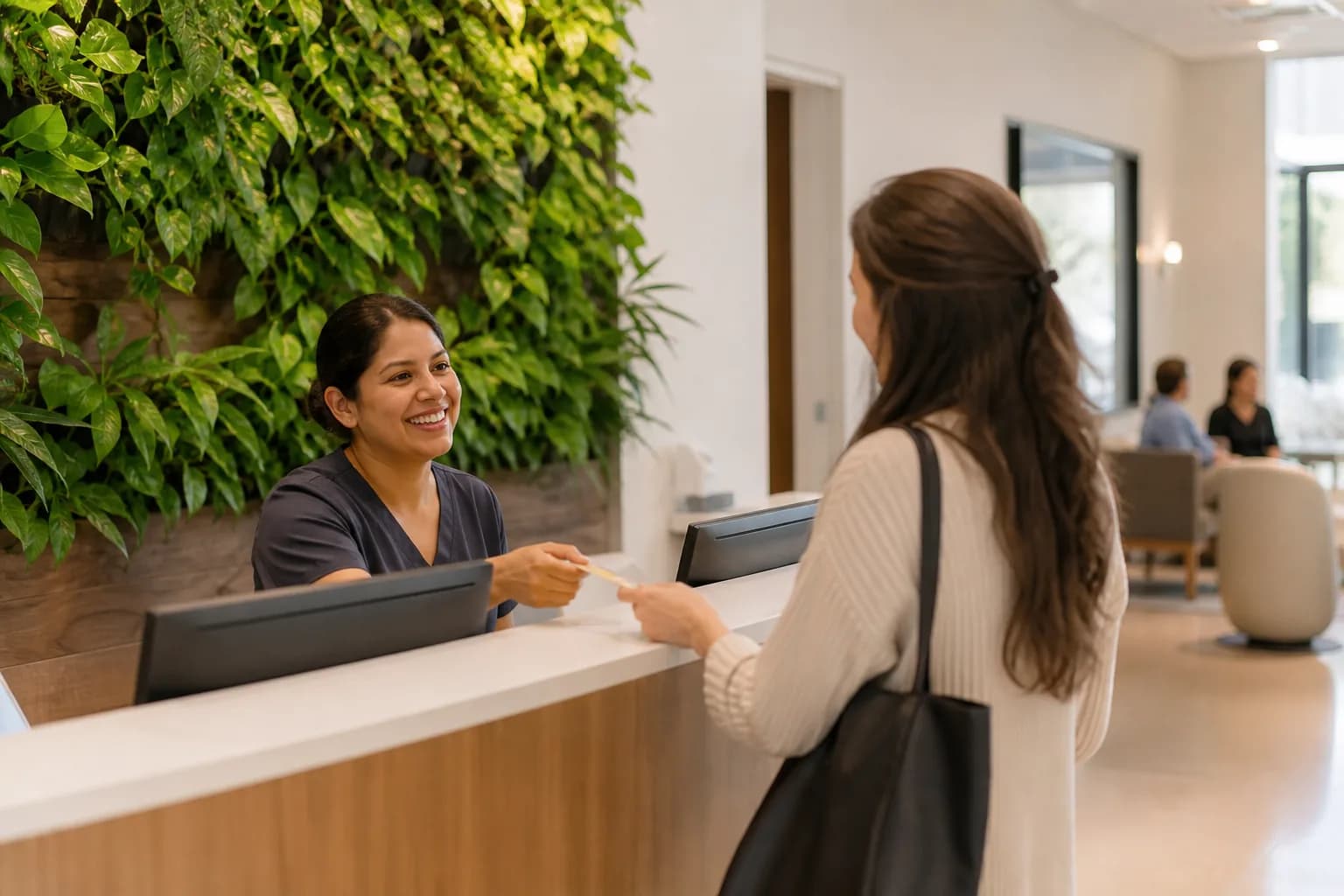
The most effective way to speed up a counter is to stop doing work at it. Anything that can be captured before the patient arrives — demographics, contact details, insurance or scheme information, consent, uploaded documents — turns a four-minute registration into a thirty-second identity confirmation. For patients who booked online, this should be the default path rather than an option.
Pre-registration only works if the counter honours it. If a pre-registered patient arrives and the clerk re-keys everything because they do not trust the data, you have added a step rather than removed one. That trust is built by validating at capture: verifying the phone number, constraining the date-of-birth format, checking scheme numbers against a pattern. A platform such as HealUDoc can carry validated pre-registration data straight into the encounter, so the desk is confirming rather than transcribing.
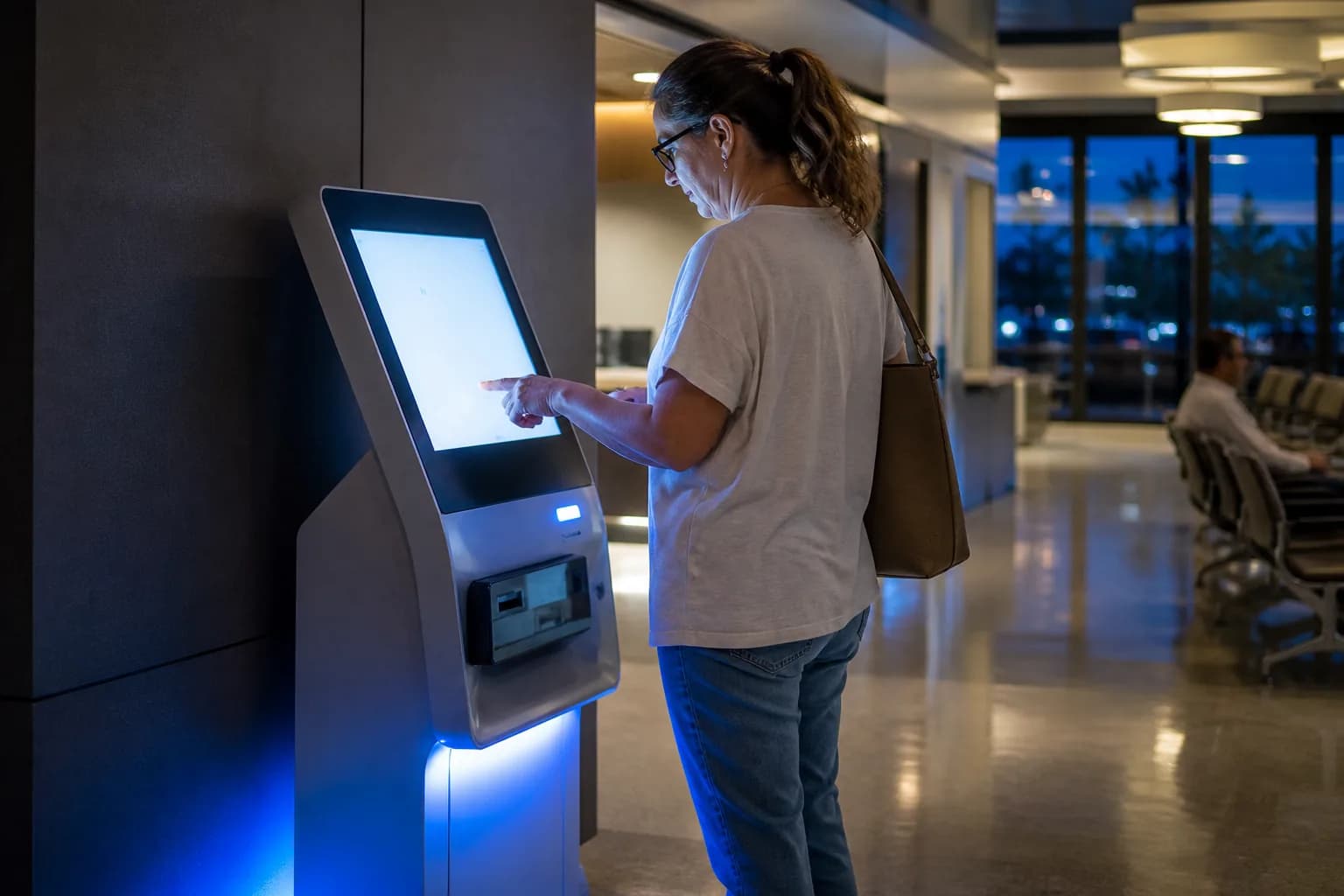
For walk-in-heavy hospitals, the equivalent is a self-service capture point in the lobby — a kiosk or a tablet with an assistant — where a patient completes their details while queueing, and reaches the counter with a reference. This is not about replacing staff; it is about moving data entry out of the serial bottleneck and into parallel time that is currently spent standing in a line.

Document capture and ABHA linkage at the desk
Document capture is where counter time disappears. An identity document, an insurance or scheme card, a referral letter, and previous records all need to be attached to the encounter, and the difference between a good and bad implementation is measured in minutes per patient. A document scanner at the counter with a one-touch capture into the patient record is a small capital cost against a large recurring time cost; photographing documents on a personal phone and emailing them, which still happens, is both slow and a data-protection problem.
ABHA linkage belongs at registration because that is the only moment when the patient, their identity documents, and a member of staff are reliably in the same place. Under ABDM, linking a patient's ABHA address to their hospital record is what makes their records portable and discoverable with consent, and doing it later means chasing patients who have no reason to respond. Build it into the registration script for new patients rather than treating it as a separate campaign.
The linkage should be quick or it will be skipped. If ABHA creation or linkage adds two minutes to every new registration during the morning rush, counter staff will find reasons not to do it, and the department's linkage rate will quietly sit near zero. Where the flow is slow, move it to a dedicated help desk beside the counter rather than making it a step in the critical path.
What the desk should capture once, correctly
- Verified mobile number, with consent for care communication recorded
- Identity document image attached to the patient record, not a local drive
- Scheme or insurance details validated against expected formats
- ABHA number or address linked for new patients
- Referral letter attached to the encounter, visible to the clinician
Staff to the arrival curve, not to the shift roster
Patients do not arrive uniformly. Most Indian OPDs have a pronounced early-morning peak, a lull, and a smaller afternoon rise, and the peak is often two to three times the daily mean arrival rate. Staffing counters equally across the session guarantees a long queue in the peak hour and idle counters later, which is the pattern almost every hospital exhibits and almost none plans for.
The data to fix this already exists in your token or registration timestamps. Plot arrivals by fifteen-minute interval across a few weeks, overlay the number of counters open, and the mismatch becomes obvious. The remedy is staggered shift starts, a flexible counter that opens only during the peak, or redeploying staff from a function that is quiet in the morning — not hiring, in most cases.
Separating queues by case type is the other half of the answer. A dedicated fast counter for returning patients with a card and no changes will clear a large fraction of the queue quickly, leaving the general counters free for the genuinely complex registrations. The gain here comes from removing the blocking effect of the slow cases, and it is usually larger than the gain from adding a counter.
“We had five counters open all day and a queue that only existed between eight and ten. Moving two staff to a staggered start fixed more than the year we spent asking for a sixth counter.”
Layout, signage and the queue that forms behind the counter
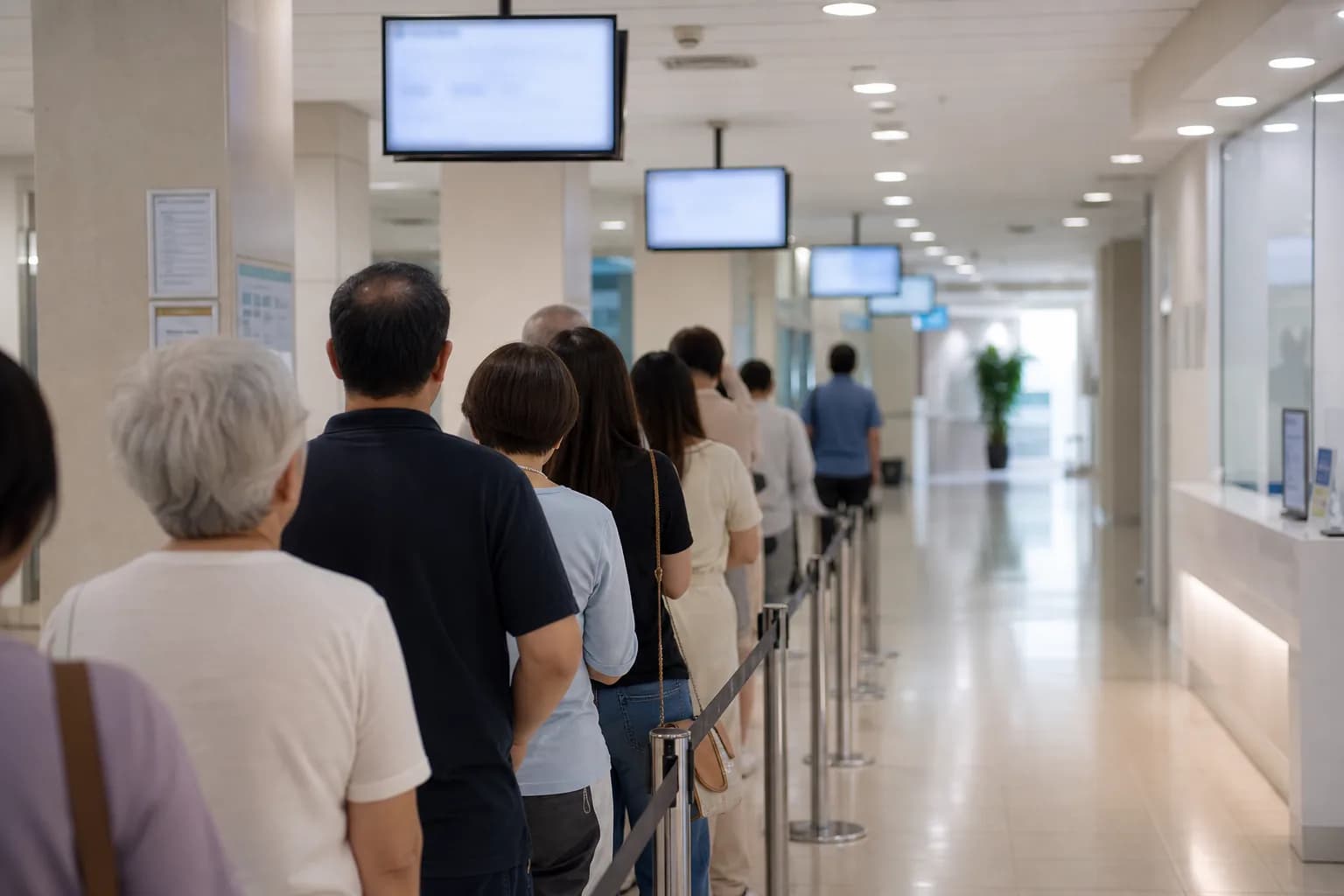
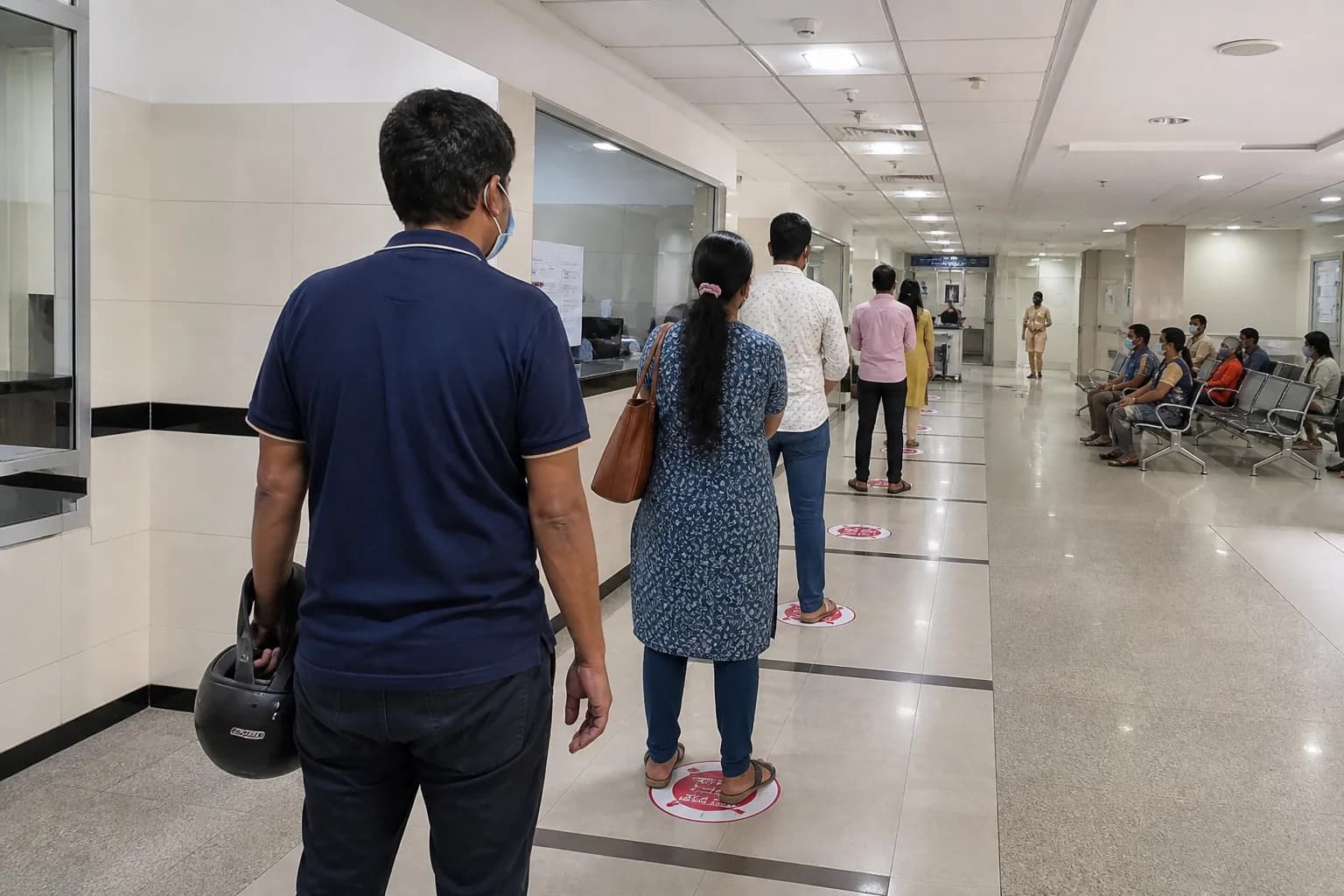
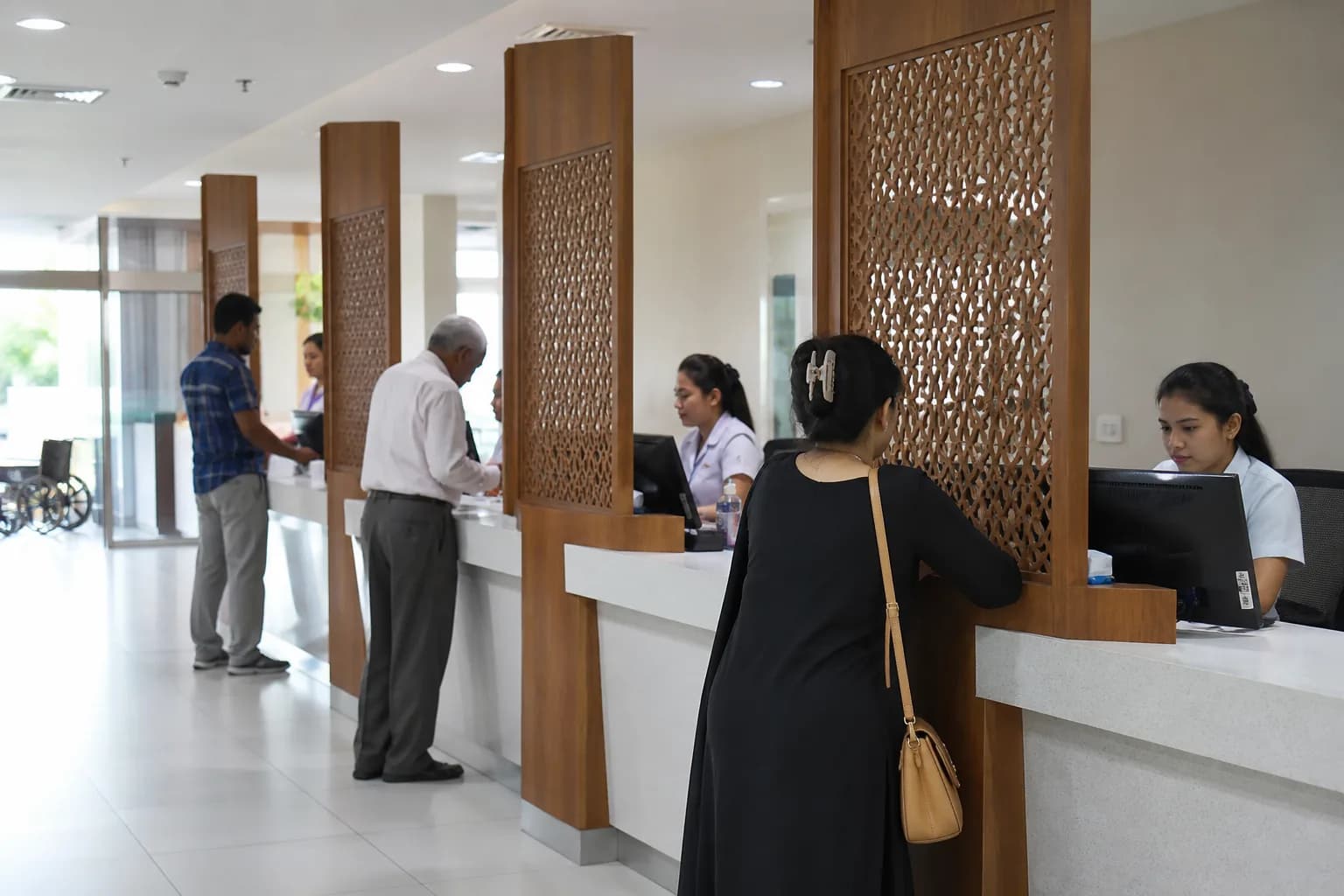
Physical design either supports the workflow or fights it. A single serpentine queue feeding multiple counters is measurably fairer and shorter than parallel queues per counter, because it prevents the one-slow-case-blocks-everything effect, but it requires the space and the barriers to be laid out for it. Parallel queues persist mostly because nobody has moved the furniture.
Signage should tell people what they need before they reach the counter, not after. The three questions patients ask a clerk most often — which counter, which documents, how much — can all be answered by a board, and every one answered in advance is time returned to the queue. In multilingual settings this is more valuable than any software change.
Watch where the queue actually forms rather than where it was designed to form. A queue that curls back across the corridor to the pharmacy entrance is creating a second problem in another department, and the fix may be as simple as reorienting the counter or relocating the token printer. These observations are free and rarely made, because managers see the waiting area at eleven o'clock rather than at eight.
Measuring the desk honestly
Three measures cover most of what matters: time from arrival to registration complete, service time per registration by case type, and the abandonment rate — patients who took a token and left without registering. The third is the one hospitals do not track and the one that best indicates a queue has crossed from frustrating into unacceptable.
Report the peak hour separately from the daily average, because the average will always look acceptable. A desk with a six-minute mean wait and a forty-minute wait between eight and nine has a problem that the mean actively conceals, and it is the forty minutes that patients describe when asked about the hospital.
Connect the desk data to the clinic data. If consultations consistently start fifteen minutes after the doctor arrives, check whether registration has produced anyone for them to see. A surprising proportion of clinic start-time problems are registration throughput problems, and they are solved at the counter rather than in the consulting room.