The real question behind ventilator and ICU device data documentation
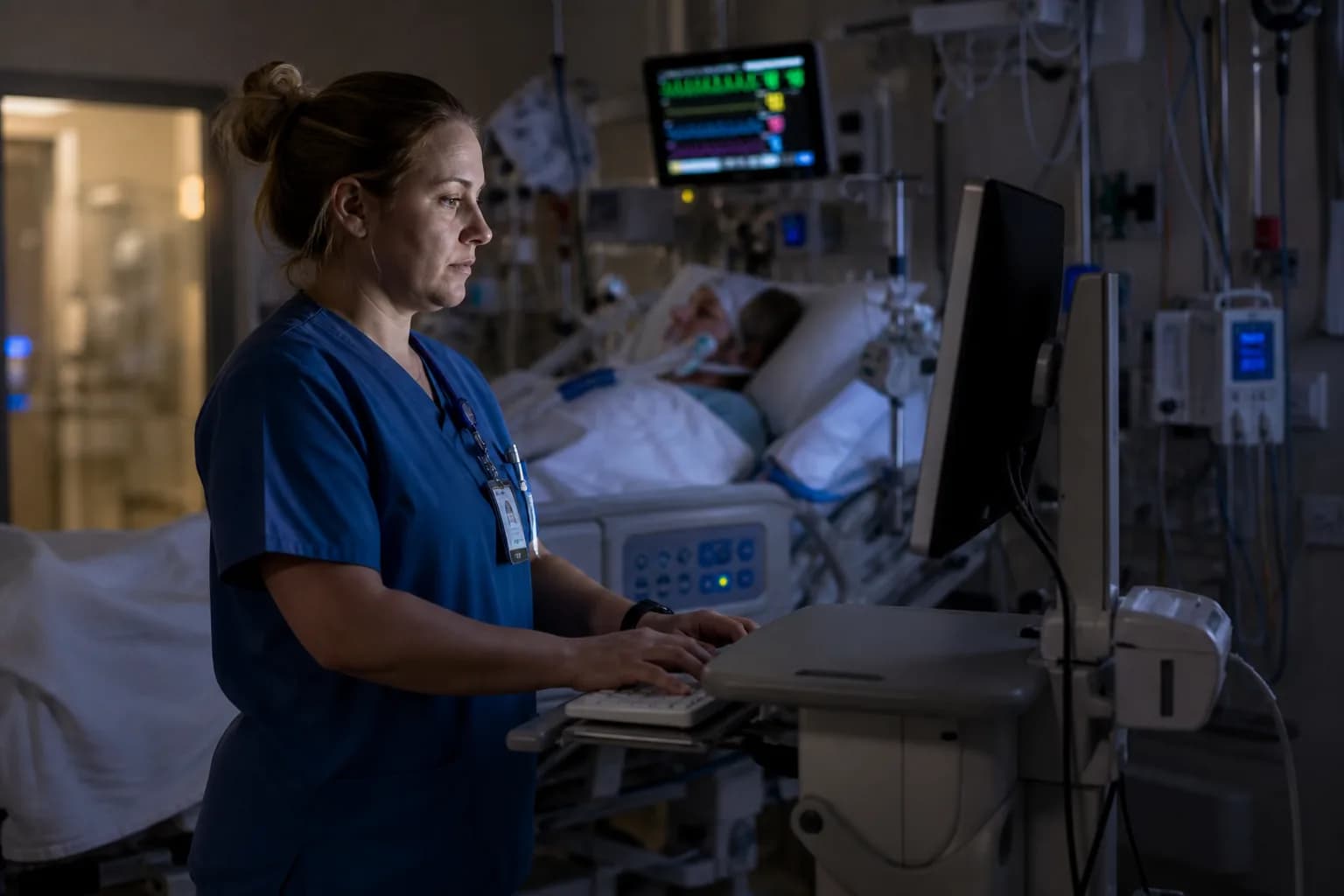
Ventilator and ICU device data documentation looks like a technology decision and is actually a decision about what the medical record is for. A ventilator generates a continuous stream of settings and measured parameters; a monitor generates more. The question is not whether you can capture all of it but which subset belongs in the legal record, at what interval, validated by whom — and hospitals that skip that question end up with either a thin manual chart or an unreadable firehose.
Both failure modes are common. Manual charting produces a record with genuine gaps, transcription errors and values rounded toward the expected, because a nurse charting hourly across four ventilated patients is reconstructing from memory more often than anyone admits. Full automated capture produces a record technically complete and clinically unusable, where the trend a physician needs is buried under thousands of rows nobody has curated. Neither serves the next clinician.
The workable answer is almost always a hybrid: automated acquisition of a defined parameter set at a defined interval, with clinician validation before entry into the permanent record, plus manual entry for the interpretive content no device produces. What follows is how to decide each of those parameters for your own unit rather than adopting a vendor's defaults unexamined.
Manual charting and device integration compared honestly
Manual charting's advantages are real and often undersold. It requires no interface project, works with any device the biomedical department owns regardless of age, imposes no ongoing integration maintenance, and forces a human being to look at the numbers — which is itself a clinical safety function. Its costs are equally real: nursing time, transcription error, and a systematic bias toward charting values at the time they were convenient rather than the time they occurred.
Device integration inverts the profile. It removes transcription error, timestamps accurately, captures at intervals no human could sustain, and frees nursing time for care. In exchange it introduces an interface that can fail silently, a dependency on device firmware and vendor cooperation, a real capital and maintenance cost, and — most importantly — the risk that data enters the record without anyone having looked at it. An integration project that does not budget for ongoing interface monitoring is an integration project that will eventually be quietly abandoned.
Costs scale differently, which matters for mid-size hospitals. Manual charting cost scales with bed count and acuity indefinitely; integration cost is heavily front-loaded and then scales gently. There is a crossover point, and where it falls depends on your bed count, nurse-to-patient ratio, device fleet homogeneity and how much you value the accuracy improvement. Work that arithmetic for your own unit rather than accepting a generic payback claim.
What to compare before choosing an approach
- Age and protocol support across your existing device fleet
- Nursing hours currently spent on transcription per shift
- Who is available to monitor interface health, and when
- Capital cost versus recurring integration maintenance
- Whether the vendor charges per device or per connection
- How the approach degrades during downtime
Validation before device data enters the permanent record
The single most important control in any integrated setup is that automatically acquired values are staged, not committed. Data arrives into a pending buffer, a clinician reviews it against the patient in front of them, and only accepted values become part of the record. This is not bureaucratic caution: devices report artefact routinely, and a disconnected line, a repositioned probe or a suctioning episode all generate readings that are numerically valid and clinically meaningless.
Design the validation screen so that accepting is fast and correcting is easy, because a review step that is slower than manual charting will be bypassed within a fortnight. Show the staged values in context with the previous accepted values so an outlier is visually obvious, allow the clinician to reject a value with a reason, and permit a manual override that is preserved alongside the original device reading rather than replacing it. The record should always be able to show both what the device said and what the clinician recorded.
Keep the provenance of every value permanently. Each entry should carry whether it was device-acquired, manually entered, or device-acquired-and-amended, along with the validating clinician and timestamp. Platforms such as HealUDoc can hold that provenance and the amendment history as part of the entry itself, so a reviewer months later can distinguish a number a machine produced from a number a person asserted — a distinction that cannot be reconstructed after the fact if it was not captured at the time.
Choosing charting intervals that match clinical reality
Interval selection is where most units default thoughtlessly to hourly and stop thinking. A stable patient on unchanged settings does not generate clinically meaningful new information every hour, while a patient in an active weaning trial or being proned generates it every few minutes. A fixed interval is therefore simultaneously too dense and too sparse, and the fix is to make the interval a function of patient state rather than a constant.
A common structure is a routine baseline interval, a denser interval during defined events, and event-triggered capture whenever a setting is changed. Every settings change should be captured as an event with the time, the previous value, the new value and who made it — that record answers far more retrospective questions than any amount of routine sampling. Document the interval policy formally so that a gap in the chart can be distinguished from a period when nothing was required.
Whatever intervals you choose, write down what the chart means when it is empty. An accreditation reviewer or a legal reader encountering a four-hour gap will ask whether the patient was unmonitored or whether the policy simply did not require an entry. A stated policy converts an apparent omission into a documented decision, which is the difference between a finding and a footnote.
Documenting weaning as a clinical narrative, not a settings log
Weaning is the part of ventilator documentation that automation cannot supply, because the record that matters is the reasoning. A settings log shows what changed; it does not show why the trial was started, what was observed, why it was stopped, and what the plan is. That interpretive layer has to be written by a clinician, and it is the layer the next shift actually reads.
Structure the weaning record around decision points rather than parameters. Each entry should capture that a trial was considered, the basis for proceeding or deferring, the time it started and ended, the clinical observation during it, the outcome decision, and the plan for the next attempt. Whether a patient met the criteria your unit has adopted is a clinical judgement recorded by the clinician — your system's job is to make sure that judgement is captured with its timestamp and author, not to make the judgement.
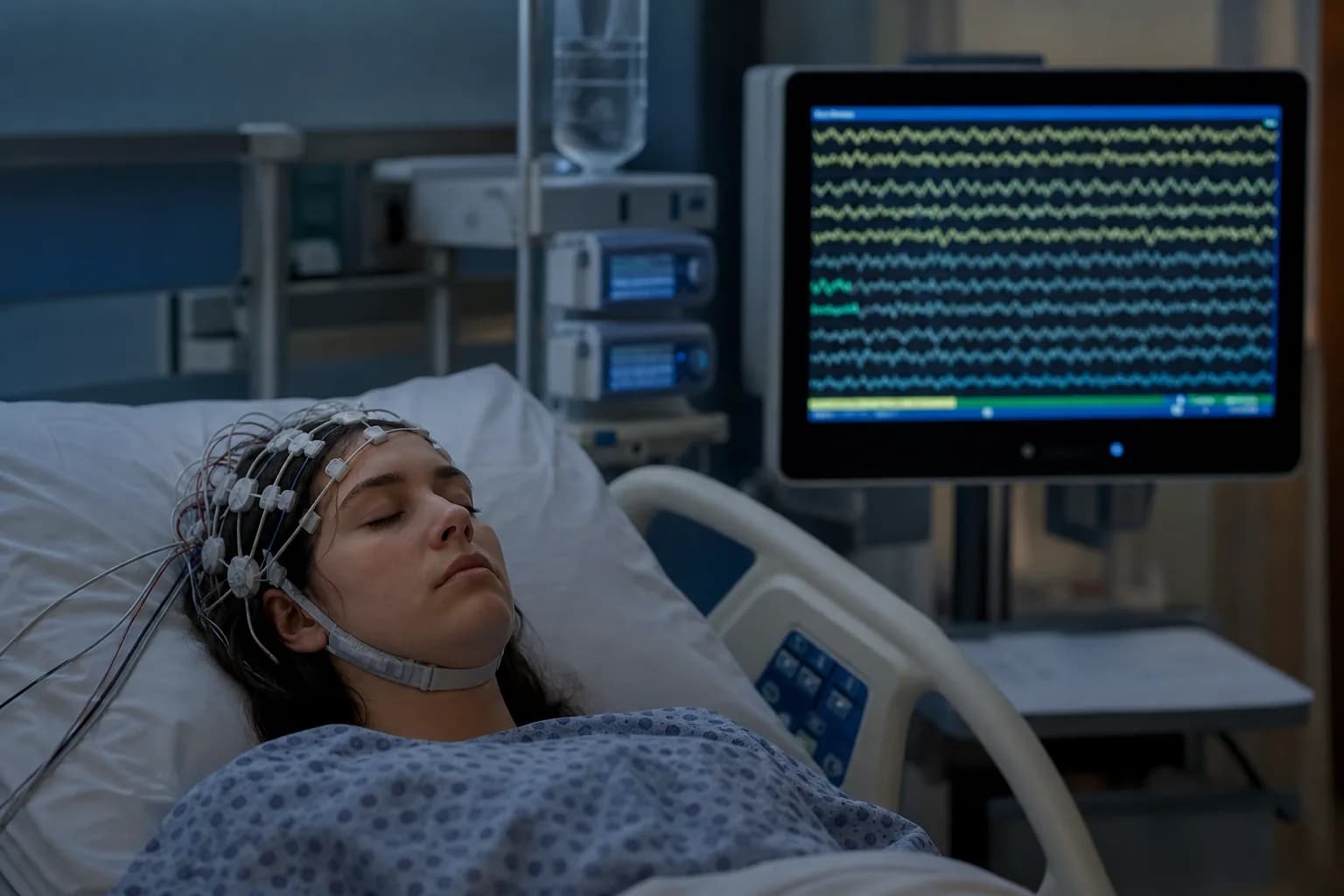
Link the narrative to the device data rather than duplicating it. If the weaning note can reference the time window and the reader can expand the underlying parameter trace, the clinician does not need to transcribe numbers into prose. HealUDoc can hold the structured device record and the clinical narrative against the same encounter timeline so the reasoning and the data are read together rather than reconciled from two places.
“Our automated feed told us exactly what the ventilator did for six days. It could not tell us why we stopped the trial on day three — and that was the only question the review actually asked.”
Data volume, retention and what you keep forever
Continuous acquisition produces volumes that surprise finance teams the second year, not the first. A single ventilated bed sampling multiple parameters at short intervals generates a large number of rows per day, and multiplying that by bed count and by years of retention produces a storage and query-performance problem that nobody scoped at project start. Model the volume before signing, using your actual bed count and intended interval, not the vendor's example.
The usual resolution is tiered retention: keep the validated, charted record at full fidelity for the full medical-record retention period, and keep the high-resolution raw waveform or high-frequency data for a much shorter window. Define the tiers as policy, with the clinical, legal and information-governance stakeholders all signing off, and make sure the tiering is documented in the same place as your broader medical records retention schedule rather than buried in a technical configuration.
Retention decisions also carry data-protection weight. Under the DPDP Act 2023 framework, personal data should not be retained beyond the purpose it was collected for, and a defensible retention schedule is easier to justify than an accumulation habit. Equally, records that may be needed for a medico-legal case or an ongoing clinical review must not be purged on a schedule that ignores litigation hold. Write both rules down and make sure whoever operates the purge job can see them.

Retention questions to answer in policy
- Which parameters form part of the permanent legal record
- How long high-frequency raw data is kept before summarisation
- How a litigation or medico-legal hold suspends the purge
- Who authorises deletion, and what evidence of deletion is kept
- How retention interacts with your DPDP retention schedule