What pre-arrival notification is actually buying you
Pre-arrival notification from ambulance to emergency department buys time that cannot be recovered any other way. A department that learns about a critically ill patient when the trolley comes through the door starts from zero: finding a bay, finding a team, finding equipment. A department that received a structured pre-alert eight minutes earlier has done all of that already, and the patient's assessment begins on arrival rather than after the scramble.
The value is entirely in what happens at the receiving end. A pre-alert that is taken by whoever answers the phone, written on a scrap of paper and not acted upon has bought nothing at all, and this is the most common way pre-alert systems fail. Design the receiving-end response first — acknowledgement, activation, preparation — and only then worry about the transmission format.
The other benefit is directional. A structured pre-alert lets the receiving hospital say that it cannot take this patient, or that a different facility is more appropriate, before the ambulance arrives at a door where the answer is much harder to give. That conversation is far better held at eight minutes out than at zero, and a pre-alert system that has no mechanism for a diversion response is only doing half its job.
What the crew should transmit, and in what order
The pre-alert should be short, structured and in a fixed order, because it is received by someone who is writing it down while doing something else. A widely used shape covers the crew and vehicle identity, patient age and sex, the presenting problem or mechanism, key observations, treatment given so far, and the estimated time of arrival — with any special requirement stated explicitly at the end. Fixed order matters more than the specific mnemonic your service adopts: the receiver's form should mirror it field for field.
The estimated time of arrival is the field the receiving end plans around and the one most often given loosely. A number in minutes, given as a number rather than a range, is what allows a department to decide whether to call the team now or in three minutes. Where the estimate changes materially en route, an update is worth the second call — a team assembled for a patient who arrives eleven minutes later than announced is a team that will respond more slowly to the next pre-alert.
Special requirements deserve their own explicit slot rather than being left to the narrative. Isolation needs, a bariatric patient, a patient in police custody, a paediatric patient requiring specific equipment, an anticipated need for the resuscitation room, a language requirement, or a known bleeding risk each trigger different preparation, and each is routinely omitted when the format has nowhere obvious to put it.

Fields a pre-alert should always carry
- Calling service, vehicle identifier and callback number
- Patient age and sex
- Presenting problem or mechanism of injury
- Key observations at the time of the call
- Treatment given before and during transport
- Estimated time of arrival in minutes, and any special requirement
Acknowledgement and team activation at the receiving end
The pre-alert must be received by a defined role, not by the nearest available handset. A department where the pre-alert line is answered by whoever is closest will lose alerts during exactly the periods it is busiest. Name the role — commonly the nurse in charge or a designated triage coordinator — give it a dedicated line or handset that is carried, and define who takes it when that role is unavailable.
Acknowledgement should confirm receipt, read back the critical elements, and state what the department is doing in response. Read-back is not a formality; it is the only mechanism that catches a misheard age, mechanism or time of arrival, and those are precisely the errors that cause a team to prepare for the wrong patient. The acknowledgement should also state clearly whether the receiving facility can accept the patient.
Activation should follow directly from the alert content through pre-agreed criteria rather than through a fresh judgement each time. If the pre-alert describes a category that triggers a trauma team or a specific pathway, the activation happens on the alert, not on arrival — the entire point is to be ready before the patient is there. Where the criteria are met and the team is activated, log the activation time automatically, because that timestamp is what makes the whole process measurable later.
Bay and resource readiness before the doors open
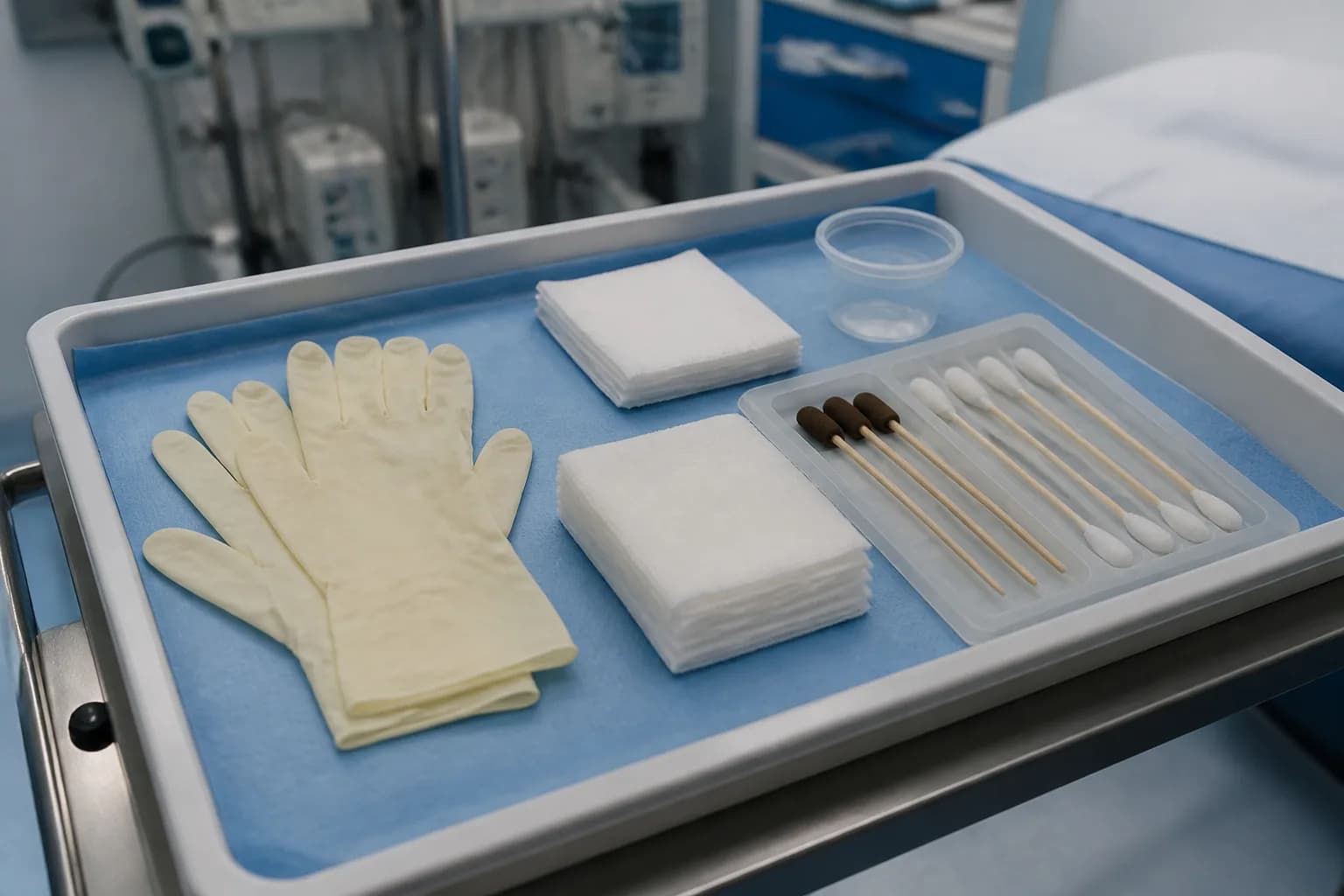
The preparation window is short and works best as a role-assigned checklist rather than a general instruction to get ready. Someone clears and prepares the bay, someone checks and positions equipment, someone assembles the team and assigns roles, someone prepares the record and identifiers, and someone alerts the downstream services likely to be needed. Assigning these as named positions on the pre-alert response card removes the negotiation and the duplication.
Downstream alerting is the element most often forgotten and most costly when omitted. Laboratory, blood bank, imaging, theatres and critical care each need lead time of their own, and a pre-alert that stops at the emergency department door simply moves the bottleneck. Where blood may be needed urgently, an early heads-up to the blood bank is often the single highest-value call made in the preparation window.
Prepare the record as well as the room. Registration for an unidentified or critically ill patient should be possible as a provisional record created before arrival, so that orders, results and administrations can be recorded against an identifier from the first minute and merged into the permanent record once identity is established. HealUDoc supports provisional registration with a later merge that preserves the full activity trail, which prevents the common pattern of the first fifteen minutes of care being documented on paper and transcribed afterwards.
Handover structure at the door
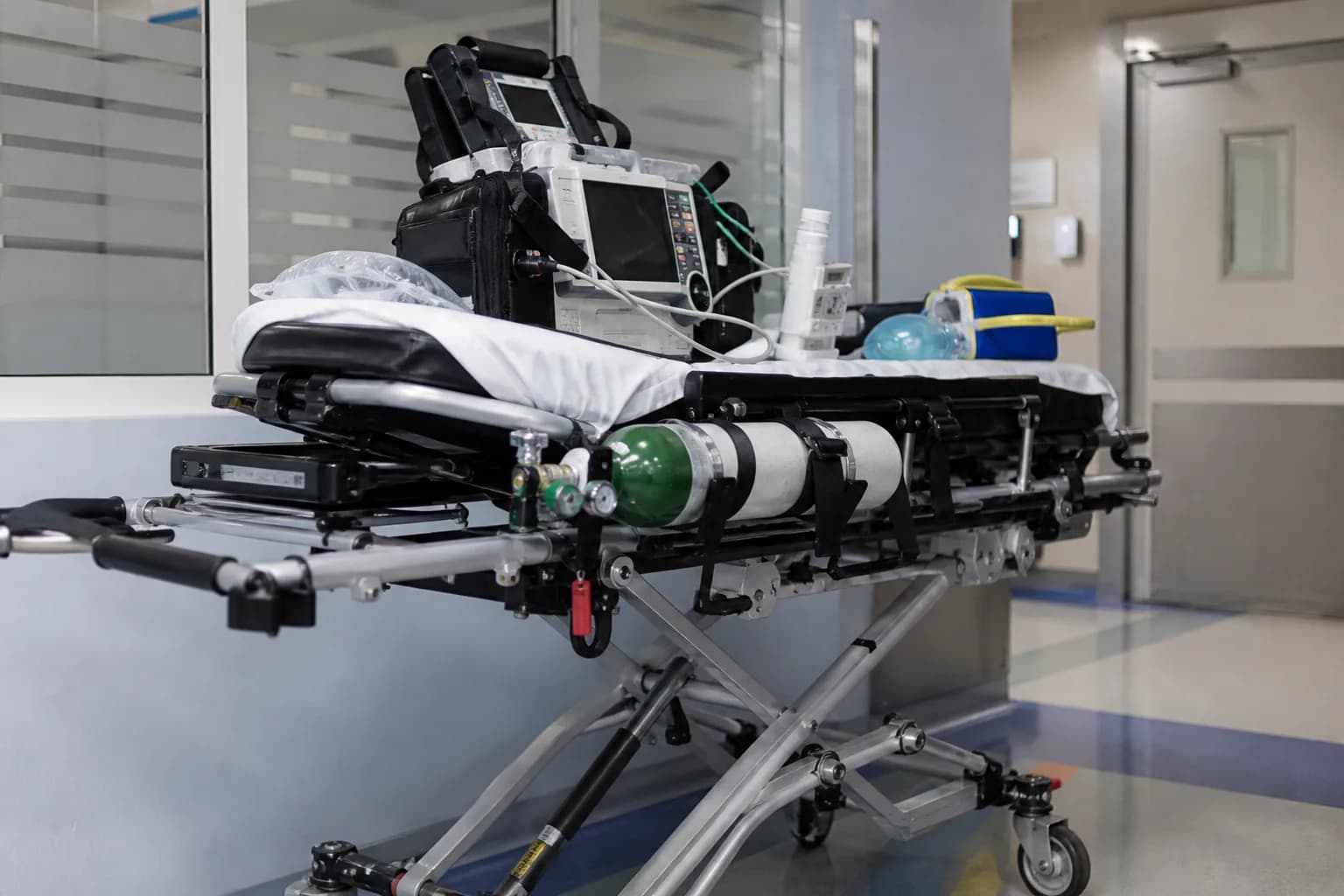
Handover at the door fails in a specific and repeatable way: the receiving team begins assessing the patient while the crew is still speaking, and the information the crew alone possesses — the scene, the mechanism, the timings, what was given and when — is lost permanently. The fix is a brief, deliberate pause on arrival in which the crew delivers a structured handover to a team that is listening rather than working.
Ten to thirty seconds of silence is usually sufficient and needs to be actively enforced by the team leader, since the instinct to start work is strong and well-intentioned. Some departments use an explicit call for silence on arrival; others require the leader to acknowledge the handover before the team begins. Whichever convention you adopt, it needs leadership backing, because it will otherwise erode within weeks.
The handover should conclude with an explicit transfer of responsibility, verbalised and understood by both sides, and the crew should leave a written or electronic record rather than relying on what was said. The prehospital record is a clinical document with its own value, and it must reach the patient's file rather than the department's out-tray. Where the ambulance record is electronic and can be attached to the hospital encounter, that is worth the integration effort — the alternative is a paper form that goes missing at exactly the rate you would expect.
“The hardest change was persuading a room full of people to stand still for twenty seconds. Once it stuck, we stopped having the argument about what time the last dose was given, because someone had actually heard the answer.”
Measuring pre-alert accuracy and acting on the gaps
The two measures that matter are coverage and accuracy. Coverage asks what proportion of patients who met the pre-alert criteria actually arrived with a pre-alert; it requires retrospectively identifying qualifying arrivals and matching them against the pre-alert log, which is tedious by hand and much easier where the log and the encounter record sit in one system — HealUDoc can match logged pre-alerts against emergency arrivals so the alerts that never came become visible rather than invisible. Accuracy asks how closely the pre-alert content matched what arrived — particularly the estimated time of arrival and the acuity.
Estimated time of arrival accuracy is worth tracking specifically, as the difference between the announced and actual arrival times. Systematic error in either direction damages the system: consistently early alerts leave teams standing idle and they stop assembling promptly, while consistently late ones mean the preparation window never materialises. A systematic bias is usually correctable with feedback to the transporting service, and is invisible without measurement.
Feed the results back to the ambulance services rather than keeping them internal, and make the exchange bidirectional by telling crews what happened to the patients they brought. Outcome feedback is the strongest driver of pre-alert quality available, costs almost nothing, and is the single most reliably neglected part of the whole process. A quarterly joint review with the services that bring you most of your patients will do more for your pre-alert coverage than any change to the form.
Metrics worth tracking for a pre-alert programme
- Pre-alert coverage among qualifying arrivals
- Difference between estimated and actual arrival time
- Acuity concordance between alert and arrival assessment
- Proportion of alerts acknowledged with a read-back
- Team assembled before arrival, as a proportion of activations