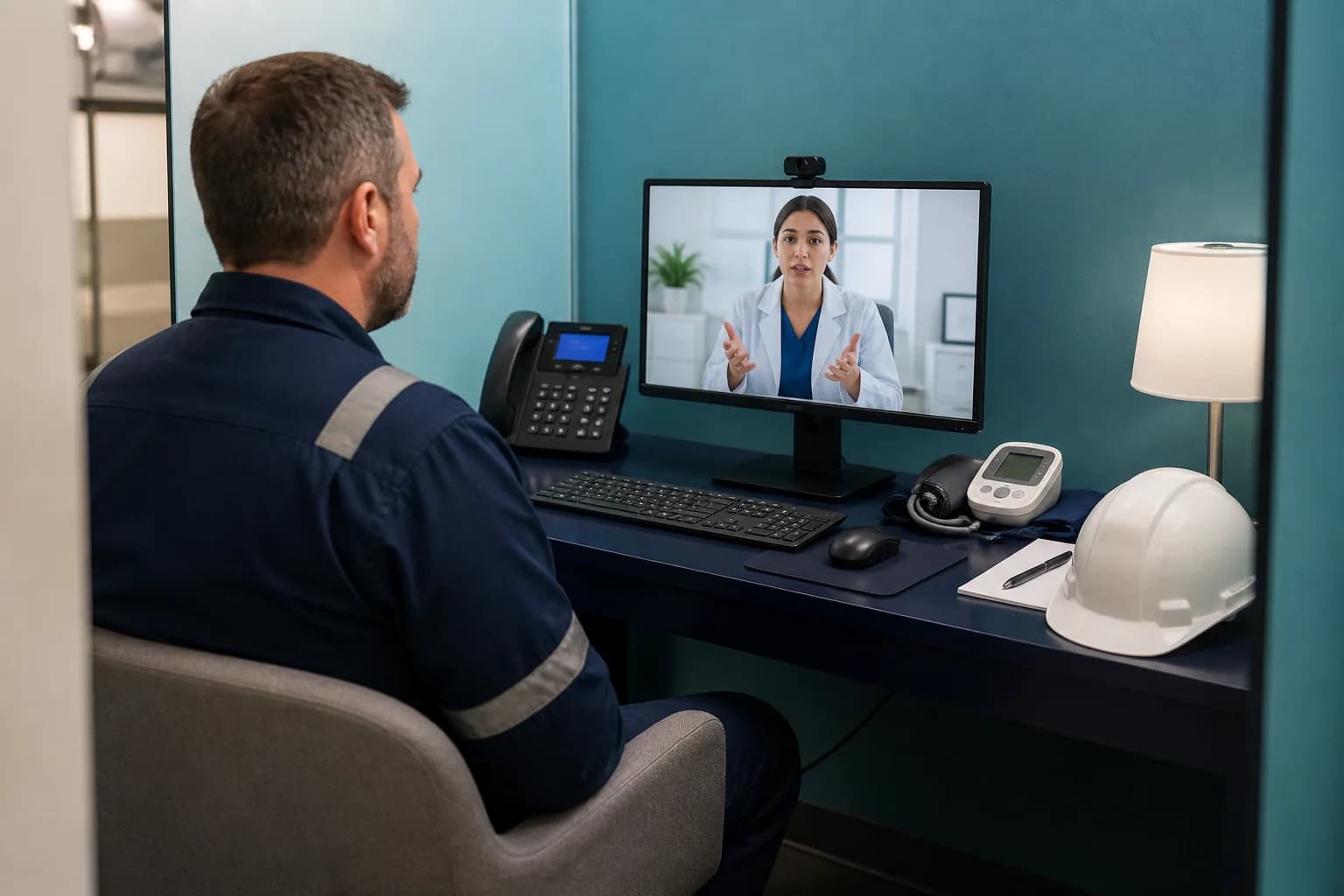
The ingestion layer, described plainly
Between a blood pressure cuff on a patient's arm and a number a doctor trusts in the record, there are five distinct steps, and each one fails differently. The device takes a measurement. Something moves that measurement off the device. Something normalises it into a clinical observation with units, a time, and a subject. Something stores it against the correct patient. And something decides whether a human needs to look at it now. Most remote monitoring projects budget for the first step and improvise the other four.
The reason this matters is that the value of remote monitoring lives entirely in step five. A programme that collects fifty thousand readings a month and generates no clinical action is an expensive data collection exercise. Conversely, a modest programme that reliably surfaces two hundred readings that changed a decision is doing the job. Design the ingestion layer as the plumbing to a decision, not as a data pipeline that happens to end in a database.
This is also why the ingestion layer needs a clinical owner and not only a technical one. Someone has to answer what a reading means, what makes it actionable, and what happens when it is missing. Left purely to IT, the layer will be built to move data correctly and will be silent on every question that determines whether it is safe.
The five steps, and how each one typically fails
- Measurement: wrong cuff size, wrong posture, wrong person on the device
- Transfer: pairing lost, app closed, phone updated, gateway unplugged
- Normalisation: units mismatched, device clock drifted, no context recorded
- Storage: reading attached to the wrong patient or to no episode
- Decision: reading stored correctly and read by nobody
Getting data off the device: BLE, gateways and manual entry
Most consumer and clinical home devices in the Indian market speak Bluetooth Low Energy, and where they implement the standard health profiles the integration is straightforward. Where they use a proprietary profile, you are dependent on the manufacturer's software development kit and effectively locked to that vendor for that measurement. Ask which it is during procurement, in writing, because it determines whether replacing a device model later is a purchase decision or a development project.
The pairing chain is the fragile part. A device paired to a patient's own phone through an app depends on that app staying installed, permitted, and running in the background across operating system updates, which is a lot to ask of an eighty-year-old patient's handset. A dedicated cellular gateway in the home is more expensive and dramatically more reliable, and for elderly or low-digital-literacy cohorts it is usually the correct choice despite the cost.
Keep a manual entry path and stop treating it as a failure. A family member reading a number off a display and typing it into a form produces genuinely useful clinical data, and refusing that path in pursuit of automation loses more information than the automation gains. Flag the reading as manually entered so that clinicians can weigh it appropriately, and measure the proportion, because a rising manual share is an early signal that your device chain is breaking.

Normalising a reading into something clinical
A number without context is not an observation. What arrives from a device has to be enriched into a record entry with the measurement type coded consistently, the units explicit, the time of measurement rather than the time of receipt, the device identity, and the subject. Aligning to a standard structure, most naturally a coded observation in the FHIR R4 form the national implementation guidance already points hospitals towards, saves you from inventing a private schema that nothing else can read.
Two provenance details cause disproportionate trouble. Device clocks drift and some devices report the time they synced rather than the time they measured, which will silently reorder a series and make a morning reading look like an evening one. And the time zone handling in cheap device firmware is inconsistent enough that you should normalise on receipt with an explicit rule rather than trusting what arrives. Store both the reported measurement time and the receipt time so a discrepancy is visible instead of invisible.
Subject attribution is the safety issue. A home blood pressure monitor is used by whoever is in the house, and a spouse's reading arriving on the patient's record is a real and frequent event, not a theoretical one. Where the device supports multiple user slots, use them and train on them. Where it does not, expect contamination, and make sure the clinical team knows that an isolated wildly discordant reading is more likely to be the wrong person than a crisis.
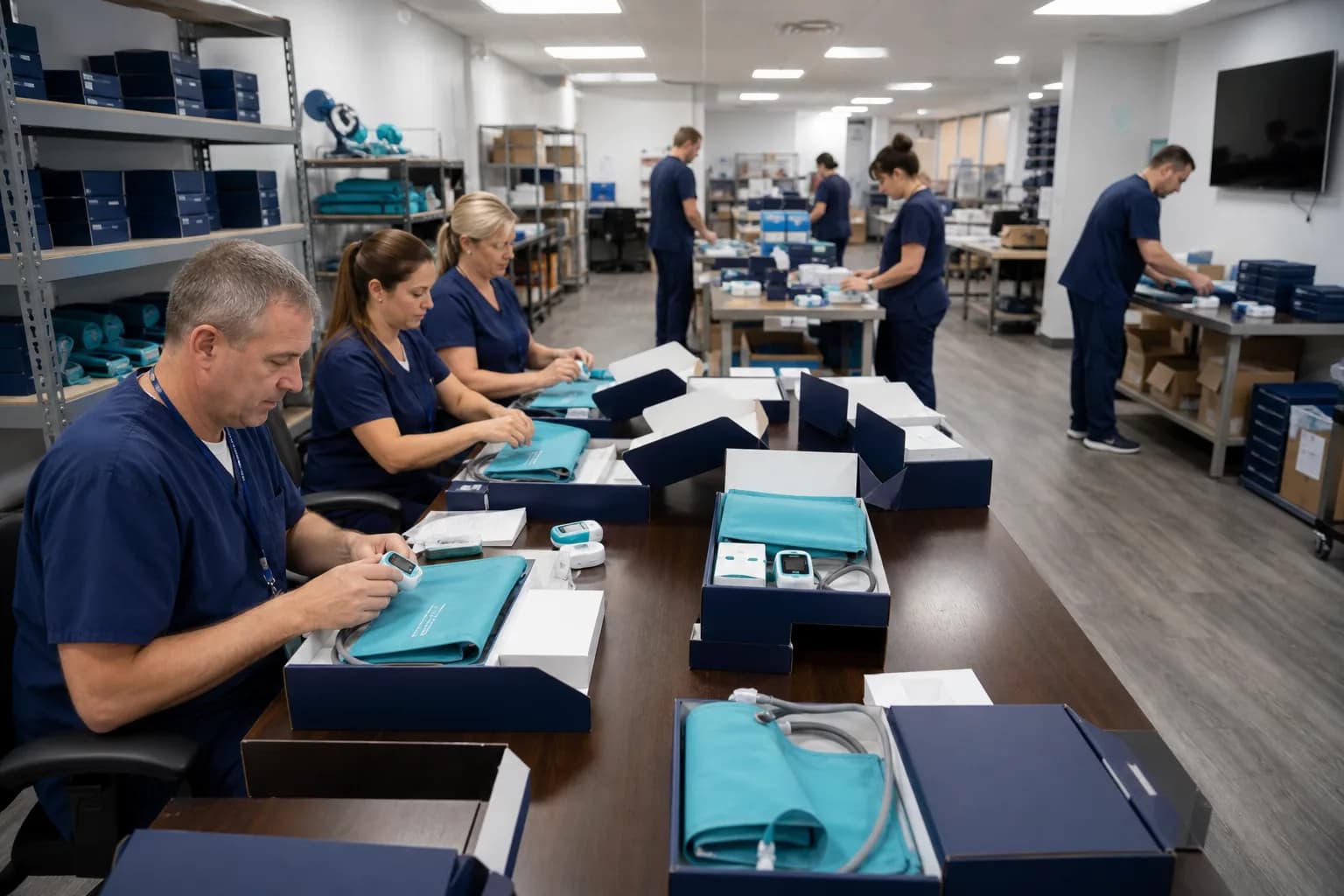
Setting thresholds that do not drown the team
Fixed population thresholds are the default and they are the reason most remote monitoring programmes end up ignored. A single systolic cut-off applied across every hypertensive patient will fire constantly for the patients whose baseline sits near it and never for the patient whose pressure has fallen by forty points but remains inside the band. The threshold has to be set per patient, at enrolment, by the clinician who knows the case, with the population value as a starting suggestion rather than a rule.
Trend rules catch what absolute rules miss. A sustained drift over several days, a fixed change from the patient's own baseline, or a pattern of missing transmissions are all clinically meaningful and none of them trip an absolute threshold. They also generate far fewer alerts per patient, which is the property you need most. The trade-off is that trend rules require enough history to be stable, so run absolute rules alone for the first fortnight of an episode.
Then tier the output. Not every deviation needs a call. A workable structure is three tiers: something that goes into a routine review queue for the next working day, something that requires contact within a stated number of hours, and something that requires immediate action. Each tier needs a defined recipient and a defined response, and the top tier should be rare enough that when it fires, everyone believes it.
Alert design rules worth adopting from the start
- Per-patient thresholds set by a clinician at enrolment, not population defaults
- Trend and rate-of-change rules alongside absolute cut-offs
- Missing data treated as its own alert condition, not as silence
- Three severity tiers, each with a named recipient and a stated response time
- A monthly review that retires or retunes any rule generating no clinical action
Who answers the alert at two in the morning
This is the question that decides whether the programme is safe, and it is the one most business cases leave blank. If your service tells patients they are being monitored, you have made a promise, and the promise is meaningless unless a specific named person sees the alert and acts within a stated time at every hour of every day, including festival weekends. Deciding this is a staffing and cost decision, not a technology one, and it should be settled before a single device goes out.
The honest alternative is to scope the promise down and say so clearly. A programme that reviews readings during working hours only is legitimate and useful, provided the patient is told plainly, in writing and verbally, that this is not an emergency service and what to do instead. Many good Indian programmes run exactly this way. What is not defensible is implying continuous surveillance while operating a nine-to-five review queue.
Whatever you choose, close the loop in the record. Every alert should end in a documented disposition: reviewed and no action, patient contacted, clinician escalated, or emergency advised. Unclosed alerts accumulate, and a queue of two thousand unreviewed alerts is not just an operational failure, it is a documented record that your team knew about readings it never acted on. That is worse than not having collected them.
What the on-call arrangement must specify in writing
- Named role covering each hour, including nights, weekends and holidays
- Maximum acknowledgement time per alert tier, and what happens if it lapses
- Automatic escalation to a second person when the first does not respond
- The exact wording patients are given about coverage hours and emergencies
- Mandatory disposition on every alert so nothing closes silently
Device quality, regulation and calibration
Not every device that produces a number is a medical device, and the distinction has consequences. Under the Medical Devices Rules 2017 the regulatory framework administered by CDSCO now brings devices into a risk-based classification with licensing and registration obligations, and a hospital procuring monitoring equipment should confirm the regulatory status of what it is buying rather than assuming. A consumer wearable marketed for wellness is not automatically an instrument you should treat clinically.
Validation is a separate question from regulation. For blood pressure devices in particular, whether a specific model has been validated against a recognised protocol is a real clinical concern, and the answer differs between models from the same manufacturer. Standardise on a small number of validated models per measurement type, and resist the pressure to accept whatever device the patient already owns, which is how a monitoring programme ends up with data of unknown quality.
Then keep them calibrated. Devices that live in patients' homes for months get dropped, left in heat, and used with the wrong cuff. Build a return-and-check cycle into the episode, replace rather than repair where the cost difference is small, and keep a device register with model, serial, issue date, and last check. This is ordinary biomedical equipment discipline applied to equipment that happens not to be in the building.
Measuring whether the alerting works
Three numbers tell you nearly everything. The proportion of enrolled patients still transmitting at a given point in the episode, which measures whether your device and support chain works. Alerts per patient per week, which measures whether your thresholds are tuned. And the proportion of alerts that ended in a documented clinical action, which measures whether any of it matters. Track all three from launch, by cohort, and put them in front of the clinical governance meeting monthly.
The failure signature is easy to recognise once you look for it. Alerts per patient rising while action rate falls means the team has started dismissing alerts, and the remedy is threshold tuning, not a reminder to be more attentive. Alert fatigue in remote monitoring behaves the same way as it does in in-hospital decision support, but with a thinner team and a slower feedback loop, so it sets in faster and is noticed later.
Retune rather than expand. The instinct when a programme is underperforming is to add measurements, add patients, or add rules, and all three make the underlying problem worse. A monitoring service with three well-tuned rules that the team trusts is more clinically valuable than one with thirty that they scroll past. Retire any rule that has generated no clinical action in a quarter, and record that you retired it and why.
“We were producing about four hundred alerts a week and closing maybe sixty. When we set thresholds per patient instead of one number for everybody, alerts fell by two thirds and the ones that came through actually got answered.”