When a hospital overbooking strategy is defensible
A hospital overbooking strategy is defensible when four conditions hold together: the clinic has a measured, stable no-show rate; the consultation length is short and low-variance; the physical waiting space can absorb an extra patient without becoming unsafe; and the consequence of a patient waiting longer is inconvenience rather than clinical harm. Remove any one of those and overbooking stops being capacity recovery and starts being a transfer of the hospital's risk onto the patients who did turn up. Most clinics that overbook have never checked all four.
The underlying logic is sound in the narrow case. If a follow-up clinic reliably sees a fifth of booked patients not attend, running exactly at capacity means the consultant spends part of every session idle while patients wait weeks for an appointment. Adding a small, capped number of extra bookings recovers that time. The failure is almost never in the arithmetic; it is in applying an average rate to a session where it does not hold.
It is worth being honest about the incentive. Overbooking is often introduced not because a clinic analysed its no-show distribution but because a waiting list got long and someone needed the number to come down. That is a capacity problem being managed with a scheduling trick, and it will surface as longer waits, rushed consultations, and staff attrition rather than as an improvement.

The only defensible basis is segmented no-show data
A hospital-wide no-show rate is useless for overbooking decisions because the variation between clinics is enormous and the variation within a clinic is worse. Non-attendance concentrates: first appointments after a long wait, patients travelling a long distance, early-morning slots, the first clinic after a public holiday, and specific referral sources will each behave differently. Applying a single average is what causes a clinic to be simultaneously over-full and under-utilised on different days.
The segmentation that actually predicts is usually mundane: appointment type, lead time between booking and appointment, whether the patient has attended before, the day and time of the slot, and whether a reminder was delivered. These are all fields you already hold. Building a view of no-show rate across those dimensions, per clinic, is a reporting exercise rather than a data-science project, and it will immediately show which sessions have room and which do not.
Stability matters as much as level. A clinic with a consistent no-show rate across the last several months is a candidate for overbooking; one whose rate swings widely month to month is not, because you cannot set a cap against a number that moves. Before overbooking anywhere, plot the rate over time and look at the variance, not just the mean.
Dimensions to segment no-show rate by before setting any cap
- Appointment type: new, follow-up, procedure, report review
- Booking lead time, in bands rather than as a continuous value
- Prior attendance history for the patient
- Slot position: first hour, mid-session, last hour
- Day of week, and proximity to holidays
- Whether a reminder was delivered and acknowledged
Caps, placement and the shape of the session
Where an overbooked patient is placed in the session matters more than how many you add. Placing extras early gives the clinic the whole session to recover if everyone attends; placing them late means any full attendance pushes the overrun past the end of the session, into the consultant's next commitment. The counter-intuitive corollary is that overbooking the last hour — which is what most systems do by default, because it is where free capacity appears — is the worst possible placement.
Caps should be expressed as an absolute number per session, not a percentage, because percentages scale badly on the sessions where it matters. A clinic with a large session absorbs an extra patient invisibly; a small specialist session of eight patients does not, and a percentage-based rule will add proportionally more to the session with the least slack. An explicit cap, agreed with the clinician, is also something a coordinator can defend when asked to squeeze in one more.
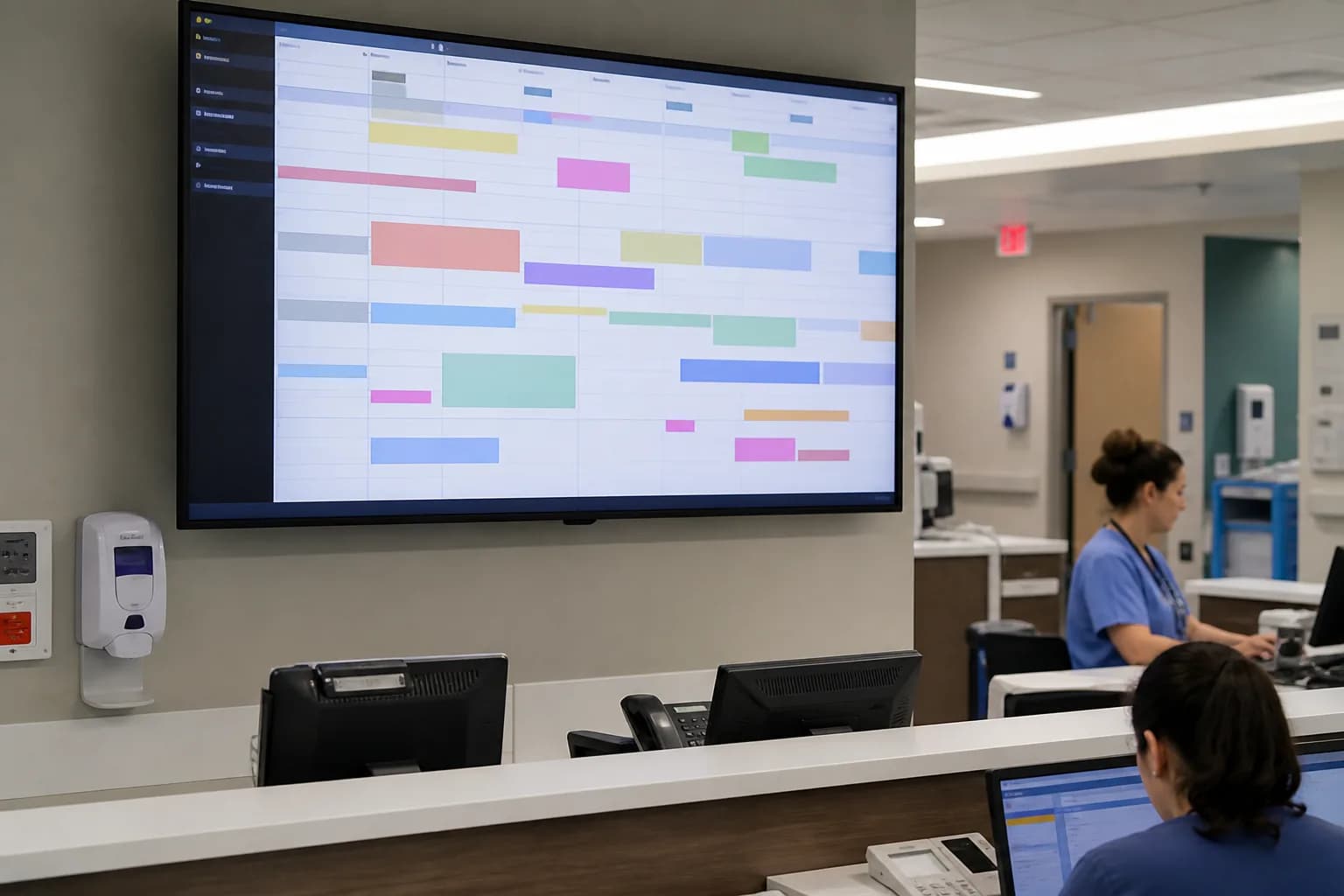
Whoever holds the cap must be able to see the real-time state of the session. A cap enforced at booking but ignored at the front desk is not a cap; the extras arrive through walk-in and courtesy insertions instead. HealUDoc dashboards can show configured capacity, booked count, and inserted count for a live session, which makes the difference between the plan and the reality visible while the session is still running.
Someone always pays the patient-experience cost
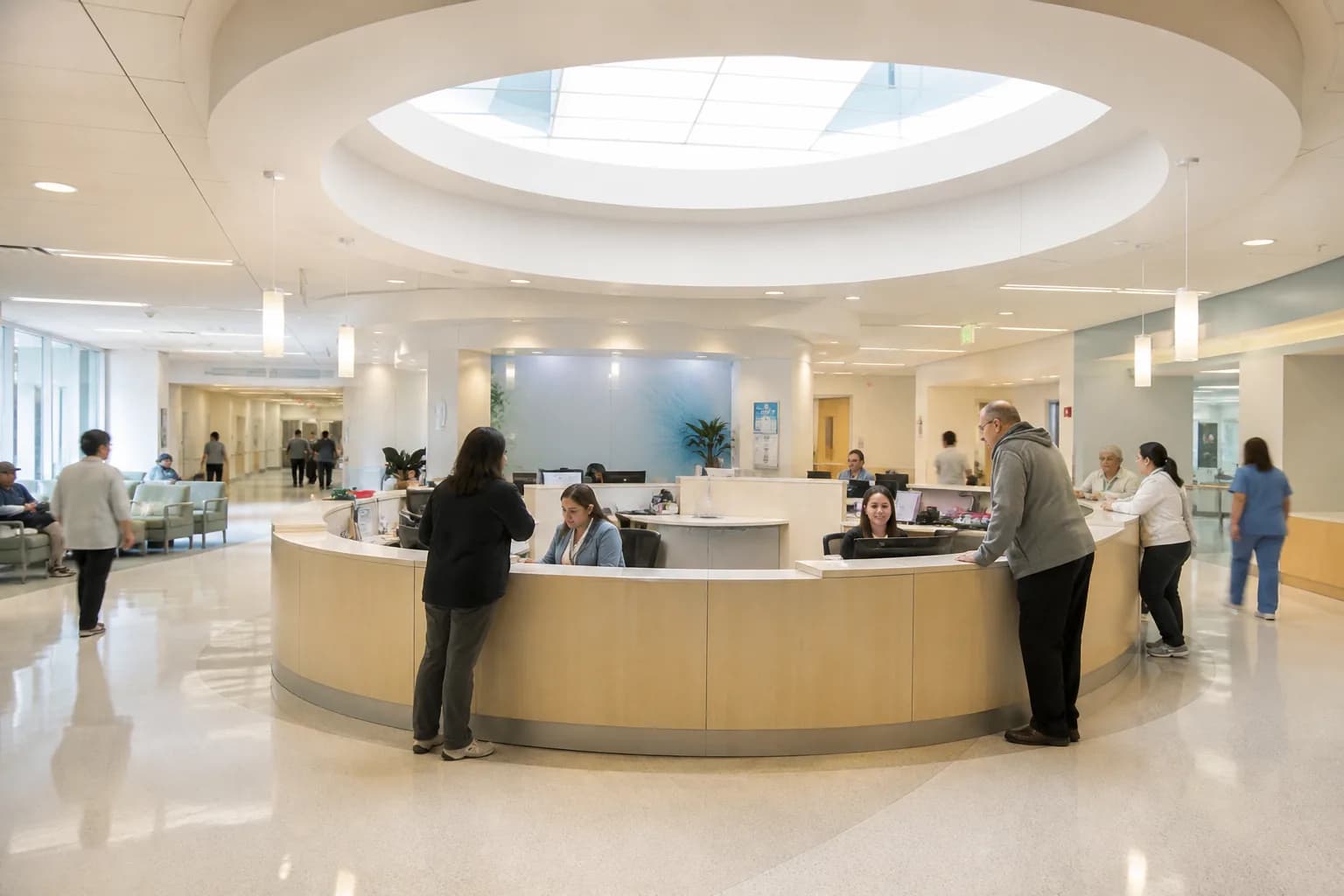
Overbooking works by betting that some patients will not attend. When the bet loses — when everyone shows up — the cost is paid immediately by the patients in the room, in longer waits, and by the clinician, in a session that runs over and consultations that get shorter. It is worth stating this plainly because it is usually absent from the business case, which tends to count recovered slots and ignore extended waits.
The distributional point is sharper still. The patients who bear the cost of overbooking are, by definition, the ones who attended. The practice systematically penalises reliable attendance to compensate for unreliable attendance, which is a difficult thing to defend to a patient who took a day of unpaid leave and travelled two hours to sit in a corridor. If you overbook, you should at least be able to explain the tradeoff without embarrassment.
The staff cost is real too. A clinic that regularly runs an hour over does not fail visibly; it fails through nursing staff staying late, registrars skipping teaching, and consultants declining to take on extra sessions because the last ones were unmanageable. That erosion of goodwill is far more expensive than the slots that were recovered.
“Our utilisation figures looked excellent. What they did not show was that the last four patients every day were being seen in six minutes by a consultant who had been in the room for five hours.”
Where overbooking fails outright
Procedural clinics should not be overbooked. When a session involves a room, equipment, a nurse, sterilisation turnaround, and a recovery period, the constraint is not the clinician's time but the physical resource, and an extra booking does not compress into it. Endoscopy, minor procedures, dressings under sedation, and day-care infusions all fail this way: the extra patient does not get seen faster, they get seen after everything else, or not at all.
Paediatric clinics are the second clear exclusion. Waiting with an unwell child is materially harder than waiting alone, the waiting area gets loud and crowded quickly, and infection control in a shared paediatric waiting space argues against packing it. Non-attendance in paediatrics also behaves differently — families frequently arrive with siblings, and a single booking can represent two or three consultations.
Beyond those, avoid overbooking any clinic where the consultation length has a long tail by nature: oncology, palliative care, psychiatry, genetics, and any clinic whose routine work includes breaking bad news. These are exactly the settings where compressing time causes harm, and where an overrun cannot be recovered by hurrying the next patient. A clinic where the right answer is sometimes to spend forty minutes with one person is not a clinic to run a capacity bet on.
Clinic types where overbooking should be off the table
- Procedural sessions constrained by room, equipment or turnaround
- Paediatric outpatients, for waiting-area and infection-control reasons
- Oncology, palliative and psychiatric clinics with long-tailed consultations
- Any clinic requiring an interpreter or extended communication support
- Sessions immediately before a fixed commitment such as a theatre list
What usually beats overbooking
Most of the capacity that overbooking chases can be recovered by attacking non-attendance directly, and those interventions carry none of the downside. Reliable reminders with a one-tap reschedule, shorter booking lead times where the waiting list allows, confirmation of long-lead appointments, and a functioning waiting list that can fill a released slot at short notice will together recover more capacity than a cautious overbooking cap, without extending anyone's wait.
A short-notice list is the most underused of these. If a slot is released two days out, someone on the waiting list who lives nearby and can attend at short notice will often take it, and they are frequently glad to be asked. Building that list — patients who have opted in to be contacted for early slots — costs almost nothing and converts cancellations into attendances rather than into gaps.
There is also the unglamorous option of fixing the slot configuration. A clinic that runs late because its slots are set below the real consultation time will look under-utilised in the booking system while being over-committed in practice, and overbooking it makes an existing problem worse. Check the schedule design before concluding that the answer is more bookings.

Governing the policy
Overbooking should be a written, approved policy with a named owner per clinic, not a habit that coordinators develop under pressure. The policy should state which clinics may overbook, the cap for each, where in the session extras are placed, who may change the cap, and the review cycle. Without that, caps drift upward one patient at a time, because each individual increase is always defensible in the moment.
Review it against outcomes rather than utilisation. The relevant measures are the distribution of patient waiting time in overbooked sessions, session overrun time, the proportion of sessions where every booked patient attended, and consultation duration in the last hour compared to the first. If waits and overruns are climbing while utilisation is flat, the policy is not working regardless of how the capacity report reads.
Give clinicians the ability to opt their session out and treat that as information rather than obstruction. A consultant who says their clinic cannot absorb extras is usually right, and forcing the policy on them produces the worst outcome: a session that is overbooked on paper and quietly managed by the doctor seeing fewer patients properly.