
Separate licence cost from the cost of running badly
Software quotations are easy to compare and almost always the smallest figure in the decision. The larger numbers sit in bed turnaround hours lost to unrecorded housekeeping status, theatre lists cancelled on the morning of surgery, consumables opened in theatre but never charged, and biomedical teams rebuilding an equipment register before every audit. A credible ROI model prices those failures first, then asks what a platform actually changes about them.
Finance leaders usually want a single payback figure, but hospital operations produce savings in different currencies: released bed-days, avoided overtime, recovered charge capture, and staff hours returned to clinical work. Keep the streams separate so a challenge to one assumption does not discredit the entire case. HealUDoc's admissions, bed management, and equipment registry modules map onto distinct streams, which makes attribution far easier to defend at a later review.

Build the baseline before the business case
Most business cases fail review because nobody can state today's performance. Spend a month capturing admission-request-to-bed-assignment intervals, housekeeping turnaround from discharge order to bed ready, first-case on-time starts, same-day theatre cancellations by reason, and the proportion of theatre consumables reconciled against the case record. Manual sampling on paper is acceptable at this stage; precision matters less than establishing a defensible starting point.
Baselines also need a denominator. Released bed-hours mean nothing unless admitted patients are actually waiting for beds, and recovered charges mean little where leakage is already small. Ask whether the binding constraint is physical capacity or coordination, because software addresses the second far more reliably than the first. HealUDoc reports these same intervals after go-live, so the baseline and the post-implementation measure share one definition rather than two.

Baseline measures worth collecting
- Admission request to bed assignment
- Discharge order to bed ready
- Same-day theatre cancellations by reason
- Unbilled consumables per theatre case
- Overdue preventive maintenance on critical devices
Where operational savings actually accumulate
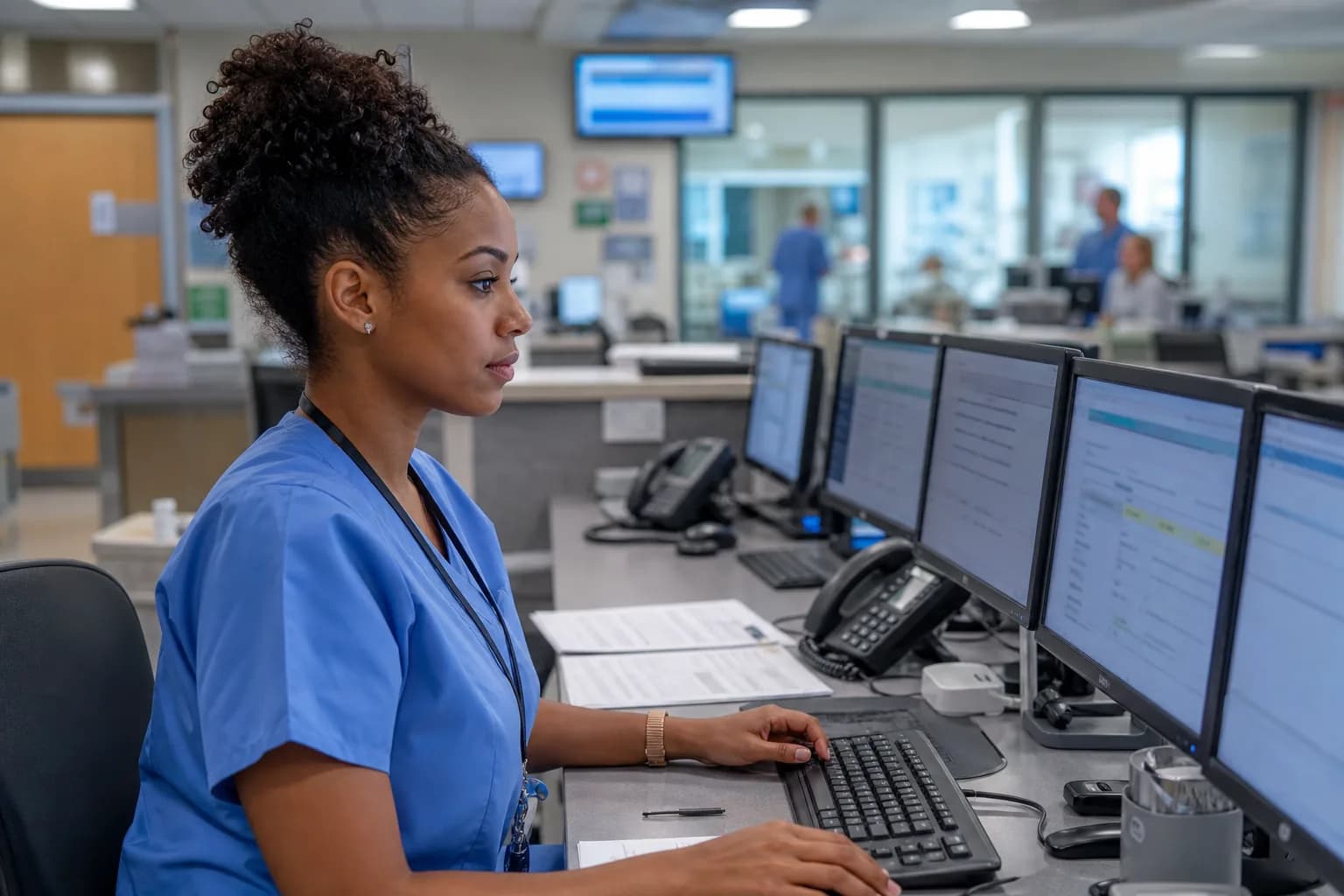
Bed turnaround is the most reliable source of value in most hospitals because it compounds. When a discharge order raises a housekeeping task automatically instead of waiting for a ward telephone call, the cleaning queue starts earlier and the bed board shows readiness without a phone round. Every hour recovered on a high-occupancy ward is an hour of admitted-patient boarding avoided, and boarding consumes nursing attention that never appears on an invoice.
Theatre utilisation behaves differently. Value comes less from adding cases than from removing the causes of cancellation: unconfirmed consent, unavailable implants, no recovery bed. HealUDoc's theatre scheduling checks those preconditions before the list is frozen, converting a day-of-surgery loss into a rescheduling decision made several days earlier. The saving to model is the marginal contribution of a session that would otherwise have run partly empty.
Model implementation cost honestly
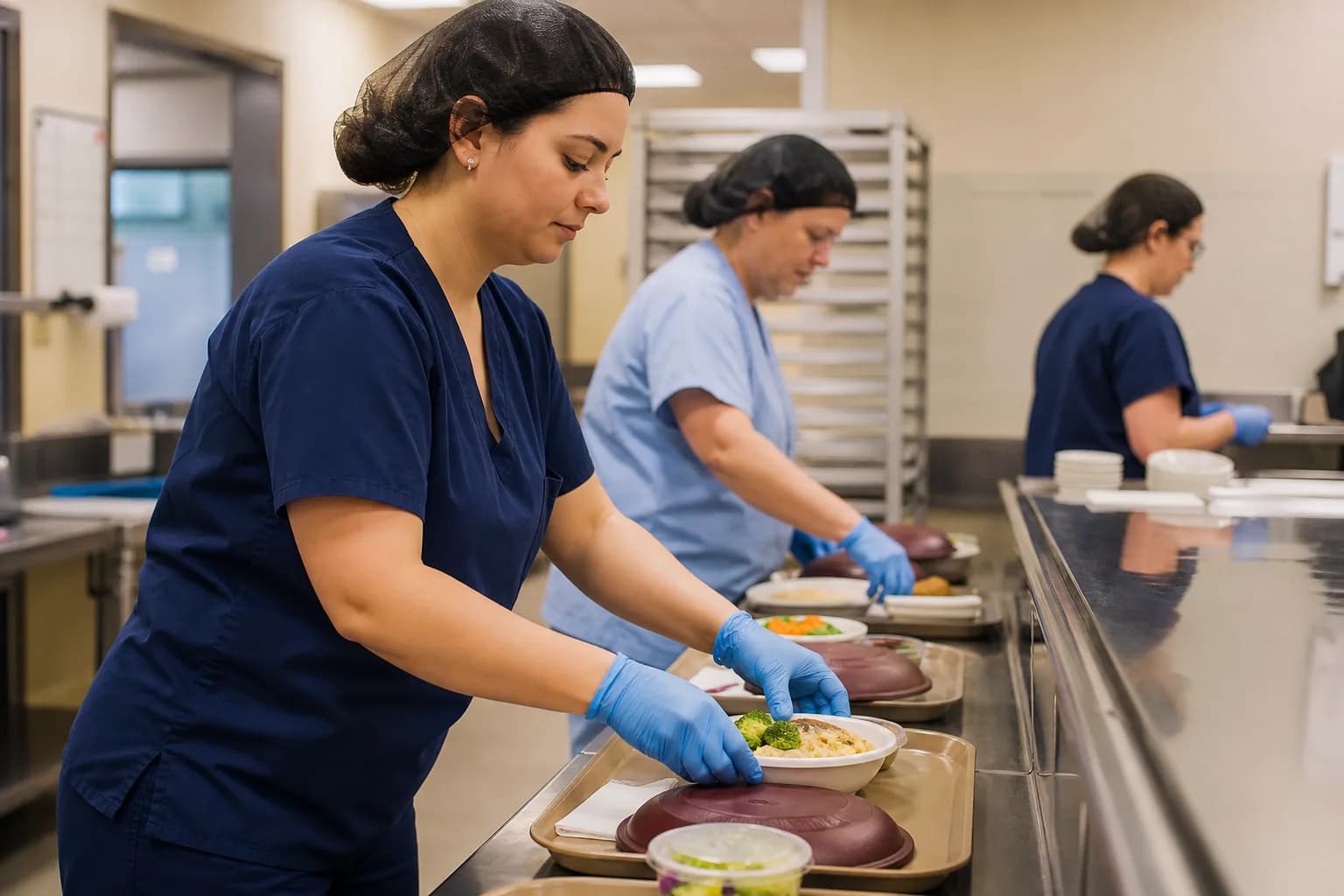
The largest implementation cost is rarely the licence or the migration; it is clinical and administrative time during parallel running. Budget backfill while ward clerks learn admission-discharge-transfer screens, biomedical staff physically verify assets against the imported register, and the operations team maintains two versions of the truth through cutover. Business cases that assume staff absorb this alongside normal duties usually overrun on schedule rather than on money.
Data preparation deserves its own line. Patient identity deduplication, service catalogue rationalisation, bed and room master data, and equipment criticality classification all require operational judgement no vendor can supply. HealUDoc can import an existing equipment register, but somebody inside the hospital still has to decide which devices are life-support critical and which department custodian owns each one.
Implementation costs commonly omitted
- Backfill for staff released to training
- Physical verification of the asset register
- Master data cleanup and deduplication
- Parallel running and daily reconciliation
- At-the-elbow support after go-live
Revenue protection usually exceeds cost reduction
Charge capture in theatre and inpatient wards leaks quietly. Implants recorded on a handwritten sheet, medicines issued from ward stock, and consumables opened but never documented become unbilled items nobody notices, because the bill still looks plausible. Capturing them at the point of use, scanned against the case record rather than transcribed afterwards, protects revenue the hospital has already earned, which is a stronger argument than speculative volume growth.
Occupancy-driven revenue follows the same logic. A bed released four hours earlier is only worth something if a patient is waiting for it, so apply released capacity against real admission demand rather than theoretical throughput. HealUDoc's branch-aware capacity views make that demand visible per site, which stops a group-level business case from assuming every branch carries the same queue.

Review the case after go-live, not only before it
Most ROI models are written to secure approval and never opened again. Schedule reviews at three, six, and twelve months against the original baseline measures, using the original definitions rather than whatever the new reports make convenient. Some assumptions will prove optimistic: turnaround gains often arrive slowly because housekeeping staffing, not visibility, was the real constraint on particular wards.
Report the misses alongside the wins. A finance committee shown an honest variance analysis will fund the next phase; one given only favourable numbers learns to discount them. Where a benefit did not materialise, establish whether the workflow was configured as designed, whether staff bypassed it, or whether the underlying assumption was simply wrong. Those three causes call for very different responses.
“The business case that survived board scrutiny was the one that admitted two of its five assumptions were uncertain and explained how we intended to test them.”