One bill is not a management system
Most hospitals know their monthly electricity cost and essentially nothing else about their energy. A single meter at the incomer produces a number that goes up, prompts concern, and supports no decision, because it cannot say where the consumption occurred or what changed. Every conversation about energy in such a hospital ends in general exhortations about switching things off, which have a measurable effect for approximately two weeks.
The first investment is therefore sub-metering rather than any efficiency measure, because without it you cannot identify where to spend, cannot verify that anything you did worked, and cannot detect the equipment fault that is quietly consuming more than it should. Sub-metering at the level of major systems and major departments is inexpensive relative to what it reveals and is the precondition for everything else.
Meter the things that consume most and vary most: chillers and air handling, the theatre complex, critical care, imaging, laundry and kitchen, lifts and pumping, and lighting where it is separable. That set typically accounts for the overwhelming majority of consumption, and once you can see it separately the analysis becomes obvious rather than speculative.

Choosing a denominator that means something
Absolute consumption is not comparable across periods, because occupancy and activity vary. Energy per bed day is the usual normalisation and is a reasonable starting point, though it shares the weaknesses of any bed-day measure: it ignores acuity, treats a day-care patient and an intensive care patient alike, and takes no account of outpatient or diagnostic activity that consumes energy without generating a bed day.
For hospitals with substantial outpatient and diagnostic volume, energy per unit of floor area is a useful companion measure, since much consumption is driven by conditioning space rather than by treating patients. Reporting both, and understanding that they answer different questions, is more informative than arguing about which is correct.
Weather-correct the series before drawing conclusions, because in most Indian climates the dominant driver of month-to-month variation is ambient temperature and nothing else. An uncorrected series shows consumption rising through summer and falling afterwards, which is true, uninformative, and will mask a genuine efficiency change entirely. Correcting for degree days is straightforward and turns a noisy series into one where real changes are visible.
Measures worth reporting together
- Energy per bed day, weather-corrected, trended over time
- Energy per unit of conditioned floor area, for the whole estate
- Consumption by major system, as a share of the total
- Peak demand and load factor, which drive tariff as much as units do
- Consumption per unit of activity for high-intensity departments
Where hospital energy actually goes
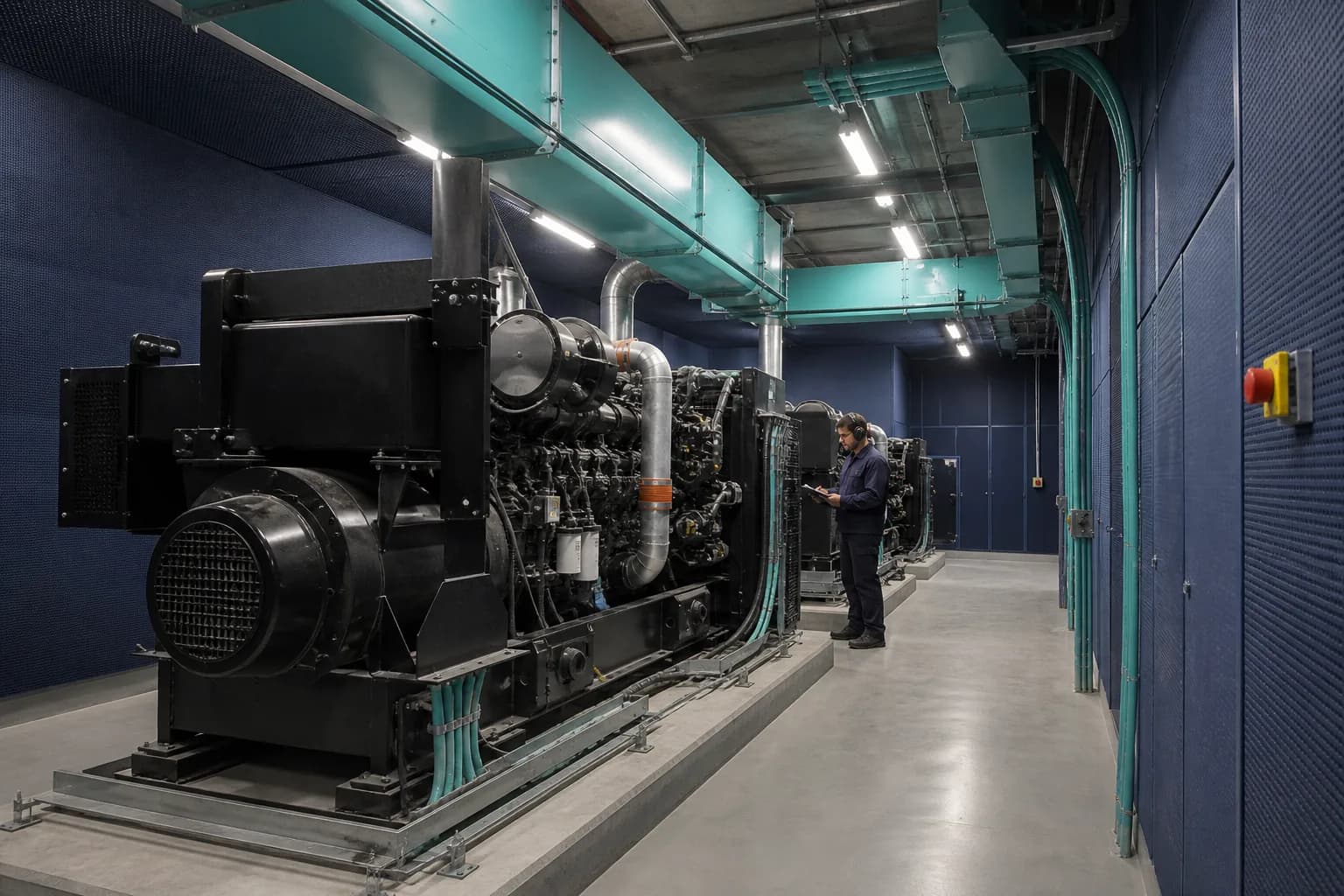
In most Indian hospitals air conditioning and ventilation dominate, typically by a wide margin, and within that the chiller plant is the largest single item. This concentration is useful because it means attention spent on the chiller plant and the air handling it serves addresses most of the opportunity, while attention spent on lighting and office equipment addresses a small fraction however visible those measures are.
The next tier is usually theatre and critical care air handling, which runs continuously at high air change rates and cannot be reduced without affecting clinical requirements, though it can very often be operated more efficiently. After that come lifts and pumping, laundry, kitchen, imaging equipment and lighting, in a proportion that varies considerably with the hospital's service mix.
Knowing the split for your own hospital rather than assuming the typical one is the point of sub-metering. Hospitals with heavy imaging, large laundry operations or unusual service profiles depart substantially from the general pattern, and a programme designed against the general pattern will underperform for them.
Operational savings before capital ones
The largest early savings in most hospitals come from operating existing plant properly rather than from replacing it, and they cost very little. Chiller plant operated at the design set point regardless of load, air handling running at full flow in unoccupied areas overnight, simultaneous heating and cooling in the same zone, and controls in manual because someone overrode them years ago are close to universal and are addressable within the existing equipment.
Scheduling is the single largest opportunity. Outpatient areas, administrative floors, teaching spaces and non-clinical zones do not need conditioning when unoccupied, and in many hospitals they receive it anyway because the system runs on a schedule set at commissioning and never revised against actual occupancy. Aligning schedules to real use is free and frequently produces a substantial reduction.
Maintenance has a direct and underestimated energy effect. Fouled heat exchangers, blocked filters, refrigerant charge outside specification and failed sensors all degrade efficiency continuously and invisibly. A chiller consuming meaningfully more than it should for its load is a maintenance finding available to anyone with a sub-meter, and it will not appear in any other report.

“Our first year of energy work involved no capital at all. Fixing schedules, taking the controls off manual and cleaning two condensers got us most of what the consultant had proposed spending on new equipment to achieve.”
Building the retrofit shortlist by payback
Once operational measures are exhausted, capital measures become the question and should be ranked by payback with the assumptions visible. Typical candidates are lighting replacement, variable speed drives on pumps and air handling, chiller replacement or the addition of a correctly sized smaller unit for low-load periods, building management system upgrades, and improvements to the building envelope where it is genuinely poor.
Rank them honestly, which means including installation, disruption and the clinical impact of the work, not only equipment cost against projected savings. Retrofit work in an operating hospital is more expensive and slower than the same work in an empty building, and vendor payback calculations rarely reflect that. A measure with a stated two-year payback that requires a theatre to be out of service for a fortnight has a different real cost.
Be sceptical of savings projections generally, and insist on measurement afterwards. The discipline that makes an energy programme credible over years is that each completed measure has a before-and-after figure from the sub-meter, and that the figure is reported whether or not it met the projection. Programmes without that discipline accumulate claimed savings that exceed the total bill, which is a recognisable pattern and destroys the programme's credibility.
What a retrofit business case should state explicitly
- Measured baseline consumption from the relevant sub-meter
- Projected saving with the assumptions it depends on
- Installation cost including disruption and clinical downtime
- How the saving will be verified after commissioning
- Who owns the verification and when it will be reported
Reporting energy where it will be acted on
Energy performance belongs in the same operational reporting as everything else the hospital reviews, not in a separate engineering document. Presented alongside occupancy, activity and cost, it becomes interpretable — a rise in consumption alongside a rise in occupancy is different from the same rise with occupancy flat, and only the combined view distinguishes them.
Give departments their own figures where sub-metering allows it. Departmental accountability for consumption changes behaviour in a way that hospital-level reporting does not, particularly for scheduling and for equipment left running. It also surfaces the cases where a department's consumption is driven by something outside its control, which is worth knowing before anyone is asked to explain it.
Keep the cadence monthly and the format stable, and carry the weather-corrected trend rather than raw units. Holding energy data alongside the operational and activity data the hospital already reports on, as a platform such as HealUDoc allows, is what makes the normalisation possible at all — energy per bed day requires the bed days, and a series that has to be assembled by hand from two systems each month is a series that stops being produced within a year.