The gap between mains failure and generator on load
Every hospital has a generator and most hospital electrical incidents happen anyway, because the generator is not the part that fails. A diesel set takes time to start, stabilise and accept load, and during that interval anything not held up by a battery-backed supply is simply off. A theatre light, a ventilator, an anaesthesia machine, a perfusion pump and an imaging gantry mid-acquisition all experience that interval differently, and the design question is which of them were never allowed to experience it at all.
That framing changes the conversation from generator capacity to load classification. Capacity matters, but a correctly sized generator feeding a badly classified distribution board still leaves critical equipment dark for the changeover period. Conversely a modest generator feeding a well-segregated board, with the genuinely critical circuits held by uninterruptible supplies, produces a hospital that rides through a mains failure with nobody in a clinical area noticing.
The failures that make the news are almost never a generator that would not start. They are a generator that started correctly into a board where the theatre suite had been extended onto a non-essential circuit during a refurbishment three years earlier and nobody updated the drawings.

Classifying loads into the categories that matter
Work from three categories rather than two. Non-essential loads can wait for the generator and can be shed entirely if capacity is tight: administrative areas, general lighting in non-clinical zones, comfort cooling outside clinical spaces. Essential loads must come back on the generator promptly but tolerate the changeover gap: ward lighting, lifts, most clinical equipment that restarts safely, water pumping, kitchen and laundry.
The third category is the one that requires a battery-backed supply because it cannot tolerate any interruption at all: life support and anaesthesia, operating theatre lighting and the equipment in use during a procedure, critical care monitoring and infusion, medical gas plant controls and alarms, the imaging equipment where an interruption mid-study is a clinical and financial event, and the network and server infrastructure the clinical record depends on.
Classification has to be recorded circuit by circuit and reconciled against reality, because it drifts. Every refurbishment, every new piece of equipment and every departmental move is an opportunity for a critical load to end up on the wrong circuit, and none of those projects treats electrical classification as their responsibility. A periodic walk-down comparing the board schedule against what is actually plugged in where finds things that no drawing review will.
Loads that belong on an uninterrupted supply
- Operating theatre lighting and equipment in use during procedures
- Life support, anaesthesia and critical care monitoring and infusion
- Medical gas plant controls, alarms and monitoring panels
- Imaging equipment where interruption mid-study causes loss
- Clinical network, servers and the systems holding the record
Sizing the generator against the load you will actually have
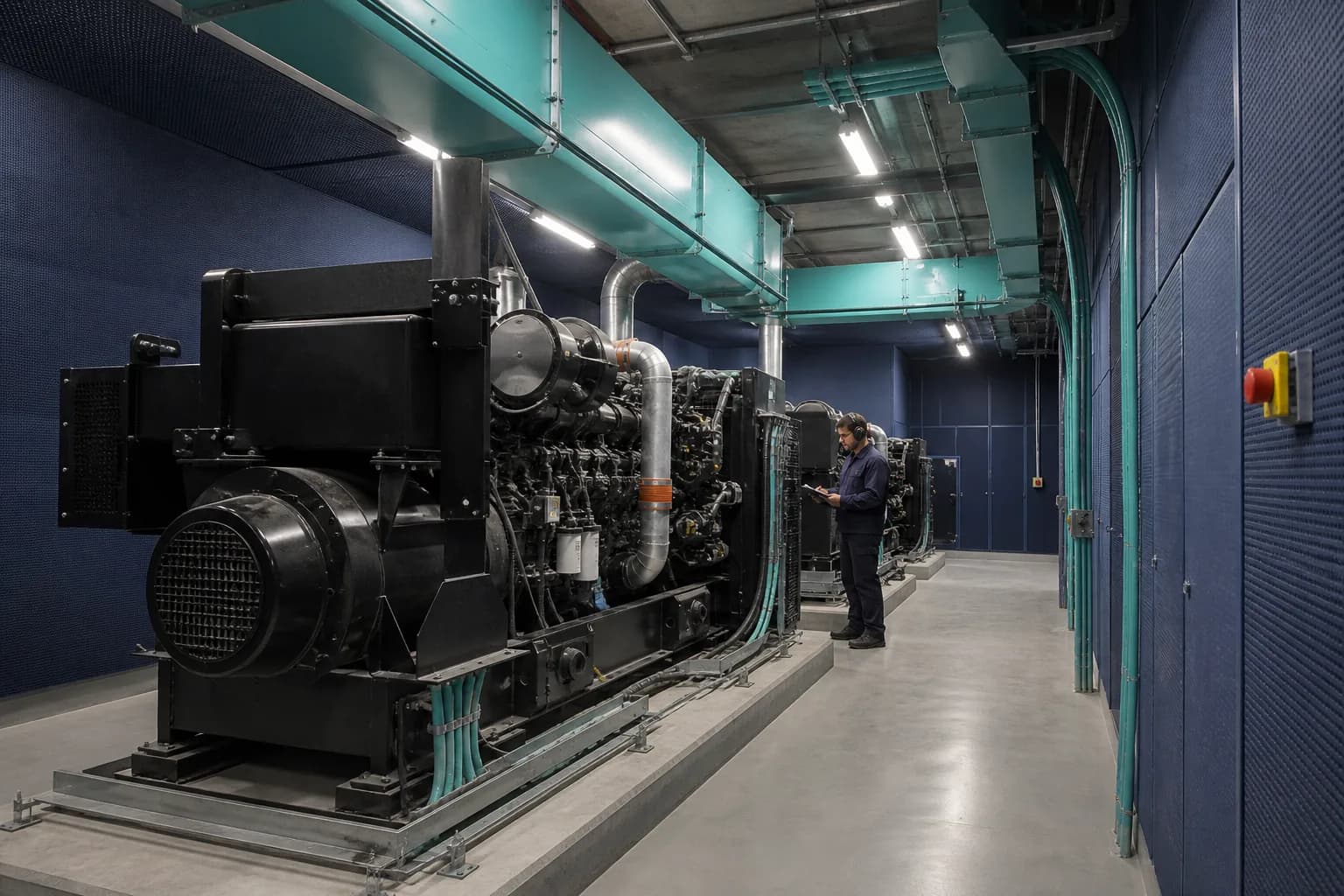
Generator sizing errors run in both directions and both are expensive. Undersizing is the obvious risk and is usually caught, though it reappears quietly as the hospital adds equipment and departments without revisiting the calculation. Oversizing is the commoner error and is less understood: a diesel set running at very low load for extended periods suffers incomplete combustion and deposits that shorten its life and reduce its reliability, which is precisely the wrong outcome for a machine bought for reliability.
Size from a measured maximum demand plus a stated growth allowance, and account for starting characteristics rather than steady-state load alone. Motors, chillers and imaging equipment draw far more at start than they consume running, and a set sized on running load will stumble when a chiller starts. Staggered restart sequencing after changeover addresses this and needs to be configured deliberately rather than left to whatever order things happen to come back in.
Decide the redundancy arrangement explicitly. A single set is a single point of failure and the question is what happens during its maintenance, not only during its failure. Two sets sharing load, or one set plus a defined arrangement for hired capacity, are both defensible. What is not defensible is a single set whose annual maintenance is deferred indefinitely because there is no way to take it out of service.
UPS topology, and where the batteries actually go
The central choice is between a large centralised uninterruptible supply feeding critical distribution, and distributed units at or near the equipment. Centralised gives better economics at scale, easier monitoring and one maintenance regime, but concentrates risk and means a fault or a maintenance window affects everything downstream. Distributed units are more resilient in aggregate and considerably harder to keep maintained, because a battery in a cupboard in a ward is a battery nobody tests.
In practice most hospitals end up with both, which is fine if it is a decision rather than an accumulation. A common arrangement is centralised support for theatres, critical care and the data room, with local units for specific equipment that the manufacturer requires or that sits outside the protected distribution. The important thing is that the inventory is known and that every unit has an owner and a test schedule.
Batteries are the failure point in every topology. They degrade predictably, they fail without any external sign, and the moment their capacity is discovered to be inadequate is invariably the moment they are needed. Autonomy has to be specified deliberately — long enough to cover generator start and stabilisation with real margin, and longer for anything supporting a procedure that cannot simply be abandoned — and then verified by discharge testing rather than by the panel's own self-report.
Battery-backed supply questions worth answering annually
- What autonomy each unit actually delivers under a real discharge test
- Battery age against expected life, and the replacement budget line
- Whether every distributed unit is on a maintained inventory
- What the bypass arrangement is during maintenance
- Whether alarms reach someone who will act at three in the morning
Testing that proves the design rather than the paperwork
The near-universal weakness is testing that does not test anything meaningful. Running the generator off load for twenty minutes a week proves it starts. It does not prove that changeover works, that the essential board is correctly classified, that restart sequencing is right, that the batteries hold long enough, or that staff know what to do. Those are the things that fail, and they fail together.
A meaningful test simulates a genuine mains failure and takes the hospital onto backup with load, on a planned schedule, with the clinical areas informed and the affected departments prepared. Record what came back, in what order, and how long the interval was in each area. The first such test in a hospital that has never done one reliably finds at least one circuit in the wrong category, and finding it during a planned Sunday test is enormously preferable to finding it otherwise.
Test the failure modes too, not only the success path. What happens if the generator fails to start, if the automatic changeover does not operate, if one uninterruptible supply drops. Each needs a manual procedure, and the staff who would execute it need to have done so under supervision rather than to have read about it in a folder.
“We had tested the generator every week for nine years. The first time we tested a real changeover under load, the recovery ward and one theatre corridor stayed dark. They had been moved onto a non-essential board during a refurbishment nobody documented.”
Fuel, maintenance and the boring things that decide the outcome
Backup power fails on logistics as often as on engineering. Fuel stock has to be sufficient for a realistic outage rather than a nominal one, and it has to be usable: diesel degrades in storage, absorbs water and grows contamination, and a full tank of poor fuel will stop a generator within hours. Periodic fuel testing and a stock rotation policy are unglamorous and they are the difference between a set that runs for two days and one that runs for two hours.
Establish the resupply arrangement before it is needed, with a named supplier, an agreed response and an understanding of what happens when a regional event means everyone is calling that supplier simultaneously. A contract that assumes normal conditions is of limited value in exactly the circumstances that caused the outage.
Maintain to the schedule and record it. Load bank testing at intervals, oil and filter changes, coolant and battery checks, and the changeover panel itself, which is the component most often neglected because it has no moving parts anyone thinks about. A maintenance regime that exists in a contract but not in dated records is not a maintenance regime for any purpose that matters, including an inspection.
Monitoring, and knowing before the clinicians tell you
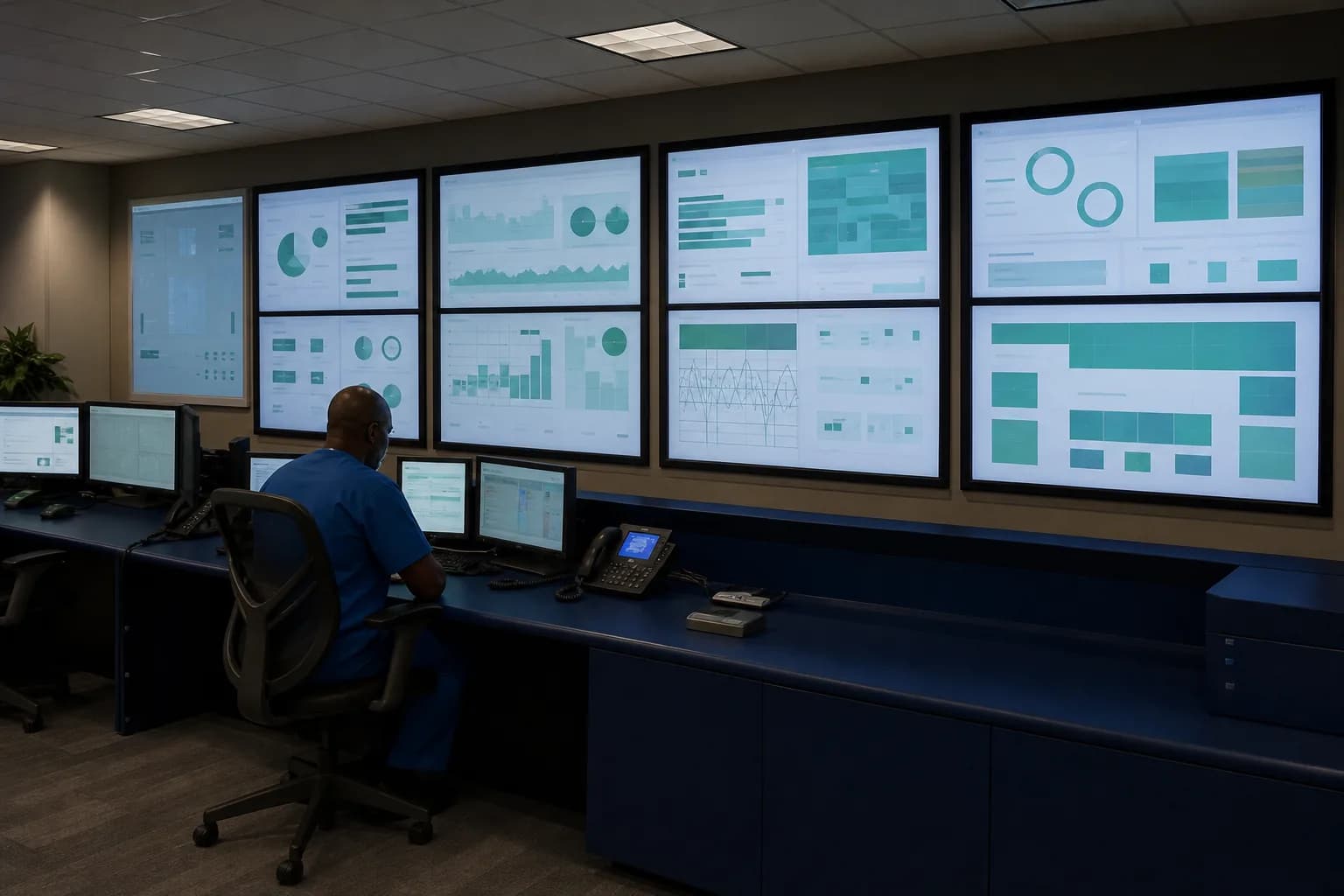
The last piece is knowing the state of the system continuously rather than at test time. Generator readiness, fuel level, battery health and autonomy, changeover panel status and the condition of each uninterruptible supply should be visible on a monitored panel with alarms that reach a person, at any hour, through a route that has been tested.
Alarms that annunciate only in a plant room nobody occupies at night are decoration. Route them to whoever is actually present and responsible overnight, confirm periodically that the route works, and be specific about who acts on what. A hospital where the engineering alarm sounds in an empty room while the clinical team discovers the problem from a monitor going dark has the monitoring but none of the benefit.
Bring the resulting record into the same operational reporting the rest of the estate is reviewed against. Backup power readiness, test results, battery age and fuel status alongside the hospital's other operational data — as a platform such as HealUDoc allows — turns electrical resilience from a specialist concern discussed after an incident into a standing item that gets funded before one.