Sequence modules by dependency, not by enthusiasm
The order in which a small hospital adds functionality determines how much rework it does later. Registration, OPD, and billing form the base, because every other module depends on a reliable patient and encounter record. Laboratory and pharmacy follow, since orders and results give clinicians a genuine reason to work in the system. IPD, with its shift handovers and observation charting, is the heaviest lift and should never be first.
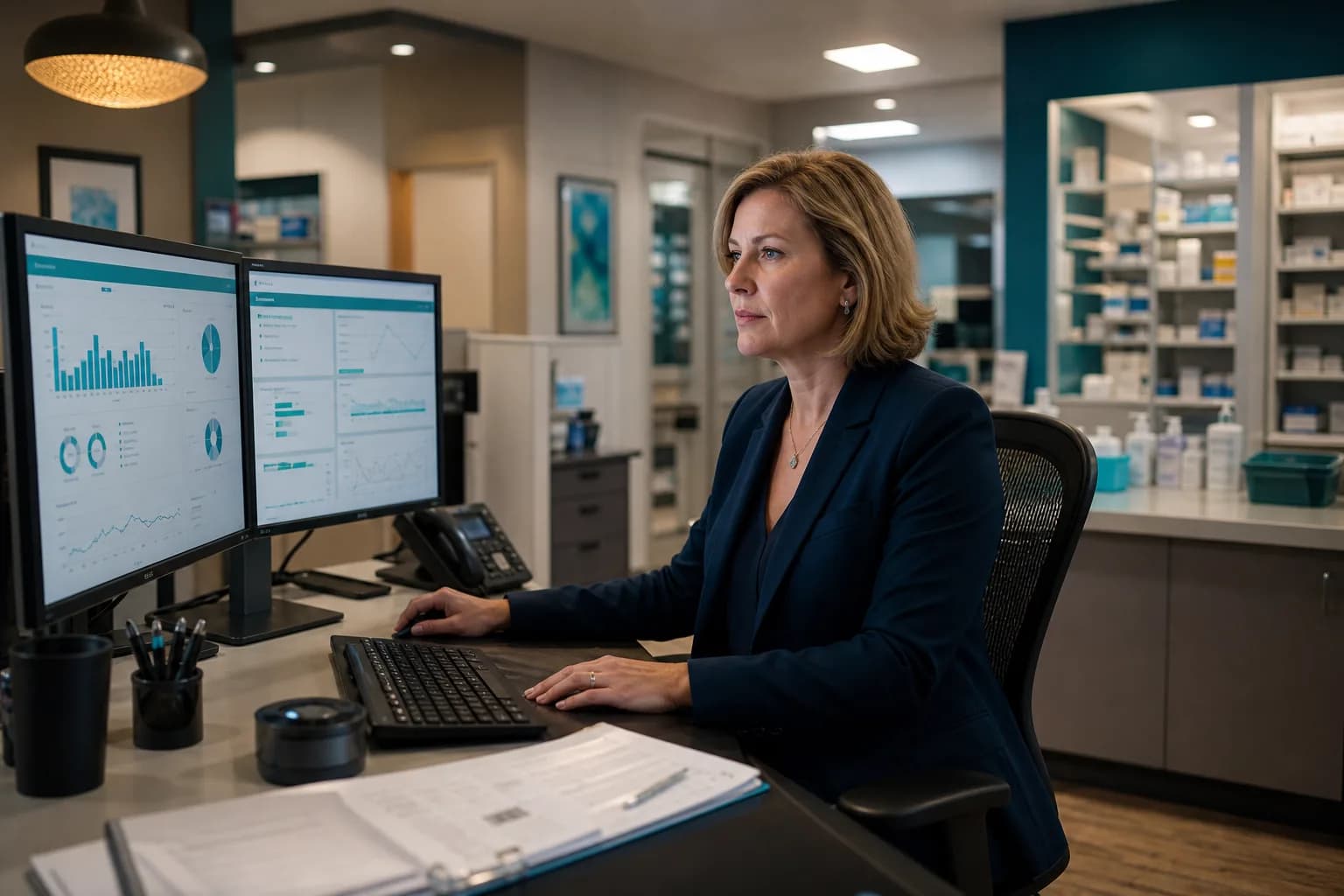
Resist adding analytics, patient portals, or specialty modules before that base is stable. A dashboard built over inconsistent registration data teaches leaders to distrust reporting for years afterward. Because HealUDoc modules share one patient record, each addition inherits the identity and access decisions made earlier, which is an advantage when those decisions were sound and a compounding problem when they were not.

Staff the informatics function with the people you have
A four-hundred-bed hospital will not fund a dedicated informatics department, and it does not need one. What it needs is named part-time ownership: a clinical lead with protected time, a pharmacist owning the medication dictionary, a laboratory lead owning test and result codes, and a billing lead owning charge configuration. Ownership without protected hours is a title, and it typically fails within a quarter.
Super users are the difference between a system that stabilizes and one that breeds workarounds. Choose them for credibility on the ward rather than technical curiosity, cover their clinical time honestly, and give them a direct channel to whoever changes configuration. In HealUDoc terms, that means a small group who understand how roles, templates, and order sets are built and can explain to colleagues why a screen behaves as it does.

Roles a small hospital must name explicitly
- Clinical lead with protected time
- Medication dictionary owner in pharmacy
- Laboratory test and result code owner
- Charge and billing configuration owner
- Per-shift super user coverage
Standardize before you replicate
Every configuration inconsistency multiplies when a second site is added. If two departments use different admission templates, different diagnosis coding habits, or locally invented order names, extending to a third department copies the confusion rather than resolving it. The period before expansion is the cheapest time to consolidate templates, retire duplicates, and agree a shared clinical vocabulary, because standardization is far harder to negotiate once each site believes its version is correct.
Distinguish genuine clinical variation from accumulated habit. A pediatric ward legitimately needs different observation ranges; two general wards recording the same observation under different names do not. Document each approved exception with a reason and an owner. HealUDoc branch-aware configuration supports local variation deliberately, which makes it all the more important to record why a difference exists rather than letting it appear by default.

Check the unglamorous infrastructure early
Scaling exposes physical constraints a pilot never touched. Wireless coverage in older wards, the number of workstations at a nursing station during shift change, label and wristband printers, uninterruptible power on clinical floors, and the bandwidth of a satellite branch on a domestic connection all become clinical issues once the paper chart is gone. Survey these well before the rollout date rather than during it.
Downtime readiness scales too. A single-site hospital can improvise for an hour; a network cannot. Every ward needs current printed patient lists, paper order and observation forms, a defined process for entering backdated documentation afterward, and staff who have practiced using them. Test the procedure at least annually, ideally unannounced, because a downtime pack nobody has opened is not a plan.

Infrastructure checks before each new site
- Wireless coverage in every clinical area
- Workstation count at shift-change peak
- Label, wristband, and prescription printers
- Backup power for clinical devices
- Tested downtime pack on every ward
Add specialties without forking the configuration
Growth usually arrives as requests: cardiology wants a different note, obstetrics needs its own observation set, the new day-surgery unit wants a bespoke pathway. Treating each as an individual build produces a configuration nobody can maintain. Establish a request process that asks which clinical decision the change supports and whether an existing template can be extended instead, since most requests resolve into a field or two on something that already exists.
Keep a single change log covering templates, order sets, roles, and dictionaries, recording the requesting department and the approval date. Reviewing HealUDoc activity logs against that record shows whether a new template is genuinely in use or was built for a workflow that never materialized. Retiring unused configuration matters as much as approving new work and is scheduled far less often.

Know when to stop and consolidate
The most common scaling failure in a small hospital is continuing to roll out while the previous phase is still unstable. The signs are specific: super users spending their time on repeat basic questions, a growing list of unresolved configuration defects, documentation timeliness worsening at the newest site, and staff maintaining a parallel paper process nobody authorized. Each of these is a reason to pause rather than push.
Build consolidation periods into the plan from the outset so pausing is a scheduled decision rather than an admission of failure. Use them to close defects, retrain where adoption is weak, retire workarounds, and confirm through HealUDoc dashboards that documentation and order metrics have returned to where they stood before the last cutover. A small hospital's real advantage is seeing these problems early enough to act.
“We paused for six weeks after our third department and it was the best decision of the program. Everything we fixed in that window would otherwise have been copied into four more wards.”