Mistake: treating the bed board as a reporting screen
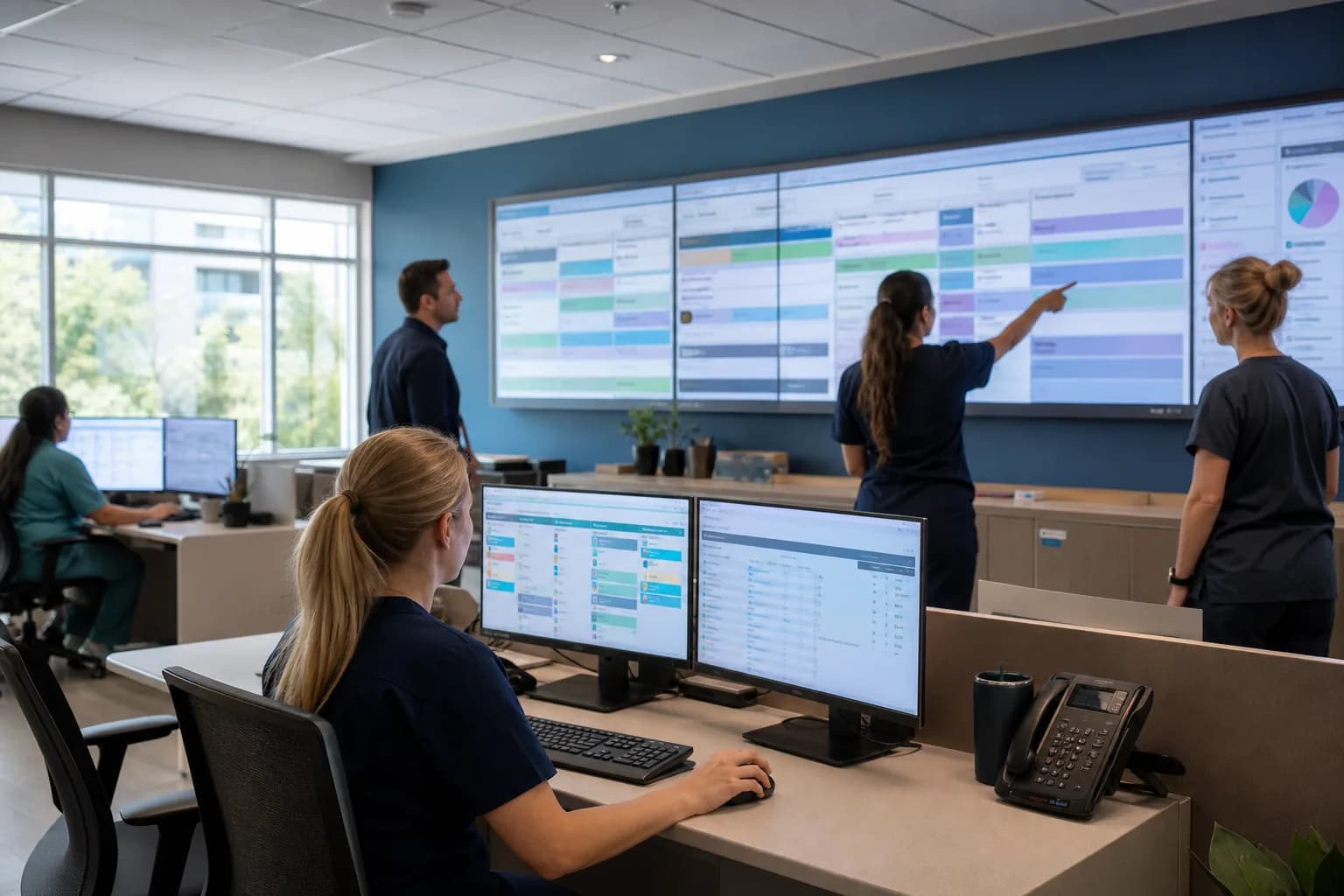
The most common failure mode is a bed board that staff read but never update. If housekeeping records cleaning completion in a paper log and the ward clerk retypes it an hour later, the screen is a lagging report and the admissions desk goes back to phoning wards. The fix is making the action that completes the work also update the status, so a supervisor closing the housekeeping task marks the bed ready with no second entry.
Watch for the quieter version of this problem: states that exist in the system but not in practice. A reservation without an expiry becomes a permanently blocked room, and a bed blocked for clinical reasons without a named owner becomes an unexplained gap in capacity. HealUDoc attaches an owner and timestamp to each bed state, but the discipline of releasing stale reservations still belongs to the shift coordinator.

Symptoms of a stale bed board
- Admissions still phoning wards for availability
- Reservations carrying no expiry time
- Beds ready long before the board reflects it
- Cleaning status updated in end-of-shift batches
- Blocked beds with no recorded reason
Mistake: letting discharge planning start on discharge day
Discharge is frequently designed as an event on the final morning. The consultant writes the order, then pharmacy, billing, transport, and nursing education begin in sequence, each dependency adding hours while the bed stays occupied throughout. Hospitals that improve this set an expected discharge date at admission and let the dependent tasks begin days earlier, leaving only what genuinely cannot be done in advance for the final morning.
The mistake beneath the mistake is treating the expected date as a prediction rather than a plan. As a forecast, nobody acts on it; as a plan with tasks attached, it drives coordination across pharmacy, billing, and the ward. HealUDoc hangs those tasks on the inpatient episode, so the ward sees which blocker is still outstanding instead of discovering an unprepared discharge prescription at eleven o'clock.

Mistake: scheduling theatres on optimistic durations
Booking teams under pressure use the shortest plausible duration for each procedure, producing a list that looks efficient and collapses by mid-afternoon. Durations should reflect the specific surgeon, the complexity of the case, and local history rather than a catalogue average, and they must include anaesthetic induction, positioning, and turnover. A list padded honestly finishes on time; one padded optimistically generates overtime and late cancellations.
The second scheduling error is treating recovery capacity as unlimited. A theatre can finish a case and still hold the patient because no recovery bay or ward bed is free, which blocks the room as effectively as a long operation. HealUDoc surfaces downstream bed availability alongside theatre time, turning an invisible constraint into a booking decision taken before the list is published.

Mistake: granting broad access because permissions are hard
Access control degrades in one direction only. A nurse needs to check a bill, so billing view is added to the nursing role; a locum needs cross-branch access for a single weekend and keeps it for two years. Within eighteen months the role matrix no longer describes who can do what, and privacy review becomes guesswork. Broad access is nearly always a maintenance shortcut rather than a deliberate decision.
Design roles around the actions people perform — requesting a bed, assigning one, transferring a patient, blocking a room — rather than around job titles. HealUDoc supports branch-scoped and time-bound assignment, which handles the locum case without permanent privilege. Sensitive operations such as releasing a blocked bed or amending a completed theatre record should require a reason that lands in the audit trail.
Access decisions worth revisiting quarterly
- Temporary cross-branch assignments
- Roles accumulated through one-off requests
- Users retaining access after transfer
- Override rights on bed assignment
- Edit rights on closed theatre records
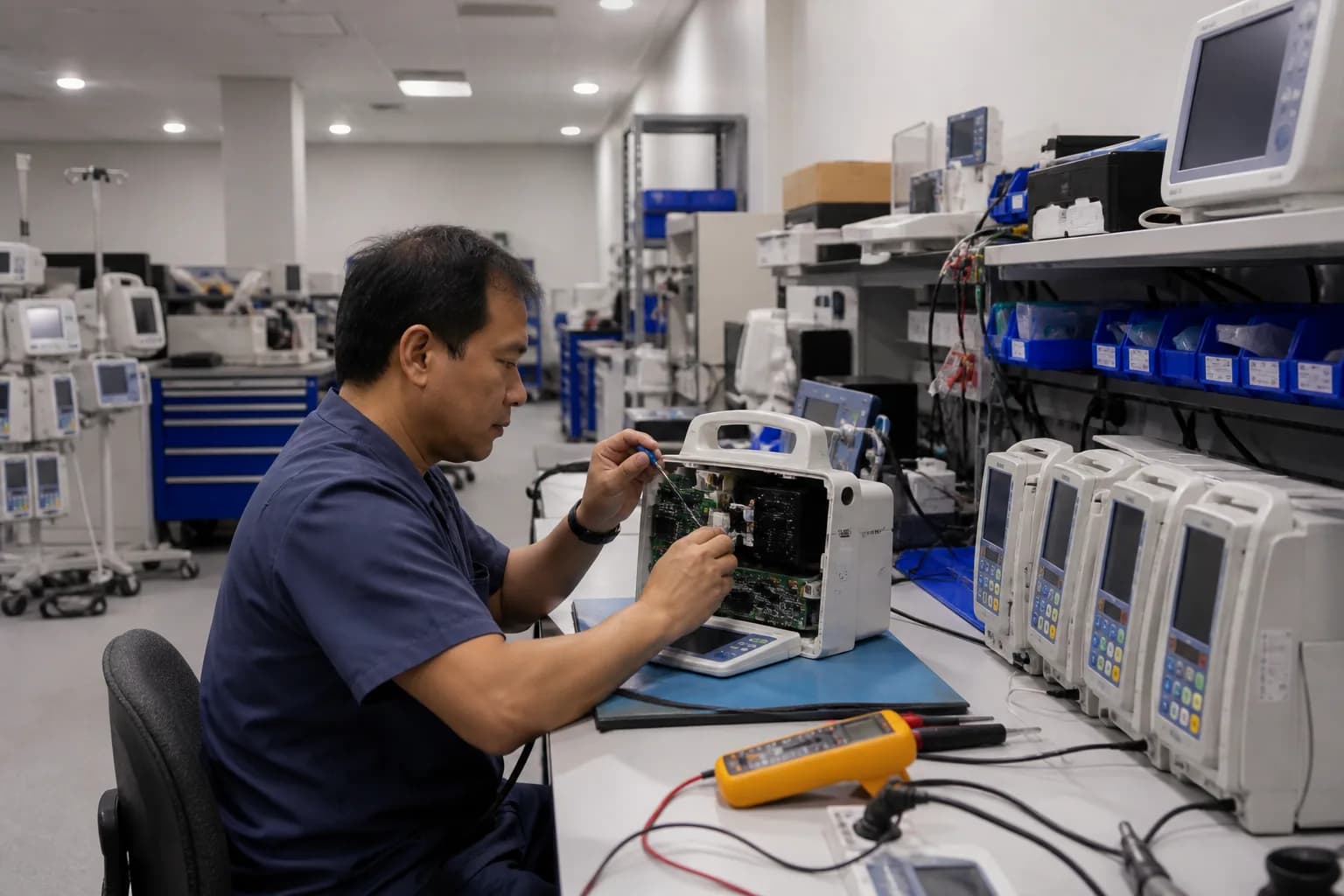
Mistake: running the equipment registry as an annual exercise
Many hospitals refresh the equipment register only when an accreditation visit approaches, then let it decay for another year. The record drifts as devices move between wards, go out for external service, or are quietly retired, so the next physical verification starts almost from scratch. Preventive maintenance schedules built on that register inherit every one of its errors without anyone noticing.
Registry accuracy is a byproduct of routine events, not an annual project. Each transfer, loan, service dispatch, and return should update custody at the moment it happens. HealUDoc records those movements with the responsible user attached, so the biomedical team can see which critical devices are overdue and where they physically sit rather than reconstructing custody from memory and email.

Mistake: measuring activity instead of flow
Operations dashboards drift toward counting things: admissions today, cases performed, beds occupied. Activity counts rise when a hospital is busy and fall when it is not, and neither movement tells you whether flow improved. The measures that change behaviour are intervals and their tails — admission request to bed assignment, discharge order to bed ready, list start to first incision.
Report the higher percentiles alongside the median, because the patients who wait longest are the ones whose care suffers and whose families complain. A median turnaround that looks acceptable can conceal a ward where one bed in ten takes half a day. Segment by ward, shift, and day of week before drawing conclusions, since a single weekend staffing gap can distort an entire monthly figure.
“We spent a year improving averages and our complaints did not change. Looking at the slowest ten percent told us exactly which two wards to work on.”