What LIS barcode specimen tracking actually buys you
LIS barcode specimen tracking replaces human memory and paper worklists with a series of recorded machine events. Each scan answers where a specimen was, when, and in whose hands. The value is not speed at the bench — it is that the laboratory can answer questions about a specimen after the fact instead of reconstructing them from people's recollection.
Three specific capabilities follow. Identity is bound to the container rather than to handwriting. Location is known at every checkpoint rather than at the endpoints. And turnaround time becomes measurable in segments, so a laboratory can tell whether a delayed report was delayed in transport, accessioning, analysis, or verification.
That last point is why barcoding often pays for itself in operational argument rather than in labour saving. Without segment timestamps, every delay discussion between wards and the laboratory is an assertion contest. With them, it is a data question.
Designing an accession number that survives growth
The accession number is the laboratory's internal handle for a specimen, and its structure is difficult to change once historical reports carry it. It needs to be unique across the whole organisation, not just within a branch or a department, and it needs to remain unique across year boundaries. Sequences that reset annually create duplicate identifiers that only cause trouble years later when someone queries across the archive.
Resist the temptation to encode meaning into the number. Embedding department, branch, or specimen type into the accession seems helpful until a department is renamed, a branch is added, or a specimen is retyped after arrival. Meaning belongs in the database record attached to the number, where it can be corrected.
Multi-branch hospital groups need a deliberate decision about central versus local sequences. Central issuing is cleaner but requires the sequence service to be available at collection time, including during network interruption. Local ranges pre-allocated to each branch remove that dependency at the cost of some sequence sparseness, which is usually an acceptable trade.
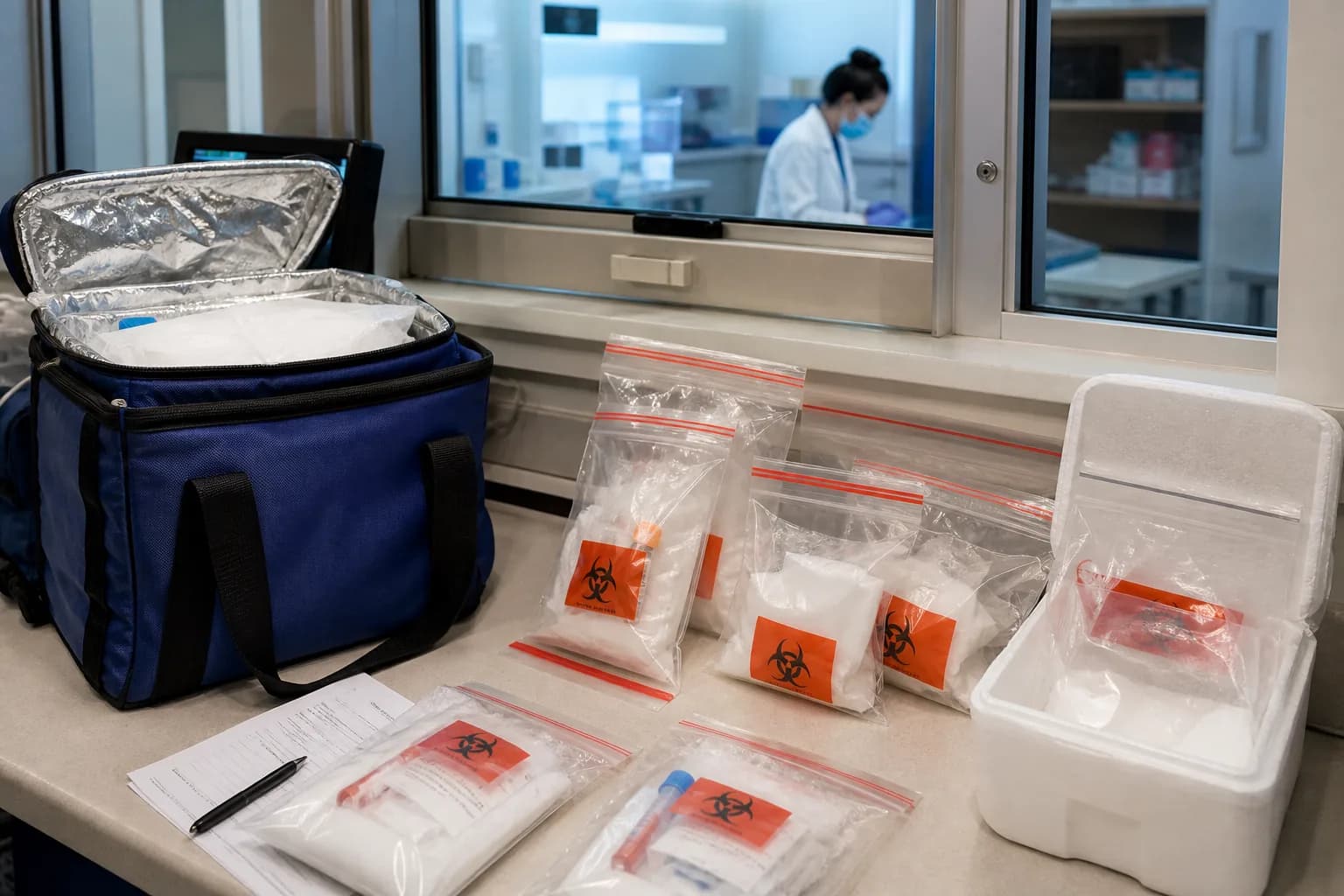
Printing labels at collection or at central accessioning
This is the architectural choice that shapes everything else. Printing at the point of collection binds identity to the tube at the moment of draw, which is where the highest-consequence error occurs. It requires a printer wherever collection happens — OPD rooms, wards, emergency, home collection kits — and a network or offline path to generate the label.
Printing centrally at accessioning is cheaper and simpler, but it means specimens travel from the patient to the laboratory identified only by whatever was written on them at the bedside. The barcode then documents the laboratory's internal handling accurately while leaving the riskiest segment untracked. Laboratories that choose this model should be clear that they have bought workflow visibility, not identification safety.
The pragmatic middle path used by many hospitals is point-of-collection printing for inpatient and emergency areas where misidentification risk is highest, with central labelling for walk-in OPD collection where the patient is present and awake at the counter. Whichever mix is chosen, the label content should be standardised: patient identifiers, accession barcode, tube type, collection datetime, and the collector.
Decisions to settle before the first label prints
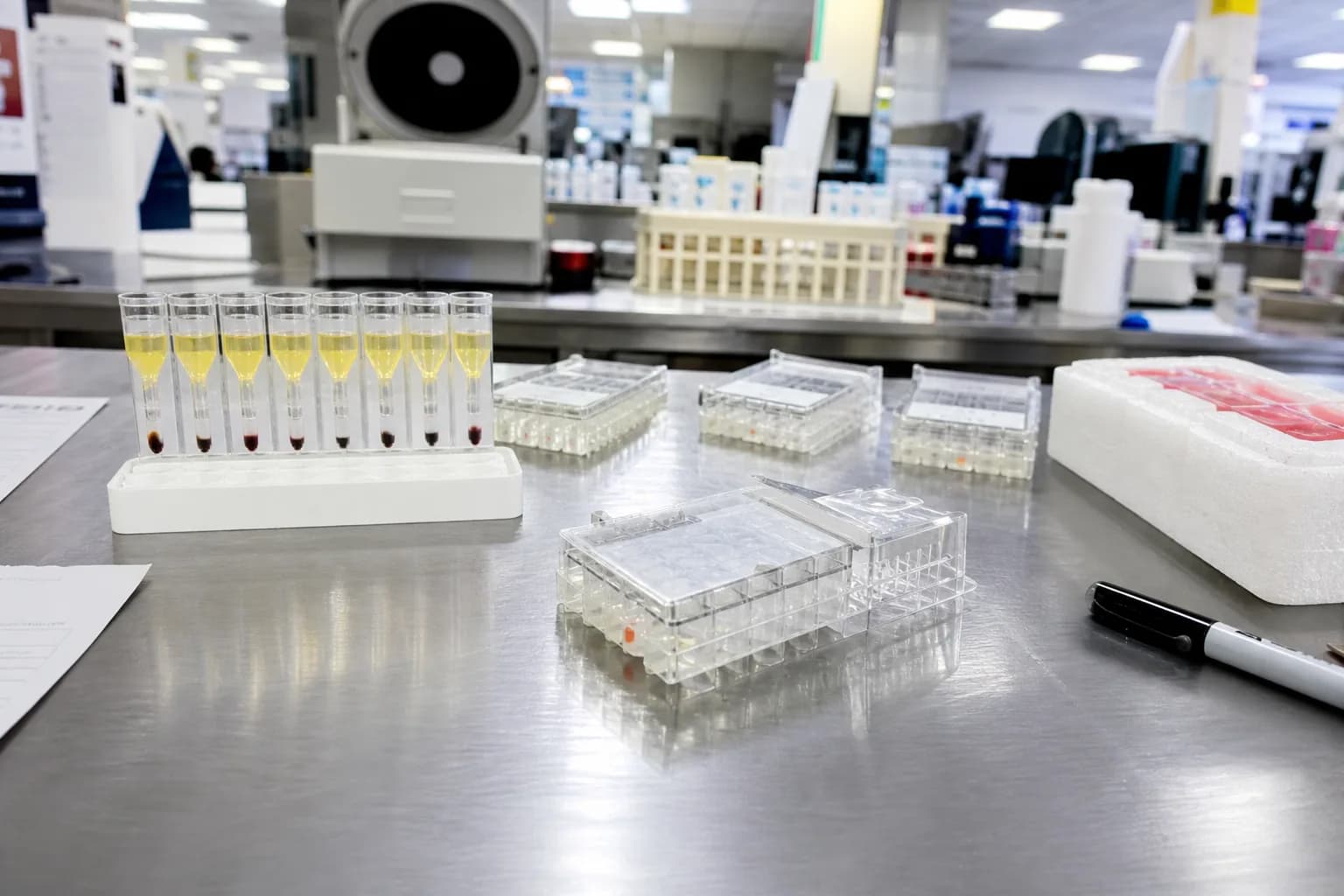
- Accession numbering scheme and where the sequence is issued
- Label size, symbology, and whether tubes are round-label or flag-label
- Point-of-collection versus central printing per location
- Offline behaviour when the printer or network is unavailable
- Reprint policy and how a reprinted label is distinguished
- Label content and which identifiers are human-readable
Choosing scan checkpoints without creating scan fatigue
Every scan is a small tax on staff time, so checkpoints should be chosen for the questions they let you answer rather than for completeness. The minimum useful set is collection, receipt into the laboratory, and placement on the analyser or bench. That trio already splits turnaround into transport, queue, and analysis.
Additional checkpoints earn their place where a specimen changes custody or physical form: dispatch from a branch, arrival at a referral laboratory, entry to and exit from centrifugation, aliquoting, and storage placement. Adding a scan that nobody ever queries produces resentment and eventually produces staff scanning a sheet of labels at the end of the shift, which is worse than not scanning at all.
Watch for that specific failure. Batch-scanning at shift end shows up as clusters of identical timestamps, and it is a signal that the checkpoint is impractical rather than that the staff are careless. The fix is usually to move the scanner, not to retrain the person.
Aliquots, add-on tests, and reflex testing
A specimen rarely stays as one tube. Aliquoting for different benches, add-on tests requested after the sample arrived, and reflex tests triggered by a result all create child containers or new test requests against an existing specimen. If the system cannot represent a parent-child relationship between containers, the laboratory ends up with untracked secondary tubes carrying handwritten labels.
Aliquot labels should carry their own barcode, linked to the parent accession. That link is what lets a laboratory answer whether the aliquot that produced an anomalous result came from the original tube or from a second draw. Systems that reuse the parent barcode on aliquots make that question unanswerable.
Reflex testing needs a rule layer and a record. When a result triggers an additional test automatically, the record should show which rule fired, when, and against which result — both for clinical clarity and for billing, since a reflex test the patient did not explicitly consent to or expect will surface at the counter. A laboratory system such as HealUDoc can carry the reflex rule, the resulting order, and the charge together so the reason for the additional test is visible to the clinician and to the billing team.
Finding a missing sample: chain-of-custody visibility
The real test of a tracking implementation is the missing sample call. A ward reports a pending result on a patient who is waiting for a decision, and the laboratory has to answer whether the sample is lost, in transit, in the queue, or already run under a different identity. Without checkpoints, that call consumes twenty minutes and often ends in a recollection.
With checkpoints, the last known scan defines the search. If the last event is collection, the sample is between the ward and the laboratory and the transport route is the search area. If the last event is receipt, the sample is inside the laboratory and the search is a physical one within known racks. Narrowing the search space is the entire deliverable.
Laboratories should build a specimen search view that anyone on the enquiry desk can use, keyed on patient identifier as well as accession number. Requiring the accession number to look up a sample is a design flaw, because the person calling about a missing sample is precisely the person who does not have it.
Rollout sequencing and the failure modes to expect
Barcode implementations fail more often on hardware and workflow than on software. Scanner ergonomics at a crowded collection counter, label adhesive that lifts off refrigerated tubes, printers positioned two steps away from the draw chair, and labels that obscure the sample volume window all cause staff to work around the system. Pilot in one high-volume collection area and one ward, and watch the physical handling rather than the screens.
Sequence the rollout by risk rather than by ease. Emergency and inpatient collection carry the highest misidentification consequence and should not be left until last simply because they are harder. Referral and send-out specimens can follow once the internal flow is stable.
Plan the downtime procedure before go-live, not after the first outage. Pre-printed contingency label stock with a reserved accession range, a paper log, and a defined reconciliation routine for when the system returns will be used at some point, and a laboratory that has rehearsed it recovers in an hour rather than a shift.
“The scanner has to be within arm's reach of the chair. We learned that after watching people label three tubes and then walk over to scan all three, which is exactly the batching we bought the system to stop.”