Start with a clinically owned acuity model
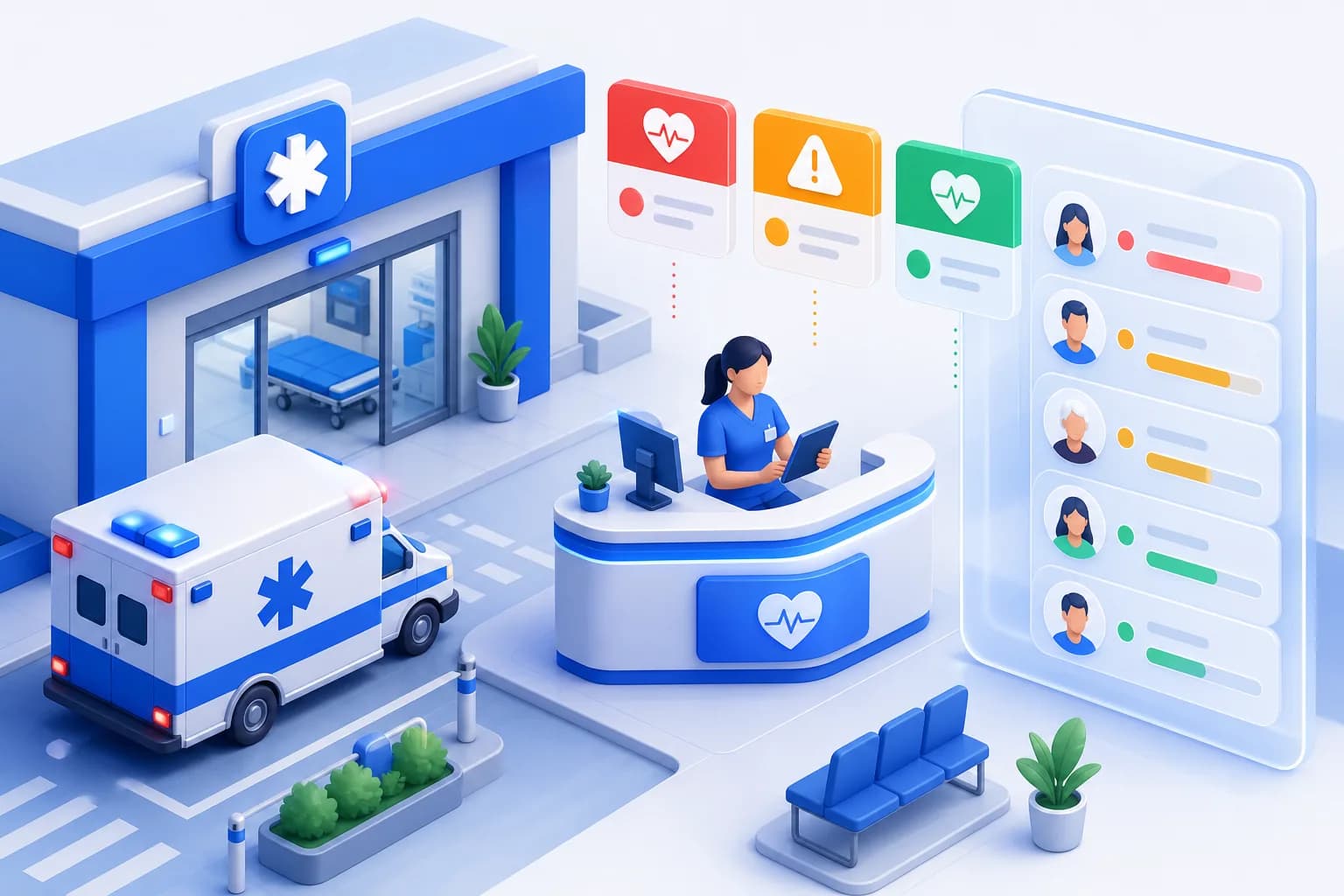
A digital triage workflow should encode an approved clinical model rather than inventing a score around available software fields. The emergency team must define how vital signs, presenting complaints, pain, mental status, and high-risk modifiers change acuity. Every rule needs an accountable clinical owner and a scheduled review date.
Keep the number of mandatory inputs small enough for the first contact, then collect detail after immediate threats are excluded. Pediatric, obstetric, geriatric, and immunocompromised patients often need separate modifiers because normal-looking observations can conceal risk. HealUDoc can present these rules through role-based forms while preserving the clinician's ability to override with a documented reason.
Design the first five minutes
The first screen should support rapid identification, infection precautions, a primary survey, and assignment of acuity. Registration should accept a temporary identity when delaying care for demographic verification would be unsafe. A visible timer should begin at arrival, not after clerical registration is complete.
Route orders and alerts according to acuity so resuscitation patients bypass ordinary queues. Link emergency encounters to lab, radiology, pharmacy, and billing only after the clinical pathway is active. This sequence prevents administrative dependencies from becoming barriers to stabilization.

Essential first-contact fields
- Arrival time and mode
- Presenting complaint
- Airway, breathing, and circulation status
- Core vital signs
- High-risk clinical modifiers
Make escalation impossible to miss
Alerts should identify an action, recipient, and deadline instead of merely changing a color on a dashboard. A critical trigger may notify the emergency physician, charge nurse, and bed coordinator simultaneously, with acknowledgement recorded. Unacknowledged alerts should escalate by policy rather than remaining in a passive inbox.
Avoid excessive warnings because alarm fatigue makes truly urgent signals less effective. Test each alert against historical cases and remove rules with poor clinical yield. Multi-branch hospitals should retain a common severity language while allowing escalation contacts and available services to differ by location.
Standardize reassessment and handoffs
Triage is a repeated safety process, not a single score assigned at arrival. Set reassessment intervals by acuity and trigger an earlier review when symptoms, observations, or waiting time worsen. The system should show overdue reassessments at the top of the worklist.
At transfer to IPD, ICU, theatre, or another hospital, handoff data should include current condition, interventions, pending tests, allergies, and escalation concerns. Structured fields improve completeness, while a short narrative preserves clinical nuance. Patient portal updates can inform families about administrative milestones without exposing sensitive clinical details.
Safe handoff minimum
- Current acuity and trend
- Treatments already given
- Pending investigations
- Known allergies and risks
- Named receiving clinician
Measure flow without gaming care
Useful measures include arrival-to-triage, triage-to-clinician, reassessment compliance, left-without-being-seen rate, and acuity-adjusted disposition time. Review distributions and outliers rather than relying only on averages that hide dangerous waits. Segment results by shift, branch, arrival mode, and acuity to locate operational causes.
Dashboards must never encourage staff to lower acuity or close encounters prematurely to improve targets. Audit overrides, timestamp edits, and unexplained status changes alongside performance measures. Balanced review connects speed with return visits, adverse events, and clinical escalation rates.

“Our breakthrough was treating reassessment as a clinical promise, not a dashboard statistic.”
Validate before and after launch
Run tabletop simulations for chest pain, sepsis, stroke, trauma, pediatric fever, and overcrowding before deployment. Include clinicians, registration staff, lab teams, and bed managers because failure often occurs between departments. Record where users hesitate, duplicate work, or depend on undocumented workarounds.
Launch with a short feedback cycle and daily review of safety exceptions during the first weeks. Compare electronic outputs with independent senior-clinician assessments to detect under-triage and over-triage. Change control should document the evidence, approver, release date, and training impact of every protocol update.