Decide what belongs in the record before choosing a standard
Integration projects go wrong when the first question asked is which standard to use. The prior question is which data belongs in the legal clinical record, which stays in the source system and is merely viewable, and which is operational signal that need not persist at all. A continuous monitor produces far more data than any chart should hold, and importing all of it makes the record harder to read rather than richer.
Write this down as a data disposition table before any interface is specified, listing element, source system, destination, retention, and who may amend it. HealUDoc's clinical records can receive normalized observations and trend summaries while high-frequency waveform data stays in the device system with a link for review. The table also settles amendment authority, because a value that arrived by interface still needs a defined human correction path.

Device integration in monitored areas
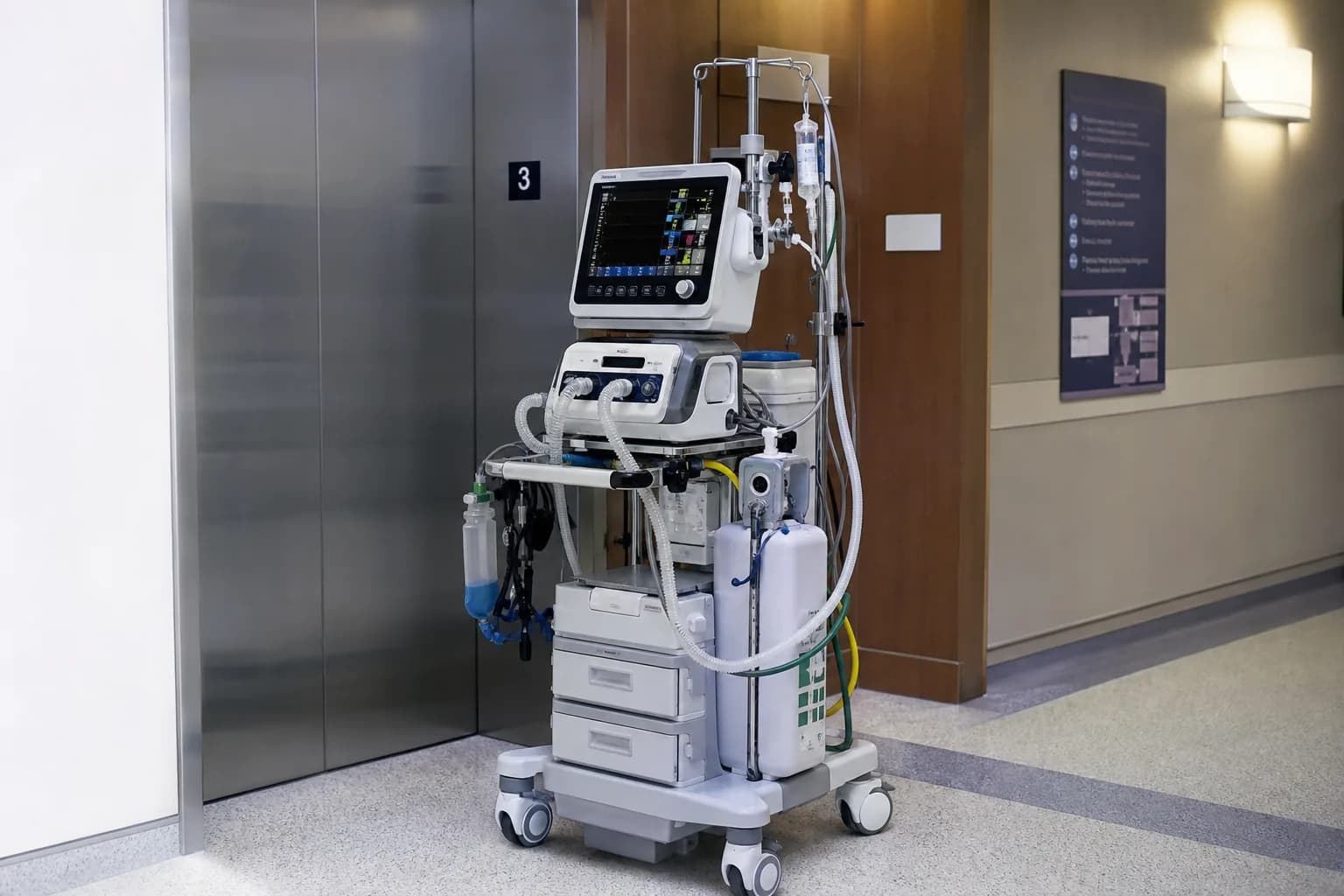
Bedside monitors, ventilators, dialysis machines, and infusion pumps each present different integration problems. Some publish continuously, some only on request, and some require a gateway that maps proprietary parameter names onto standard codes. That mapping is clinical work rather than technical work: someone with the relevant expertise must confirm that a parameter labelled one way by the vendor corresponds to the observation clinicians expect to read.
Clock synchronization and patient association are non-negotiable prerequisites. A device whose clock drifts by minutes will produce a trend that contradicts the nursing record, and staff will stop trusting both sources. Require positive association at connection, a visible indication of the currently associated patient, and an audit entry whenever it changes. Revalidate the whole chain after firmware updates, because vendors do occasionally change parameter identifiers between releases.
Device interface acceptance criteria
- Parameter mapping signed off by a clinician
- Synchronized clocks across devices and servers
- Positive patient-device association at connection
- Alerting when the interface stops delivering data
- Revalidation triggered by firmware changes
Laboratory and blood bank interfaces
Laboratory and blood bank interfaces are more mature but carry sharper consequences. An order message that loses its priority flag turns an urgent crossmatch into a routine one. A result message arriving without the original specimen identifier cannot be reconciled if the analyser is later found to have been miscalibrated. Specify explicitly what happens to messages that fail validation, because a silently discarded message is far worse than a rejected one.
Bidirectional flow matters most for transfusion, since status has to return to the requesting ward. HealUDoc's transfusion workflow tracks a request through acceptance, testing, ready, issued, and administered states, and each transition should be driven by a real event in the blood bank system rather than manual re-entry. Where the blood bank runs a separate application, agree which system is authoritative for unit status and enforce that in one direction only.
Patient identity is the hardest part
Every integration problem eventually becomes an identity problem. Emergency patients arrive without documents and are registered under a temporary identifier that must later merge with an existing record. If the merge does not propagate to the laboratory, the blood bank, and the device gateway, results and reserved units remain attached to an identity that no longer exists. This is the most common source of serious integration incidents in critical care.
Define the merge and unmerge behaviour of every connected system before go-live, then test it with a realistic scenario: a trauma patient registered as unidentified, crossmatched, transfused, and subsequently identified. HealUDoc propagates identity changes across its emergency, ICU, blood bank, and dialysis records, which reduces the surface area considerably, but any external system still requires an explicit merge message and a confirmation that it was applied.
Identity scenarios to test explicitly
- Unidentified emergency arrival later identified
- Duplicate registration merged after results exist
- Merge reversed following an error
- Patient transferred between branches mid-episode
- Reserved blood units following a merged record
Downtime behaviour and reconciliation
Interfaces fail, and critical care cannot pause while they are repaired. Every integration needs a documented downtime procedure that staff have actually practised: what is recorded on paper, who is notified, how long the unit continues before escalating, and what happens to orders placed during the outage. The procedure must be accessible without the network, which in practice means printed and stored where staff will look for it.
Reconciliation after recovery is the harder half. Decide in advance whether queued messages replay automatically or require review, and how duplicates created during downtime are resolved. Results entered manually and then received again by interface must be reconciled rather than left as two entries. HealUDoc's activity logs record which entries were manual and which arrived by interface, which makes the post-downtime review tractable instead of guesswork.
Governing interfaces after they are live
An interface that works on the day of acceptance testing is not a finished piece of work. Message volumes change, vendors upgrade, network segments are re-addressed, and a unit reconfigures its bed numbering without telling anyone. Monitoring should alert on the absence of expected traffic rather than only on error messages, because a silent interface produces no errors at all, which is precisely why it goes unnoticed for days.
Give every interface a named owner and a register recording purpose, direction, message types, dependencies, and last validation date, then review it whenever a connected system changes. HealUDoc's activity logs let that owner confirm expected volumes are still arriving from each source. Include interface failure in clinical drills so staff recognize the symptoms early, and verify after each incident that reconciliation actually happened rather than assuming the queue drained cleanly.
“Our worst outage was not the one where the interface stopped; it was the one where it kept running and sent the wrong thing.”