Separate flow measures from safety measures
Most critical-care dashboards fail because they mix two different kinds of measure on the same screen. Flow measures such as waiting time, turnaround, and utilization answer whether the operation is moving. Safety measures such as reassessment compliance, mismatch stops, and reaction reporting answer whether it is moving safely. Reviewed together without distinction, a good flow number reads as reassurance when it may have been achieved by cutting a safety step.
Pair each flow measure with a balancing safety measure and present them adjacently. Triage-to-clinician time sits next to reassessment compliance; transfusion turnaround sits next to bedside verification completeness. HealUDoc's dashboards can group measures this way rather than by department, which changes a review meeting from defending a number into explaining a tradeoff. The pairings should be agreed by clinical governance, not chosen by whoever happens to build the report.
Emergency measures beyond the average wait
Mean waiting time is the least useful emergency measure in common use. It conceals the distribution, and the patients who wait longest are frequently those whose acuity was underestimated at first contact. Review the tail instead: the ninetieth percentile by acuity level, the count of patients breaching their reassessment interval, and the number who left before being seen. These describe risk, whereas the average describes nothing in particular.
Segment every emergency measure by acuity, arrival mode, shift, and day of week before drawing a conclusion. A department that performs well overall may fail consistently between midnight and four in the morning, or for walk-in patients whose triage is delayed by registration. HealUDoc records arrival, triage, and clinician-contact timestamps separately, which lets a delay be attributed to a specific interval rather than to the department as a whole.
Emergency measures worth tracking
- Arrival-to-triage interval by arrival mode
- Ninetieth percentile triage-to-clinician time by acuity
- Reassessment interval compliance
- Left-without-being-seen count
- Acuity reassignments after initial triage
ICU measures that reflect strain rather than occupancy
Occupancy percentage is a poor proxy for ICU strain because it treats every bed and every patient as equivalent. A unit at eighty percent occupancy with several patients on multiple organ support and two nurses short is under more pressure than a full unit of stable step-down candidates. Useful capacity reporting distinguishes physical, staffed, equipped, and clinically suitable beds, and reports each of them separately.
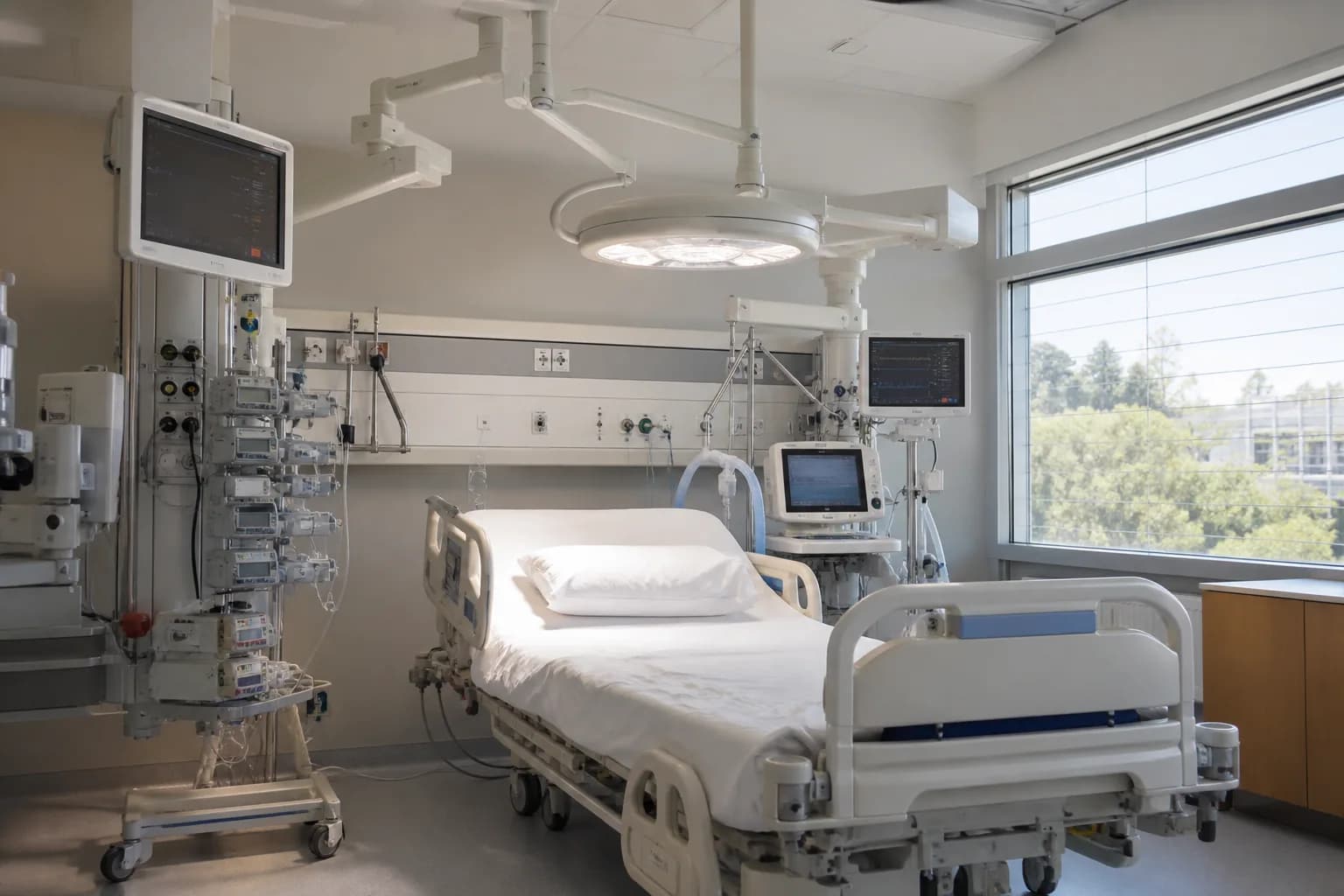
Add measures describing flow into and out of the unit: time from discharge decision to bed vacated, delayed transfers grouped by cause, and hours patients spend boarding in the emergency department awaiting an ICU bed. HealUDoc's ICU bed monitoring distinguishes cleaning, reserved, and staffed states, so a delay can be attributed to housekeeping, staffing, or ward acceptance rather than reported as generic congestion nobody owns.
Transfusion service measures worth the reporting effort
The crossmatch-to-transfusion ratio is the blood bank measure most worth understanding, because it connects clinical ordering behaviour to laboratory workload and to reservation-driven expiry. A high ratio means units are being held for patients who do not receive them. Review it by requesting specialty rather than as a hospital-wide figure, since the pattern is almost always concentrated in a small number of elective services.
Alongside it, track discards by reason, days of cover by component and group, and emergency-release usage. HealUDoc's blood bank inventory separates time expiry from reservation expiry, which turns an undifferentiated wastage figure into two actionable ones. Reaction reporting should be read as a culture indicator: a rise usually reflects improved detection, and presenting it to a board as deterioration without that context discourages the reporting itself.

Transfusion service measures
- Crossmatch-to-transfusion ratio by specialty
- Discards split by time and reservation expiry
- Days of cover by component and group
- Request-to-issue interval by urgency pathway
- Bedside verification completion rate
Dialysis measures that look past session counts
Dialysis units are measured on session counts far more often than on delivered treatment, which rewards throughput over completeness. Track missed and shortened sessions with recorded reasons, start-time delay against the scheduled slot, and variance between prescribed and delivered treatment time. A unit running at full utilization while routinely shortening sessions is not performing well, and the schedule alone will not reveal it.
Chair utilization needs the same care. Count slots lost to late cancellation separately from those lost to machine downtime, isolation requirements, or staffing, because each has a different remedy. HealUDoc's dialysis scheduling records cancellation reason and timing at slot level, which makes that distinction available without a manual tally. Review utilization by shift, since the final shift of the day usually carries most of the losses.
Reviewing measures without distorting behaviour
Any measure attached to a target will eventually be managed rather than improved. Emergency departments can improve triage-to-clinician time by reassigning acuity, dialysis units can improve utilization by shortening sessions, and blood banks can improve turnaround by accepting incomplete requests and resolving them afterwards. None of these are dishonesty. They are rational responses to what is being counted, and they appear wherever the counting is one-sided.
Audit the mechanism, not only the result. Review acuity reassignments, retrospective timestamp edits, and cancellation reason patterns alongside the headline figures, since HealUDoc's activity logs retain both the original entry and the amendment for comparison. Change measures when behaviour adapts around them, and explain to staff why the change was made. A measure set that never changes is either perfectly designed or no longer taken seriously.
“We stopped asking why the number moved and started asking what people did differently to move it.”