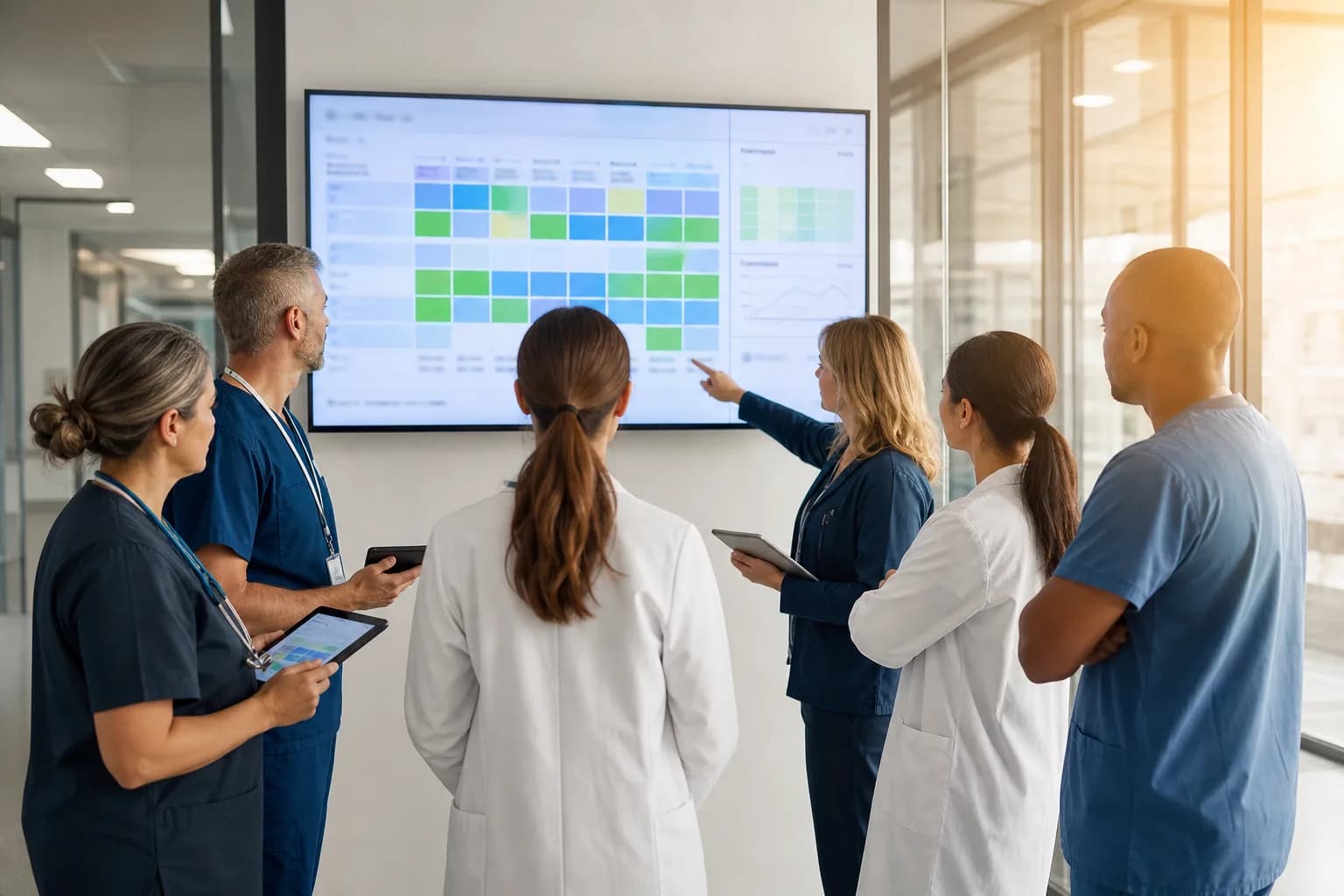
Setting the bar for practical AI use cases in hospital operations
Practical AI use cases in hospital operations are the ones that survive a simple test: a named person does less work or makes a better decision, the failure mode is visible and recoverable, and the hospital can tell whether it worked. Applied consistently, this test separates a small set of genuinely useful applications from a much larger set that demonstrate well and disappoint in production.
The pattern that distinguishes them is worth stating plainly. AI performs well where the task is bounded, where a human reviews the output before it has consequences, and where being wrong costs a correction rather than a patient. It performs poorly where the task requires context the model cannot see, where the output is acted on without review, or where the cost of a confident error is clinical.
This is not scepticism about the technology. It is a claim about deployment. The same capability that is valuable as a drafting assistant to a clinician who reviews it is dangerous as an unreviewed decision-maker, and most disappointing implementations differ from successful ones in the review step rather than in the model.

Where AI genuinely helps hospital operations today
Documentation support is the clearest current win. Ambient capture and structured drafting reduce the keyboard burden of clinical notes, and because the clinician reads and signs the note, the review step is already built into the workflow. The gain is real time returned to clinical work, and the failure mode — a draft that needs correcting — is visible at the moment it occurs. Correction rates are also directly measurable, which makes the benefit assessable rather than assumed.
Coding assistance is similarly well shaped. Suggesting ICD-11 codes from a documented encounter, flagging documentation that will not support a proposed code, and identifying probable omissions all leave the coder in the decision seat while removing search effort. Scheduling optimisation is a third: predicting no-show probability to inform overbooking, sequencing theatre lists to reduce changeover, and matching appointment length to expected consultation duration are constrained optimisation problems with measurable outcomes.
Triage support and image pre-read are genuinely useful with tighter conditions attached. A triage prompt that recommends a category which a nurse confirms adds consistency to a decision known to vary between staff. Image pre-read that flags studies for prioritisation — moving a probable intracranial bleed up the reporting queue — creates value without displacing the radiologist. Both require that the human decision remains the decision, and that the system's suggestion is recorded alongside what the clinician actually did.
Applications with a defensible case today
- Ambient and structured documentation drafting, clinician-reviewed
- Coding suggestion and documentation-gap flagging for coders
- No-show prediction feeding scheduling and overbooking rules
- Theatre list sequencing and appointment duration estimation
- Triage category suggestion confirmed by a trained nurse
- Image pre-read for worklist prioritisation, not for reporting
Where AI is currently oversold
Autonomous diagnosis is the headline claim and the weakest one operationally. Systems that perform impressively on curated datasets encounter a different distribution in a working hospital — different equipment, different patient mix, different image quality, different documentation habits — and performance degrades in ways that are not obvious from the vendor's validation. The gap between benchmark and bedside is the central fact of clinical AI deployment, not a footnote.
Prediction without a matching intervention is the second category. A deterioration score, a readmission risk, or a no-show probability delivered into a workflow with no capacity to respond generates alerts that staff learn to dismiss. This is not a model failure; it is an operating model failure, and no improvement in the model fixes it. The question to ask about any predictive product is what happens after the prediction, and who does it.
Third is the general-purpose assistant positioned as an answer to unstructured clinical questions. These tools are fluent, and fluency is easily mistaken for reliability. Where the output is a draft a clinician reviews, that is manageable. Where staff begin to rely on it for clinical facts, drug information, or protocol details without verification, the hospital has introduced an unmonitored information source into clinical decisions. Policy on acceptable use needs to precede availability, not follow the first incident.
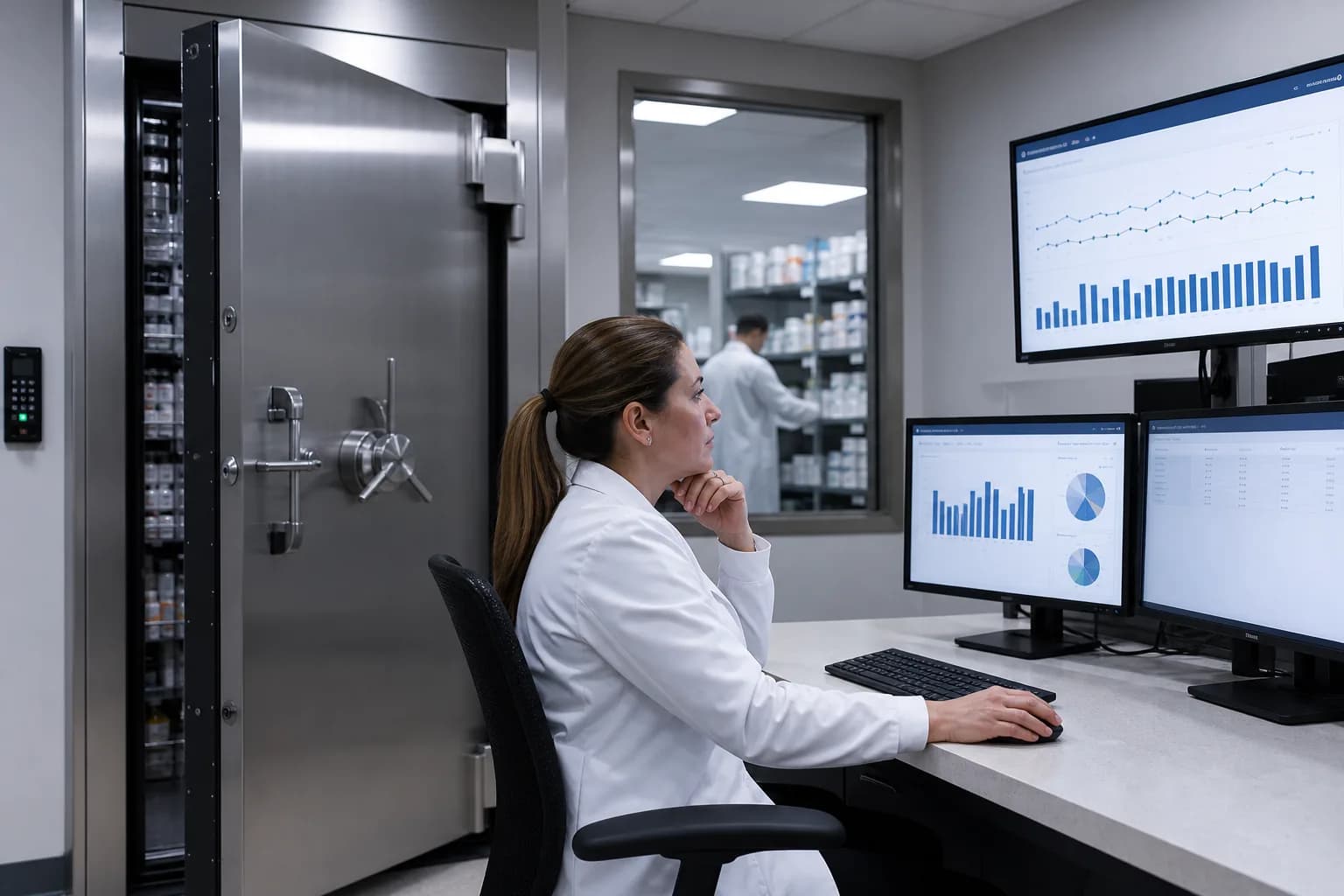
Evaluation criteria before anything is purchased
Insist on evaluation against your own data before purchase, not against the vendor's validation set. A retrospective run on a few months of your own historical records, scored against what actually happened, is the single most informative step available and is usually achievable within a pilot agreement. A vendor unwilling to support it is telling you something useful.
Define the success criterion before the pilot begins, in operational rather than statistical terms. Not that accuracy exceeds a threshold, but that coders process a defined volume with fewer queries, or that documentation time per encounter falls without a rise in correction rates, or that the prioritised worklist reduces time to report for urgent studies. Agree how it will be measured and who measures it, because a pilot without a pre-agreed criterion always concludes ambiguously and gets renewed by default.
Check performance across your patient mix rather than in aggregate. A model that works well overall may perform materially worse for elderly patients, for a particular payer group, or for documentation from a specific department. Aggregate performance conceals exactly the disparities that matter, and asking for subgroup results is a reasonable procurement requirement rather than an unusual one.
Human oversight that is real rather than nominal
Human-in-the-loop is claimed far more often than it is implemented. Genuine oversight requires that the reviewer has the information, the time, and the incentive to disagree. A clinician presented with a pre-filled note under time pressure, with no easy way to see what was generated versus what they wrote, is a rubber stamp in a workflow diagram rather than a safeguard.
Build the conditions deliberately. Distinguish generated content from authored content visually. Make correction the fast path rather than acceptance. Record what was suggested and what was finally accepted, because the difference is your ongoing quality signal and your evidence trail if a decision is later questioned. Automation bias is well documented; assume it will occur and design against it rather than training people not to have it.
Assign accountability explicitly. When an AI-assisted output contributes to a decision, the responsible clinician is responsible for the decision, and that must be understood before deployment rather than discovered during an incident review. Add AI-assisted workflows to the clinical governance committee's remit, and review correction rates and near-misses the way you would review any other clinical process.
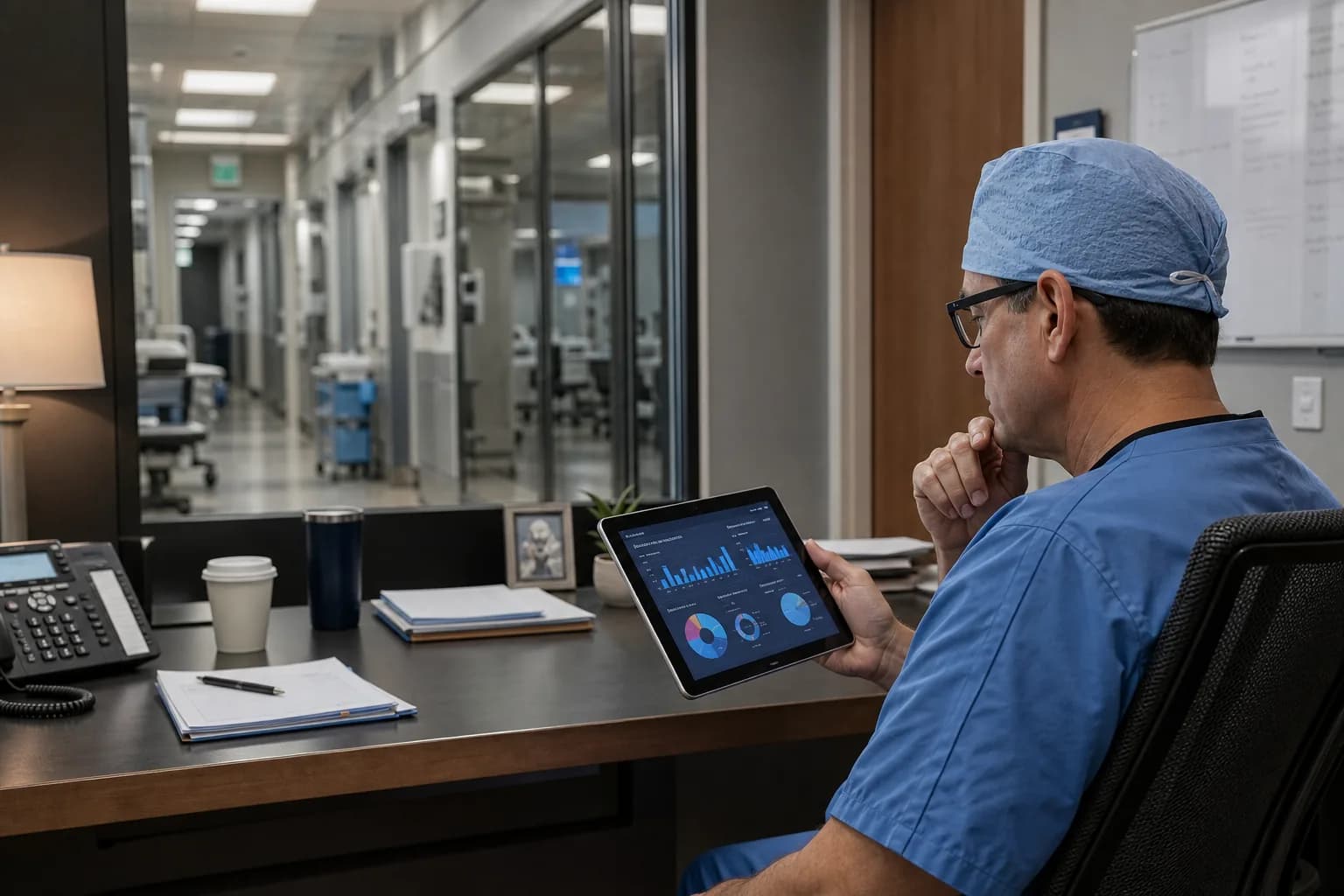
Conditions for oversight that functions
- Generated content visually distinct from authored content
- Correction faster and easier than acceptance
- Suggested and accepted values both retained in the record
- Correction rates monitored by department and reviewed monthly
- Named clinical accountability for AI-assisted decisions
DPDP, data sharing, and where the data actually goes
Most AI procurement conversations in Indian hospitals stall, correctly, on data. Under the DPDP Act 2023, the hospital remains accountable for personal data it holds, and engaging a vendor to process that data does not transfer that accountability. Purpose limitation, retention limits, and the obligation to be able to explain what is done with patient data all apply to the AI vendor's processing as much as to any other.
The questions that need concrete answers are specific. Does patient data leave the hospital's environment, and if so, to which jurisdiction. Is data used to train or improve the vendor's models, for this hospital only or across customers. What is retained after processing, and for how long. What happens to the data on termination. Ambiguity on model training in particular is common and should be resolved in the contract rather than in a sales conversation.
Prefer architectures that reduce the question's difficulty. Processing within the hospital's own environment, or de-identification before transmission where the use case permits it, removes several categories of risk at once. Where identifiable data must be transmitted, the vendor becomes part of your processing chain and belongs in your data inventory, your access reviews, and your breach response plan.
Questions to ask a vendor
Procurement is where most of the value is won or lost, and a short list of direct questions filters the field quickly. The useful ones are about evidence, failure, and exit rather than about capability, because capability is what the demonstration already showed and the other three are what the next three years will consist of.
Pay particular attention to the answers about failure and monitoring. A vendor with a considered account of how their system degrades, what monitoring detects it, and what the hospital will see when it happens has deployed in real hospitals. A vendor who describes only success has not, or is not telling you about it. Ask for a reference site with a comparable case mix and speak to them without the vendor present.
Finally, ask what happens when you leave. Data export format, model artefacts, the fate of any hospital-specific tuning, and transition support all matter, and they are far easier to negotiate before signing than after. A hospital that cannot leave a clinical AI vendor has acquired a dependency rather than a tool.

Ask every AI vendor
- What population was the model validated on, and how does it differ from ours?
- Will you support a retrospective evaluation on our own historical data?
- How does the system fail, and what will we see when it does?
- Is our patient data used to train or improve your models, and for whom?
- What performance monitoring do you provide after go-live?
- What do we take with us if we terminate, and in what format?
Starting small, and being honest about the result
The sensible entry point is an operational use case with a reviewable output and a measurable outcome — coding assistance, no-show prediction feeding a scheduling rule, or documentation support in one department. These deliver value without clinical risk, and they build the institutional muscles that harder use cases require: evaluating against your own data, monitoring after deployment, and governing an AI-assisted workflow.
Systems that already hold the operational data in one place lower the effort considerably. A platform such as HealUDoc, where documentation, scheduling, coding, and outcomes sit on a shared model, makes both the retrospective evaluation and the post-deployment monitoring a query rather than a data assembly project. The absence of that foundation is why many hospitals cannot evaluate AI proposals even when the proposal is reasonable.
Then be willing to stop things. The maturity signal in an AI programme is not the number of tools deployed but the willingness to discontinue one that did not meet its pre-agreed criterion. Hospitals that run three small evaluations, keep one, and say clearly why the other two were dropped will make better decisions over five years than those that accumulate pilots nobody is prepared to conclude.
“We ran three pilots and kept one. The two we stopped taught us more about what to ask the next vendor than the one that worked.”