If your compliance figure is 95 per cent, the audit is the problem
Hand hygiene compliance in the high nineties, sustained month after month across every unit, is not a description of behaviour. It is a description of an audit that observes announced sessions, counts a small number of easy opportunities, and is conducted by someone the staff report to. Directly observed hand hygiene compliance in well-resourced hospitals with mature programmes is typically reported in the published literature well below that, and the honest baseline for a hospital measuring it properly for the first time is usually uncomfortable.
This matters because a fabricated number removes the reason to improve. A unit head shown 96 per cent compliance has nothing to act on, and the infection control committee moves to the next agenda item. When a cluster of infections later appears on that unit, the hand hygiene data cannot help explain it, because it never described reality. An audit that produces a plausible, moderate, moving number is worth more to a hospital than one that produces a comfortable one.
The fix is methodological rather than motivational. Nothing in this article is about persuading staff to wash their hands. It is about designing an observation process whose output means something: what counts as an opportunity, how many you need, who observes, and how you handle the fact that being watched changes behaviour. Get the measurement right and the improvement conversation becomes possible. Get it wrong and every subsequent intervention is being steered by noise.
The 5 Moments, and what an opportunity actually is
The WHO framework defines five moments for hand hygiene: before touching a patient, before a clean or aseptic procedure, after body fluid exposure risk, after touching a patient, and after touching patient surroundings. These are indications. An opportunity is the unit of measurement and it is not the same thing. One opportunity may carry more than one indication simultaneously, and it requires exactly one hand hygiene action. Moving from a patient's surroundings directly to touching the patient is one opportunity carrying two indications, not two opportunities.
Getting this wrong is the most common technical error in hospital audits and it moves the denominator substantially. Observers who count indications rather than opportunities will inflate the denominator, which deflates compliance. Observers who count only the obvious before-patient-contact moment will shrink the denominator to the easiest cases, which inflates compliance. Both errors are invisible in the final percentage, and both are common in hospitals where observers were briefed for twenty minutes rather than trained.
The action counts if it is either handrub with an alcohol-based formulation or handwash with soap and water, performed at the right moment. Glove use is not a substitute and this must be explicit in observer training, because glove-wearing staff who never decontaminate between patients are a real and frequent finding. Record glove use separately as its own observation, since inappropriate glove use is a distinct problem that a compliance percentage will otherwise hide completely.

How many observations you need, and where
The WHO hand hygiene technical reference manual is the practical guide here, and its two central operational recommendations are worth following: observation sessions of roughly twenty minutes, with reasonable variation either side, and a minimum in the region of 200 opportunities per unit per measurement period before a compliance figure for that unit is stable enough to act on. Below that, unit-level percentages bounce around enough that a committee will spend its time discussing sampling variation.
Two hundred opportunities per unit per period is a serious commitment. For a hospital with eight clinical areas measured quarterly, that is 1600 opportunities a quarter, which at typical observation densities is a substantial number of twenty-minute sessions. Most hospitals cannot resource that at the start. The correct response is to reduce the number of units measured, not the number of observations per unit. Four units measured properly is useful data; twelve units measured at thirty opportunities each is a spreadsheet.
Distribute sessions across the working pattern deliberately. Compliance on a Tuesday morning ward round with full staffing is not compliance at three in the morning on a short-staffed night shift, and a programme that only observes during office hours is measuring its best case. Spread sessions across shifts, days of the week, and both busy and quiet periods, and record the shift on every session sheet so you can analyse by it later. That analysis frequently reveals more than the headline number.
Sampling decisions to fix before the first session
- Number of opportunities required per unit per period, and who resources it
- Session length and the maximum number of staff observed at once
- Distribution across shifts, weekends and night duty
- Which professional categories are recorded separately
- Which units are in scope this period, and which are deliberately deferred
Observers: selection, training and inter-observer agreement
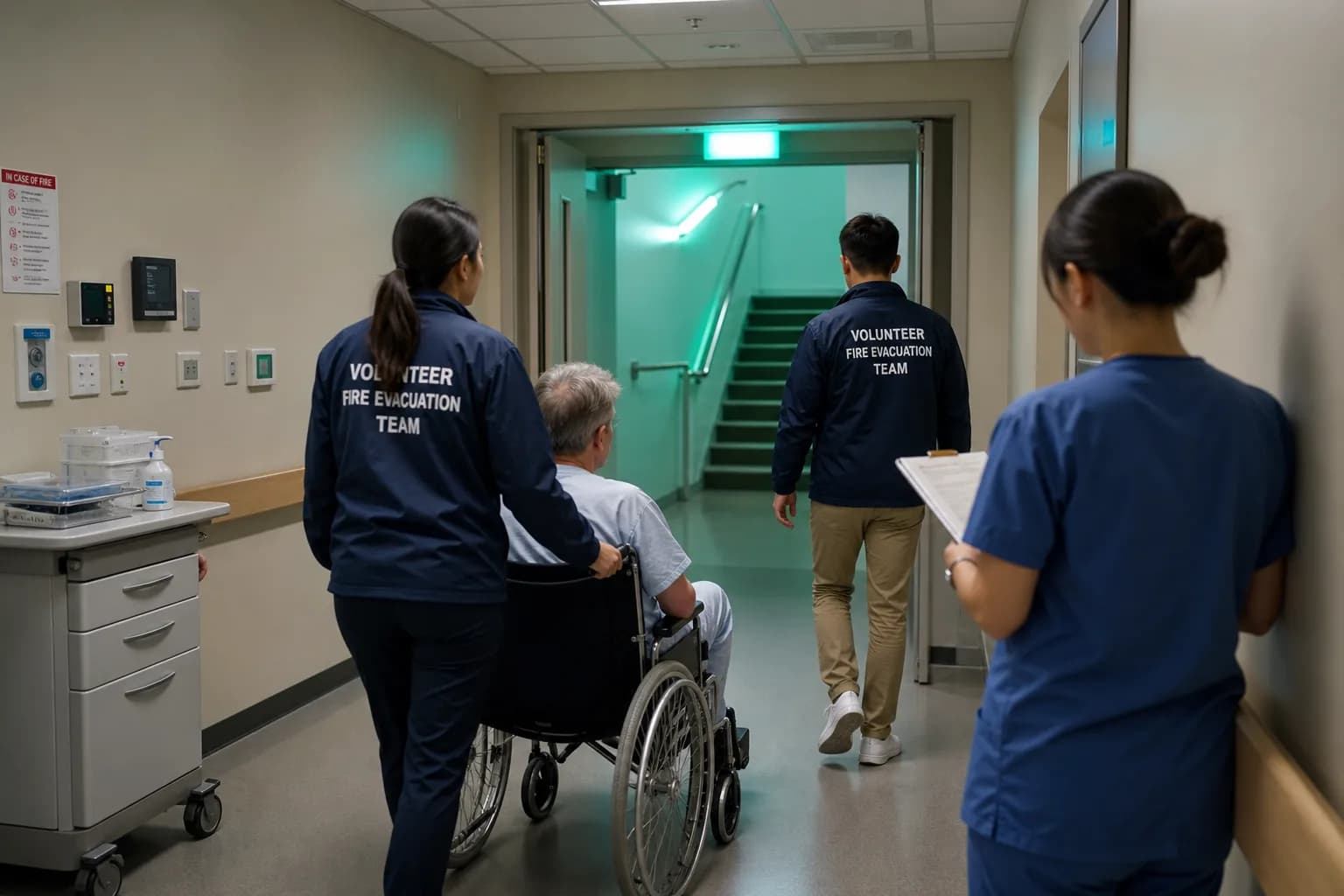
The observer is the instrument, and an untrained instrument gives untrained readings. Observers need formal training in the 5 Moments, in opportunity identification, and in the specific edge cases they will meet: the doctor who touches only the bed rail, the nurse who wears the same gloves between two patients, the physiotherapist who moves between beds without contact. Training should end with a competency check on video or on the ward against a reference observer, not with a signature on an attendance sheet.
Inter-observer agreement is the quality control that almost nobody runs and that changes everything. Have two trained observers watch the same sequence independently and compare their records: same number of opportunities, same compliance calls. Repeat it periodically, at least twice a year, and after every new observer joins. Where agreement is poor, the fix is retraining and clearer written rules, not averaging the results. Without this check you have no idea whether a difference between two units is a difference in behaviour or a difference in observers.
Independence matters as much as skill. An observer who is the ward sister, auditing her own staff and reporting a figure her matron will judge her on, is placed in an impossible position. Cross-unit observation, where trained link nurses audit a unit other than their own, resolves most of this at no additional cost. It also builds a small cadre of staff across the hospital who understand the methodology, which pays off when the programme needs defending in a committee.
Observer competency requirements worth documenting
- Formal training on the 5 Moments and on opportunity versus indication
- A recorded competency assessment against a reference observer
- Periodic inter-observer agreement testing, at least twice yearly
- Cross-unit assignment so nobody audits staff they line-manage
- A written edge-case rule sheet carried during every session
The Hawthorne effect, and living with it honestly
Being watched improves behaviour. This is not a flaw to be eliminated; it is a property of direct observation, and every directly observed compliance figure in every hospital in the world is inflated by it to some degree. The published work on this is consistent enough that you should treat your observed figure as an upper bound rather than an estimate. Stating that plainly in your reports is more credible than pretending the effect does not apply to your hospital.
You can reduce it without eliminating it. Observers who are physically unobtrusive, who observe from a position where they are not obviously watching one person, and who are a routine presence on the ward rather than an event, generate less inflation than a visitor with a clipboard announced at handover. Some hospitals use covert observation, which produces better data and raises a legitimate ethical question about observing staff without consent. The defensible middle position is open programme, unannounced sessions: staff know audits happen, they do not know when.
The practical consequence is about how you use the number. Because the inflation is fairly consistent within a hospital using a stable method, the trend remains informative even though the level is not. A rise from 58 to 71 per cent over three quarters, on the same method with the same observer pool, is probably a real improvement. A cross-hospital comparison of 71 against another hospital's 88 tells you almost nothing, because you cannot know how differently the two were watched.

“Our compliance was 94 per cent for two years. We changed nothing except who did the observing and how they were trained, and it dropped to 61. That was the first month the data was worth reading.”
Product consumption as an independent cross-check
Alcohol-based handrub consumption, expressed as millilitres per patient day, is the cheapest independent measure available and almost every hospital can produce it from existing store issue records. It is immune to the Hawthorne effect because nobody performs for a stores register. It is a blunt instrument, in that it cannot tell you whether the rub was used at the right moment or by the right person, but it moves when behaviour genuinely changes and it stays flat when only the audit changes.
Use it as a triangulation check rather than a primary measure. A unit whose observed compliance climbed twenty points while handrub consumption stayed unchanged is a unit whose audit result deserves investigation. A unit whose consumption doubled after a dispenser placement project is a unit where something real happened, whatever the observation data says. The disagreements between the two measures are where the useful questions live.
The caveats are worth knowing. Consumption is distorted by dispenser placement and by wastage, by visitors and by non-clinical use, and by store issue timing that bears little relation to actual use in the month recorded. Normalise by patient days rather than by bed count, use a rolling three-month average to smooth issue lumpiness, and record dispenser count and placement changes alongside so a step change in the series has an explanation attached.
Feeding the number back so it changes something
Immediate verbal feedback at the end of a session, given to the unit rather than to an individual, is the part of the process with the most direct effect on behaviour. It costs the observer five minutes and it converts an audit from surveillance into teaching. Keep it non-punitive and specific: this is what I saw, this moment was missed most often, here is what the unit could try. Naming individuals in feedback ends co-operation quickly and permanently.
Aggregate reporting should be broken down by moment and by professional category, because the aggregate percentage hides the actionable findings. Compliance before patient contact and compliance after body fluid exposure typically differ substantially, and they need different interventions. Compliance by doctors, nurses and allied staff frequently differs too. A single hospital-level percentage on a dashboard is the least useful presentation of hand hygiene data available.
Close the loop visibly. Post the unit's own figure on the unit, with the previous period next to it, and state what changed as a result of the last cycle. Where audit data is captured on a tablet rather than paper, a platform such as HealUDoc can hold the session records so unit-level breakdowns and inter-observer comparisons are produced without a nurse retyping tally sheets into a spreadsheet at month end. The methodology still has to be right; the tooling only removes the transcription.
Reporting breakdowns that make the data actionable
- Compliance by each of the five moments, not just the total
- Compliance by professional category, reported without naming individuals
- Compliance by shift, with night duty shown separately
- Handrub consumption per patient day plotted on the same period axis
- Number of opportunities behind every percentage shown