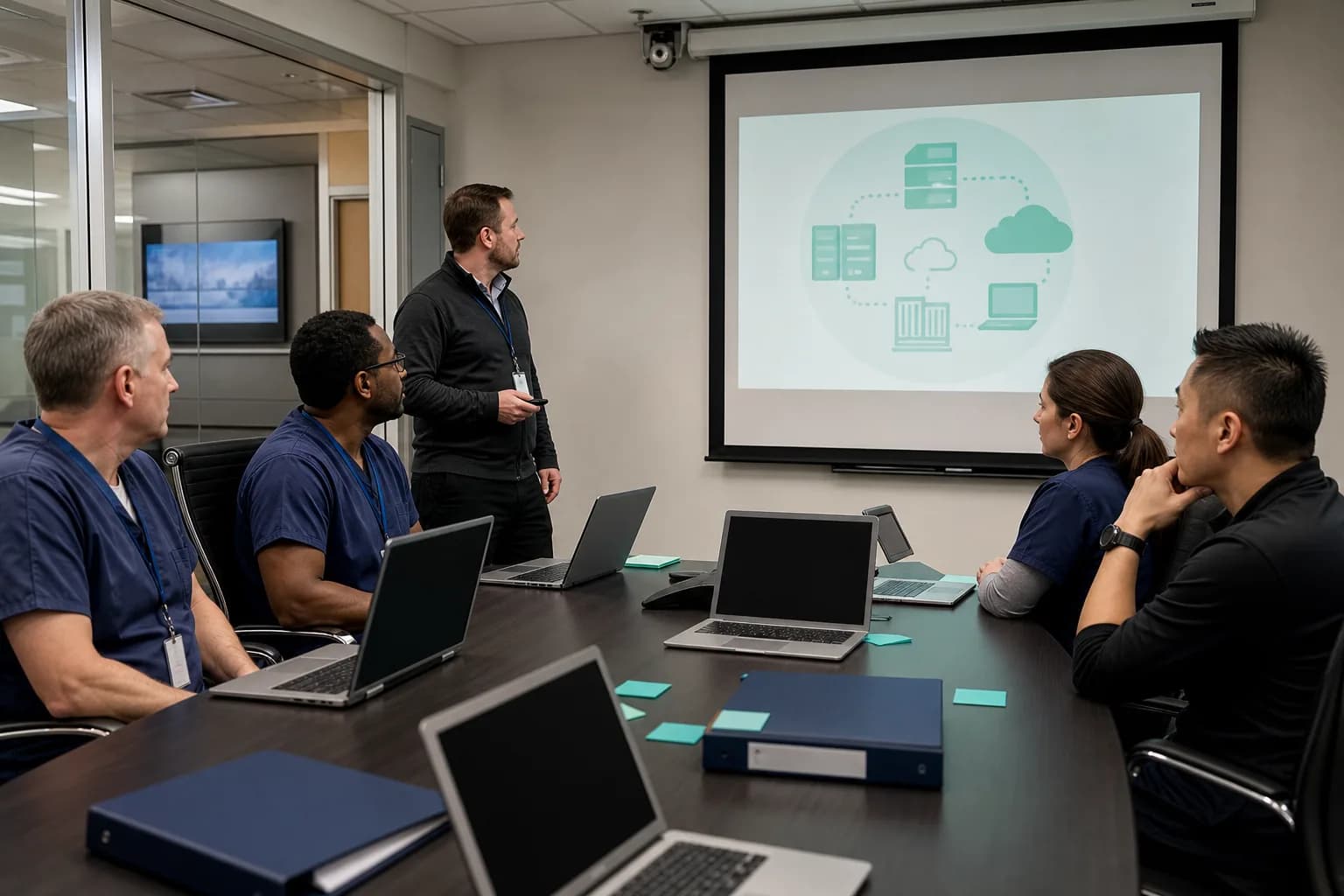
The comparison is only honest if the assumptions are visible
Every cloud versus on-premise comparison you have seen was built by someone with a preference, and the preference lives in the assumptions rather than in the arithmetic. Change the assumed refresh cycle from five years to seven and on-premise wins. Assume a real disaster recovery site on both sides and cloud usually wins. Assume your connectivity is reliable and cloud looks safe; assume a single provider in a tier-three town and it does not. So the useful thing this article can do is not give you an answer but show you every dial, and state plainly that all figures below are illustrative placeholders for your own quotes.
The second discipline is comparing like with like. Most on-premise costings omit the disaster recovery capability that the cloud quote includes by default, omit the cost of the staff who patch and monitor at midnight, and price hardware at purchase without the refresh that falls in year five or six. Most cloud costings omit egress charges, omit the bandwidth upgrade the migration requires, and quietly assume the hospital will stop doing infrastructure work entirely, which it will not.
Set the boundary before you start. This comparison covers infrastructure and platform for the hospital management system and its immediate dependencies over five years. It excludes application licensing at first, because that is a separate axis handled later, and it excludes the imaging archive, which has such different storage economics that mixing it in distorts everything. Write the boundary at the top of the sheet so nobody argues later about whether a number was in or out.
What on-premise actually costs across five years
Start with the visible capital: servers, storage, hypervisor licensing, network equipment, and the second copy of enough of that to constitute a recovery capability. Then add the facility, which is where hospital costings usually collapse. A server room needs uninterruptible power with battery replacement roughly every three to four years, generator backing that already exists in a hospital but consumes fuel and maintenance, precision cooling, fire suppression, physical access control and the floor space itself, which has an opportunity cost in a building where a square metre could otherwise be clinical.
Then the running costs. Power for compute and cooling, billed at a commercial tariff that varies widely by state. Annual maintenance contracts on hardware, typically renewed after warranty at a meaningful percentage of purchase value. Connectivity for remote branches and for patient-facing services. Backup media or a backup target. And staffing, which is the line most hospitals under-count: patching, monitoring, capacity management, backup verification and after-hours response are not free simply because the person is already on payroll.
The refresh is the sting. Hardware bought in year one is generally planned for replacement in year five or six, so a five-year comparison either includes a refresh or ends exactly at the moment the next capital request lands. Be explicit about which you have done. As an illustrative structure only, treating year-one capital as C, a five-year on-premise total is roughly C plus recurring facility and power, plus maintenance renewals from year two, plus staffing, plus a partial refresh provision. Fill in your own vendor quotes; the shape of the calculation is the transferable part.
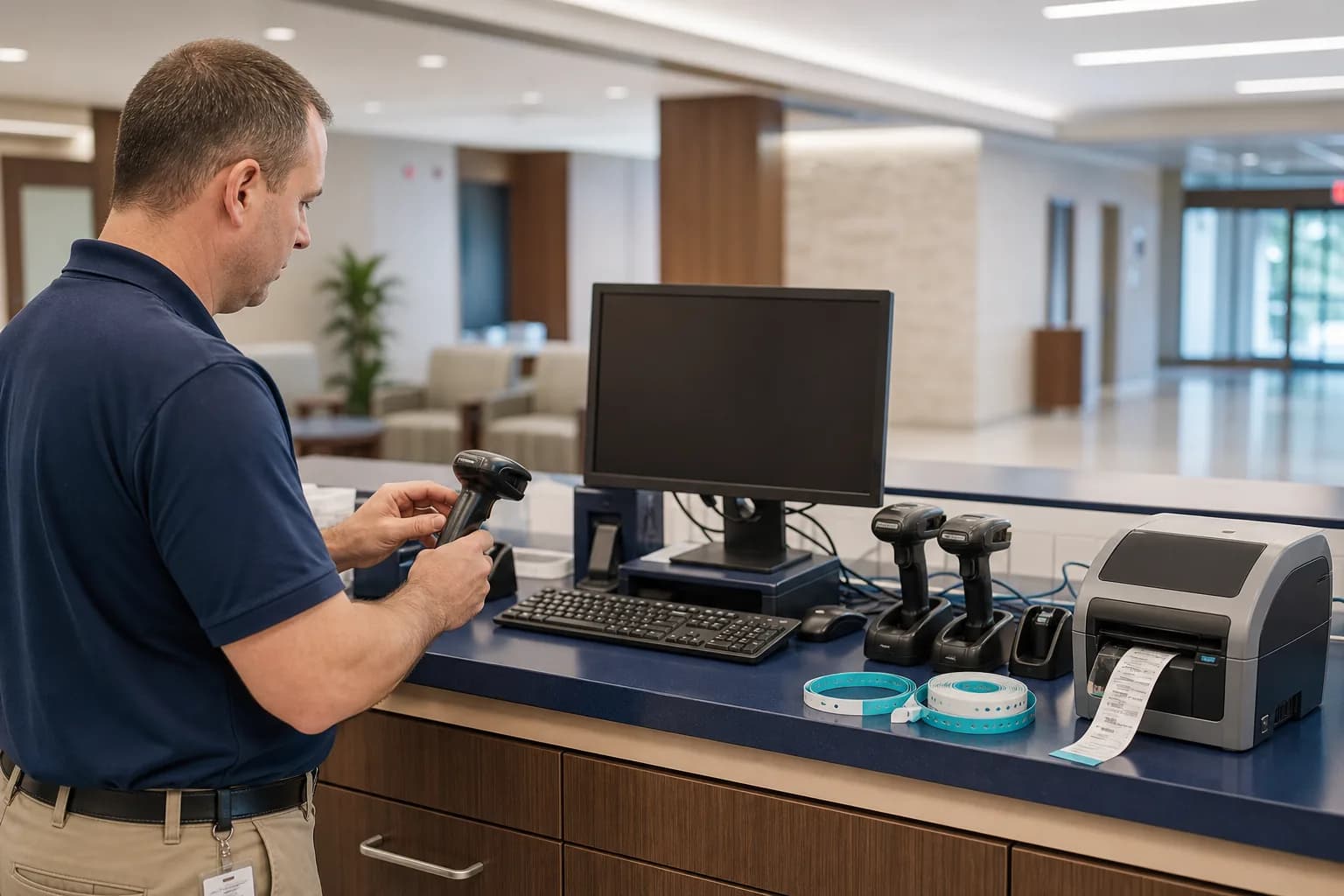
On-premise lines commonly missing from the first draft
- Uninterruptible power battery replacement within the five-year window
- Precision cooling capital and its share of the electricity bill
- Hardware maintenance renewal once the initial warranty lapses
- A genuine second site or second rack for disaster recovery, not a spare server
- Fully loaded cost of the staff time spent on patching, backups and night calls
What cloud actually costs across five years
Cloud converts capital into a monthly operating charge with a very different risk profile. The core is compute and block storage sized for peak rather than average unless you are prepared to engineer autoscaling, plus managed database services if you use them, plus backup and snapshot storage, plus the second region or second availability zone for recovery. Reserved or committed use pricing reduces the compute component substantially in exchange for a one or three-year commitment, and that commitment is the honest counterpart to the capital you were avoiding.
The lines that surprise hospitals are network related. Data egress is charged, and while a hospital management system generates modest egress, document and image retrieval does not. Inter-region replication for recovery is charged. And the hospital needs materially better connectivity than before: a primary leased line with a committed service level plus a genuinely independent secondary link on a different provider and preferably a different physical path, because the hospital management system is now a network-dependent service and a fibre cut becomes a clinical event.
Cloud does not remove the staffing line either, it changes its shape. You need fewer hands on hardware and more skill in identity, network configuration, cost management and monitoring, and those skills cost more per head in the market. Hospitals that assumed cloud would let them run with one fewer engineer usually find they run with the same number doing different work. Say so in the business case, because a promised headcount saving that does not materialise damages the credibility of the whole exercise.

Cloud lines commonly missing from the first draft
- Data egress and inter-region replication charges under realistic usage
- A second, physically independent internet link with its own contract
- Non-production environments left running outside working hours
- Backup and snapshot retention priced at the retention period you actually need
- Skills or managed-service cost for identity, network and cost governance
Licence models sit on top of both, and they change the answer
Application licensing is a separate axis and it frequently outweighs the infrastructure difference. A perpetual licence with annual maintenance at a percentage of licence value behaves like capital, is usually tied to a bed count or a named user count, and leaves you owning something at the end. A subscription priced per bed, per user or per encounter behaves like operating cost, includes upgrades, and stops entirely when you stop paying. Neither model is inherently cheaper across five years; the crossover point depends on the maintenance percentage and the subscription rate.
Watch for the metric drift. A bed-based licence is stable; a user-based licence grows every time a department adds a clerk; an encounter or transaction-based model grows with your success, which is fine until the hospital opens a second outpatient block. Model the licence cost against your own three-year growth plan rather than against today's headcount, and ask the vendor to fix the unit rate for the contract term rather than the total, because the total will move.
Then check what the licence permits in each deployment. Some vendors price the same product differently on their own cloud, on a public cloud tenancy you own, and on your hardware, and some restrict the deployment options entirely. Some charge separately for a standby instance used only for disaster recovery, which can quietly double the cost of the recovery tier you just agreed. These are negotiable at signature and immovable afterwards, so raise them during evaluation.
The data residency constraint that narrows the field early
Before comparing prices, settle where the data may live, because it removes options rather than adjusting numbers. The CERT-In directions require that logs be maintained within Indian jurisdiction, which affects the region choice for the monitoring platform as much as for the application. The Digital Personal Data Protection Act 2023 permits transfer outside India except to countries the Central Government restricts by notification, while preserving any other law that imposes a stricter restriction, so sector-specific rules can bite even where the Act does not.
For hospitals the practical effect is that a hosting arrangement in an Indian region is the straightforward path and anything else needs a documented justification. That is not usually a hardship, since all the major providers operate Indian regions, but it does mean checking the fine print of managed services: some ancillary services, support tooling and telemetry default to a region outside the country even when your primary workload does not. Ask specifically, in writing, and ask about support access as well as storage.
If the hospital serves government scheme patients under contracts that specify empanelled providers or particular hosting conditions, those conditions are a filter applied before commercial comparison. The same applies to any tender that references a certification or empanelment status. Discovering this after selecting a provider is an expensive way to learn it, and it is one of the more common causes of a hospital IT project stalling between award and go-live.
How to decide for your specific hospital
Four factors decide most cases, and price is rarely the first. Connectivity: if you cannot get two independent, reliable links, cloud carries a clinical risk that no cost model captures. Capital availability: a trust with capital budget and a poor operating margin has a genuinely different answer from a group that can fund operating expenditure but not capital. Growth and volatility: adding a branch is trivial in cloud and a six-month procurement on premises. Staffing: a hospital that cannot recruit and retain infrastructure engineers should not run infrastructure.
Multi-site groups usually find the balance tips towards cloud faster than single-site hospitals, because the alternative is either a data centre at each site or a private network back to a central one, and both are costly to build and to keep resilient. Single-site hospitals in metros with good connectivity can make either work. Single-site hospitals in smaller towns with a competent in-house team and unreliable links often make a rational choice to stay on premises, and that choice deserves to be respected rather than treated as backwardness.
Hybrid is a real answer and not a fudge, though it has to be designed rather than drifted into. Keeping the core hospital management system local while running patient portal, appointment booking, analytics and disaster recovery in cloud is a common and workable pattern. The cost of hybrid is complexity: two operating models, two security postures, an integration layer to maintain and a clear rule about which side owns identity. Decide that rule first.
“We ran the five-year numbers twice and they came out within a few per cent of each other. The decision in the end was that we could not hire a second infrastructure engineer in our town, and that was not a line in the spreadsheet.”
What the business case usually leaves out
Migration cost is the largest omission. Moving an established hospital management system means data migration and validation, parallel running, retraining, integration rework with laboratory analysers and imaging modalities, and a period of reduced productivity that has a real cost even though nobody invoices for it. As an illustrative planning assumption only, treating migration as a project of the same order as several months of the recurring cost is more realistic than the near-zero figure that appears in most first drafts.
Exit cost is the second. Whichever way you go, ask what leaving looks like: in what format your data comes back, whether it includes documents and audit history as well as database rows, how long the vendor retains it afterwards, and what it costs. A subscription where the exit format is a set of PDF reports is not portable data whatever the contract calls it. Egress charges on a large archive can be significant enough to influence the original design.
The third omission is the cost of downtime, which is difficult to quantify but not impossible. Estimate the revenue that stops and the reputational effect of a public outage during outpatient hours, and use it to sanity-check whether the recovery tier you are buying is proportionate. HealUDoc deployments can be sized against either model, but the decision here is about the hospital's own risk appetite and balance sheet rather than about the software. Write the assumptions down, date them, and revisit the comparison when the next refresh or renewal falls due rather than treating it as settled forever.
Questions to answer before the business case is signed
- What does migration cost in money, staff time and lost productivity
- What is the exit path, in what format, at what price, over how long
- Which recovery tier is included in each option, on equal terms
- What happens to the comparison if connectivity or power costs move 20 per cent
- Who owns the ongoing cost governance once the project team disbands